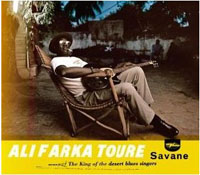
ALI FARKA TOURE
SAVANE (World Circuit/Nonesuch 79965-2)
Ali Farka Toure's final recordings are lovingly presented here by World Circuit. The sound is great, the booklet exceptional (with photos & lyrics in translation) -- even the cover has thoughtful design (apart from a little obligatory "grunge" factor in the typography) and reminds me of 1950s LP packaging. In addition to a large ensemble including Mama Sissoko and Bassekou Kouyate on dueling ngonis, there's the haunting sax of Pee Wee Ellis on "Beto," and "N'jarou." Harmonica, violin and flute on other tracks add variety. In fact this is really well sequenced because it sounds like several different groups and comes across more as a tour of the savannah than the work of one artist. All his protestations to the contrary, Touré's guitar does recall Mississippi delta blues. There are echoes of Fred MacDowell made exotic by the kora fills sprinkled throughout. On "Ledi Coumbe," Little George Sueref's harmonica also forcibly suggests the American deep south. Though everyone has their favourite Ali Farka Touré album, I think this is perhaps his finest work and a great monument to the Malian giant, who died in summer 2006.
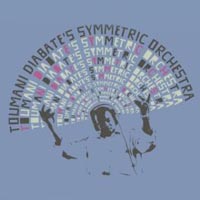
TOUMANI DIABATE'S SYMMETRIC ORCHESTRA
BOULEVARD DE L'INDEPENDANCE (World Circuit/Nonesuch 79953-2)
Malian music is the only consistently great stuff lately, and here is a real gem. Toumani Diabaté is a well-known kora player. He started out backing Kandia Kouyaté (you can hear them on the lead track on the Mali Divas compilation on World Network), then formed a traditional trio with ngoni and balafon, but since his first solo album, KAIRA, he has collaborated with flamenco artists, pop, blues and Hindi musicians. He has endeavored to make traditional West African griot music vibrant and contemporary, not just to sell records to his Western fan base but to keep Malian youth attuned to their own heritage. His Symmetric Orchestra is a big band that is a big attraction in Bamako -- the presence of the legendary Rail Band notwithstanding. They have a gig every friday night at the Hogan, an outdoor club, and have been there for ten years while the Rail Band has been jetting around the globe. Their concerts last for hours and are open-house for any visiting musicians so end up being a public rehearsal. There's kora, ngoni, balafon and traditional percussion like sabar and djembe at one end of the musical spectrum, and the electric guitars and drumkit of the modernized bands at the other, and it all flows perfectly. Diabaté is staking his claim to all West African music as a statement of the pan-African reach of the Manding culture, which was the biggest kingdom in West Africa in the 13th century. For this album, Nick Gold has brought in the master Pee Wee Ellis, who has been a crucial part of so many great West African albums with his soulful or funky horn arrangements. It's traditional stuff: the title cut was the first recording of Djelimady Tounkara of Rail Band fame, but it has all been updated. Kasse Mady does guest vocals on "Ya fama" which has the big Malian sound associated with Salif Keita. "Mali sadio," a lament for a beloved hippo shot by white hunters, is a dirge with a "We will rock you" bass and hand-claps beat with flashy kora fills from Diabaté. There's even a salsa-mbalax number (shades of Africando) but it keeps the programme interesting and diverse.
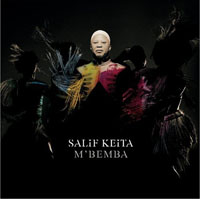
SALIF KEITA
M'BEMBA (DECCA B0006740-02)
Salif Keita's last album MOUFFOU was a new departure in one respect and a return to his roots in another. In this latest outing he also retrenches somewhat. He has gone back to the sound of his 1987 breakthrough album SORO and re-assessed his position. Gone are the synths and rock guitar that have marred his tours for the last two decades. He has a solid line-up of three acoustic guitars, kamele n'goni, djembe, electric bass and percussion. His old buddy Kante Manfila is aboard on acoustic guitar, and Salif is in strong voice. The overall impression is mellow yet half-way through he kicks things up a notch and the two middle tracks "Kamoukie" and "Yambo" have the energy of a live concert and would work well on the dancefloor. Guests Toumani Diabaté on kora, Lansana Diabaté on balafon, and Mama Sissoko on n'goni add richness to the sound of the title cut "M'bemba." Buju Banton shows up (I thought it was a found Bob Marley tape) & there's a gratuitous disco remix of one song with electric guitar, synth, etc, but don't let that put you off.
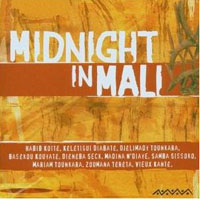
MIDNIGHT IN MALI (Sterns STCD1102)
A one-off concert, held at the French Cultural Center in Bamako at Christmas 2004, brought together many top-rank Malian musicians who jammed in various combinations all night. This disc is a record of that evening. Yves Wernert was twiddling the knobs to make sure it all sounded right. Among the big guns are Djélimady Tounkara, the extraordinary guitarist, and right at the outset he is trading licks with Madina Ndaye on kora. Living legend Kélétigui Diabaté was playing balafon and Habib Koité also played guitar. Djélimady's work is easily identified though & you can hear him pushing the other musicians to try things they probably wouldn't normally do, like playing behind the bridge & detuning which gets a bit tired, though the audience seems to eat it up. There's the late Vieux Kanté on kamalen n'goni and virtuoso youngster Basékou Kouyaté on plain ngoni. There are several vocalists, djembe and percussion players, and Alou Dembélé plays bass (a web search brings up a Camerounian soccer player of that name!). Samba Sissoko (from Djélimady's acoustic group and the Rail Band) sings, along with a couple of noted female vocalists and Djélimady's daughter on backing, but there's none of the Cobalt crew normally found in Wernert's studio. After the blisteringly great opener it gets folksy for a spell but during "Farafina (Cradle of humanity)," Djélimady pops in for another of his smoking extended solos. The kora on this is played by Madina Ndaye, a blind woman singer, quite unique in contemporary Malian music. Habib steps up for the bluesy "Forobana," but is quietly upstaged by Samba Sissoko with the 13-minute "Souaressi." It's a simple 1-4-5 pattern and comes off like one of the old Mande epics we love from the classic repertoire. Kélétigui keeps it all together and seems to be driving from the back seat, pushing the set along with his occasionally Mexican-marimba sound (I guess he's well-traveled). This concert united diverse styles of Malian music that cut across cultural divides and shows the rest of us how to get along. Diénéba Seck delivers "Signana," the crowning glory of the set, and everyone throws their best pentatonic riff at it, even the one-string horsehair-fiddle player, Zoumana Téréta. For the coda, Keletigui picks up his violin and Habib plays finger-picked acoustic guitar. I leaped up and grabbed the booklet, thinking it was Fairport Convention!
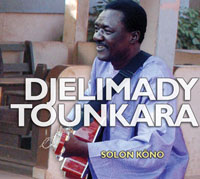
DJELIMADY TOUNKARA
SOLON KONO (Marabi 46810.2 Harmonia Mundi)
You may be thinking, Hmmm, another Malian acoustic guitar album, but if you have heard Djelimady play solo acoustic guitar you know he is ace. Best known as the driving force behind the Super Rail Band de Bamako, Tounkara is unquestionably one of the most versatile guitarists living. If you read my interview with Djelimady on the MALI LIVE page you will see he is influenced by flamenco, and that's apparent from the opening cut, a virtuoso piece of Spanish-style playing. This album is mellow yet bristles with energy. There are even two electric tracks for the Rail Band fans who need a shot of that endless line of burning steel running through the sands. One of them, "Sarankégni," is a reworking of a very early Rail Band hit when Mory Kanté was the singer. It's delivered in a beautifully reconsidered rendering sung by his youngest daughter Mariam Tounkara. Recorded in Bamako's Studio Bogolan where the redoubtable Yves Wernert runs the board, Djelimady is backed by family members and a new band of fresh recruits to the Malian trad music scene. The djembe and doundoun are undermiked, to keep the guitar forward in the mix, and the singers on top. Young Mountaga Diabaté from the Rail Band is the featured singer. SOLON KONO is the perfect demonstration of traditional music in a modern context.
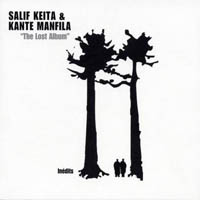
SALIF KEITA & KANTE MANFILA
THE LOST ALBUM (Syllart 079.0003.026)
Sylla strikes again. Salif Keita changed the course of African music with his album SORO, released by Island in 1987. Before that he had gained a considerable reputation as the singer of Les Ambassadeurs but he ascended to the pantheon of great solo artists with the release of SORO. It combined his traditional melodies with a high-tech production unlike anything heard before from Africa and, as a result, African musicians flocked to the Paris studios to replicate the sound. Ultimately it became a disaster and we had more than a decade of samey albums ruined with synthesizer washes and le programmation terrible. Recently African artists have increasingly gone back to their roots, unplugged their instruments and rediscovered their traditions. A younger generation of Malian artists, notably Issa Bagayogo and Rokia Traore, have found a new direction out of the bush with the help of studio skills and found a progressive route that is not so culturally hidebound by French disco. Salif reached the nadir when he did an album of covers of French pop songs (I assume it was a nadir, I never listened to it) but then turned around and recorded MOFFOU which showed he had not lost it after all. But now we get a rediscovered historic album that shows him steeped in folklore, soon after the initial electric impulses of Les Ambassadeurs. He and bandleader Kante Manfila (who came from Guinea) spent the end of the 70s in Abidjan, Ivory Coast, which at the time was the nexus of creativity in African pop, hosting many of the emerging Congolese bands such as Sam Mangwana's African All Stars and Empire Bakuba. Surprisingly Manfila and Keita decided to record an acoustic album then, and in 1980 laid down 5 tracks which have resurfaced now thanks to King Midas (Ibrahim Sylla of Syllart records). The liner notes tell you nothing about the session or personnel, just that Salif had a lonely childhood, being an albino, wasn't supposed to be a singer as he was from a noble cast, and couldn't get a job as a teacher, which is when he joined the Rail Band in the late 60s. THE LOST ALBUM has balafon and kora on it, as well as acoustic guitar (played by Kante Manfila). Looking at some other albums recorded by Manfila I would guess that the kora player is Mory Kante and the balafonist Ibrahim Diawara. Ousmane Kouyate could be on second guitar, there is even a piano. There's a wandering muted trumpet that floats in and out, occasionally going off key in a wonderous manner. And some uncredited female backup singers. Salif's impassioned voice soars over the arrangements. It's a strong recording. The only odd part is they tacked on WARA, an electric rocker, to end. No complaints, it just changes the mood. All in all, this is essential Malian music.
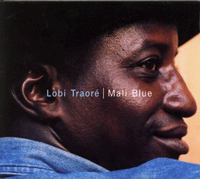
LOBI TRAORE
MALI BLUE (World Village 468033)
Lobi Traoré is an unsung hero of Malian guitar. Unjustly so, as he is every bit as good as Ali Farka Touré and sounds even better on this well-constructed album that has been assembled from his last few releases. Lately every single Ali Farka track has reappeared in some form or another and it's getting pretty monotonous. Tinariwen has that Creedence Clearwater rumble going to make them vital, but Lobi still wakes you up with his version of the Desert Blues. The presence of Yves Wernert, super-producer of the Issa Bagayogo albums, lends a lot to several tracks. Ali Farka sits behind the board and twiddles while Lobi burns. (Actually he plays matchbox on one track! No lie.) There's a big dose of rock and roll but things cool on the fifth track which, with its ngoni lead and female chorus, sounds a lot like the great Issa Bagayogo albums. A couple of French rockers show up with jazz guitar in mind and change the whole sound for "Ni tougou la mogo miko" (Don't touch me tomato?) Zani Diabaté sits in on djembe on this slow smoker. Much is made of the blues roots heard in Malian music (you get it here on "Wolodennu"), but this is more of a rock album, with lots of crunching guitar, wah wah, harmonica, drums and bass, but there's also enough of the genuine Malian soundscape to make it compelling.
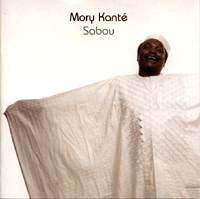
MORY KANTE
SABOU (World Network TUGCD 1034)
For Mory Kante it's too little too late. He should have made this album over fifteen years ago. He was the first to rush off to Paris and become a disco fool, scoring a monster hit with "Yeke Yeke" in the late 1980s. Finally he's taken a clue from Salif Keita, his old bandmate from Super Rail Band days, and returned to a traditional sound. But the world has left him behind. Malian music has evolved beyond where he was at as a youth, and we have Rokia Traore and Issa Bagayogo to thank for it. Malian music quietly joined the modern world so the ancient Manding kingdom with its epics and shimmering kora lines is now truly a historical style, and this is where Mory Kante has gone. The album is well-done, a good mix, clean sound, but it's seriously dated. Kante also plays most of the instruments so I suppose it's a studio creation with him adding the layers without the wit of that affable idiot OutKast in the green satin jockey get-up. This is already being hailed as a masterpiece, nothing short of genius, breathtaking, and (fill in the blank). It's got the heavy big Malian epic sound with all the traditional instruments, like kora, balafon, calabash, koro, calignan, mute calignan, cabassa, bolon and small, medium and large dunduns--all of which Mory plays himself on the opening cut, as well as doing the lead vocals. He plays acoustic guitar, electric bass and djembe on other tracks. If you don't already have a ton of this stuff you probably will enjoy it. Others should just spin LES NUITS DE BAMAKO instead.
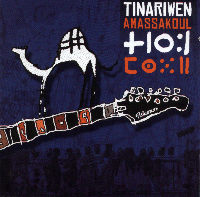
TINARIWEN
AMASSAKOUL (Wrasse Records WRASS 125)
One of the outstanding tracks from the FESTIVAL IN THE DESERT compilation was by Tinariwen. You feel instantly at home in their down-home blues groove. Their name means "Empty places" and they were formed by exiled Touareg in Ghadaffi's rebel camps in Libya. ("Touareg" is an arabic word meaning "Abandoned by the gods"; Ghadaffi is a character drawn by Carl Barks in a Walt Disney cartoon...) They left their fiddles behind in the southern Sahara sands, and took up guitars. Stratocaster knock-offs and tiny Pignose amps. Their songs of exile and dreams of independence caused their cassettes to be banned in Algeria and Mali -- a sure sign of success. By the mid-90s they were allowed to return to their homes in Eastern Mali and perform publicly. Now they are heroes. Their music combines traditional Malian flute, derbouka and singing with rock and roll guitar. There's a lot of Bo Diddley, John Lee Hooker and even, I imagine, Ted Nugent (That's a hypothetical statement since I don't actually know Ted Nugent's oeuvre, but there's a lot of flurried string-hammering on one cut). However the bits I enjoy are the more spaced-out ones with flute and drone. The hand of Yves Wernert is apparent here as he mixed about half the tracks. This is only available in the US as an import, but is well worth seeking out.
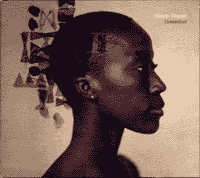
ROKIA TRAORE
BOWMBOÏ (INDIGO LBLC 2954)
I finally plopped down serious money for the import version of Rokia's third album, only to be really disappointed. The producers clearly didn't take into account her electrifying performances. This should have been a live album to bring her excitement home to listeners; instead it's another mellow album, much like the first two, but this time has completely egregious string quartets added to really put you off. The western classical tuning does not enhance her voice the way Malian instruments do. Kronos Quartet are decidedly passé (not that they were ever particularly good) and this was a bad move on the part of her management. She doesn't need to be propped up by bogus appurtenances of Western culture: she has plenty of her own high class to spare. There's mellowness aplenty and most of it is enjoyable, though it doesn't come up to the first album's plateau. The highlights of this album are "Déli," a simple almost acapella number (which she did in concert last year) with the basslike bolon accompaniment, and "Mariama," a duet with Ousmane Sacko. "Nienafing" is the liveliest track, with the dueling ngonis that blew us away in concert, but it still seems understated. Yves Wernert appears as "assistant" on the Bamako recordings. Oh, would that he were given control of the knobs. Fire your producer, Rokia, and take it from the top.
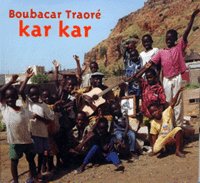
BOUBACAR TRAORÉ
BOUBACAR TRAORÉ [KAR KAR] (Indigo)
Boubacar Traoré brought his Malian blues to Ashkenaz in Berkeley on September 20th 2000 and wowed the crowd with his guitar virtuosity. For accompaniment he had a solitary calabash player, but Traoré mixed it up, changing tempo and hitting "power chords" to excite the crowd. Though a comparison to Ali Farka Touré is inevitable, Traoré holds his own. His style is notably different from Touré's, and while his singing is rough, his playing is inspired and complex. He throws in flamenco-style strumming and dramatic runs, soloing and chording at the same time. It was a great show and many of the folks I talked to wondered why he hasn't done a live album. In fact his latest album is so mellow it kind of drifts by.
But short of seeing him live, the self-titled album is a well-recorded selection of his material. This is his third album since his return after a twenty-year hiatus in his career. On it he is joined by Habib Koité, his young protégé on guitar, Sidiki Camara on djembe, and one of the legends of west African popular music: the great Kélétigui Diabaté on balaphone and violin. Though it's a dreamy album, BOUBACAR TRAORE [KAR KAR] is perfect late-night listening. "The Madison" was a popular dance in the sixties, like the twist (I had the 45; I think it was by Joe Loss!). Kar Kar's version of it, featuring blues harp and balaphone, was previously included on an e.p. that was packaged with Malick Sidibé's wonderful photos of Mali in the sixties. It provides a rocking conclusion to the new album.
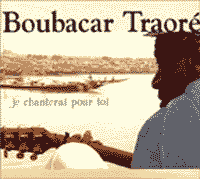
BOUBACAR TRAORE
JE CHANTERAI POUR TOI (Marabi France, distributed by Melodie)
This is a mellow acoustic album, but does beg the question, How many Malian guitar albums does one need? Ali Farka Touré, Ballaké Sissoko and even Rokia Traore, show up to add their talents. I imagine the film will make it more compelling, but will it ever play in the US? Taken on its own the album is worth hearing: the spontaneity is what makes it appealing. The songs seem unrehearsed, there are snippets of background noise, traffic, playing children, a bird. I've played it a few times and it does tend to fade into the background. At one point Boubacar was doing a duet with Kélétigui Diabaté (The "Lionel Hampton of balafon" as Malians call him) and I had completely spaced out, reading a magazine, and in my subconscious I thought I was listen to Balinese music! As a bonus the album ends with two of KarKar's biggest hits from 1963: "Mali Twist," and "Kayes Ba," which, like the opening track "Mouso teke soma ye," were included on an mini-CD tucked into copies of Malick Sidibé's monograph of Malian portrait photos from Scalo.
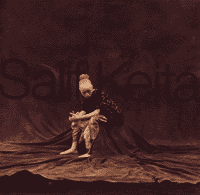
SALIF KEITA
FOLON ... THE PAST (Island 162-531 022-2 1995)
In 1987, Salif Keita scored massively with SORO, an album that blended traditional griot music and West African rock in a Parisian studio production. Since then he has been touring the globe with an arena rock stage show. Now he has paused long enough to put out a comparable album, featuring the best talents from Mali. Ousmane Kouyaté and Djely Moussa Kouyaté on guitars and Djanka Diabaté on backing vocals are experienced enough to know when to put intuition to the fore. The blistering guitar in "Africa" recalls the speedy riffs that characterized Keita's first group, the Rail Band. After quitting the Rail Band, Keita joined Les Ambassadeurs, and on FOLON he revisits one of their classic songs, "Mandjou," which has aged well. The atmospheric intros that made SORO so successful are also reprised here, most effectively on "Nyanyama," where Keita sings about the musician's role as the needle pulling together the social fabric. "Dakan-fe" is a credible sortie into African reggae (which is mostly late-Wailers style). The title track and the last cut, "Seydou," utilize traditional instruments to bring the raucous mood down to contemplative level.
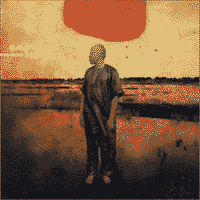
SALIF KEITA
MOFFOU
Imagine one morning Salif Keita wakes up and thinks, Man I really blew it. I tried to ingratiate myself to the French kids but they are a bunch of racists and never really dug my music. What am I doing with these cheesy synthesizers and tweaky soprano saxes in my band? I need to go back to my roots, like Issa Bagayogo... He goes into the studio with acoustic guitar, ngoni and just enough technology to sweeten the sound and presto! He's back on top. That's clearly the case with his new album MOFFOU, but the bad news is there's no American distribution for it, so you'll need to get it in Europe.
One of the dozen tracks, "Souvent," is an up-tempo rocker, influenced by Issa but a bit too busy and nowhere near as subtle as the Yves Wernert-produced stuff on Cobalt. However, most of the album consists of the slow smoky laid-back cuts that he used to do with the Rail Band and Les Ambassadeurs du Motel in his prime. It's a welcome change. Now Salif finally sees he's never going to be Charles Aznavour or whomever he was trying to become when he recorded with Weather Report.
When you cut away all the French goop ("la goupe") that ruined his career for the last decade or more since 1987's SORO, you can hear his superb voice. That was a breakthrough album and at the time we welcomed the introduction of synthesizer, but it signaled a turning point in African music, as Africans' main goal suddenly became to get into a Paris studio and have "le programmation" take over for the rhythm section and "le synth terrible" replace les cuivres. Because of the vagaries of promos, I only heard part of this album so didn't get to hear the first cut which apparently features Cesaria Evora on vocals in a duet with Keita. I found a review on-line from the Bangkok Post but none of the local stores are stocking it, having written off Keita after his last few lackluster efforts.
Not only does Salif reteam with Kanté Manfila, guitarist of his Ambassadeur days, but he has returned to the acoustic sound that made his 1985 FOLON such a classic. Djelly Moussa Kouyaté from Guinea also appears on the album on acoustic guitar. The title refers to a new nightclub Salif has opened in Bamako, so he has indeed returned home and this album shows more than a welcome return to his musical roots.
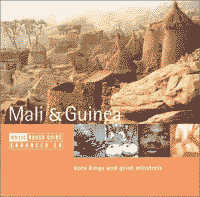
VARIOUS ARTISTS
THE ROUGH GUIDE TO MALI AND GUINEA (Rough Guide RGNET)
I have to admit I dismissed the first few Rough Guides as strictly for newbies, but soon realized my mistake as they are keystone collections for any area of world music. This one has a good cross-section of contemporary griot music from Francophone West Africa. There are plenty of classic tracks: Bembeya Jazz National's electric interpretation of the traditional song "Lan Naya" recorded when young Sekouba Diabaté became their vocalist; Momo Wandel Soumah's jazz classic "Basa" form his superb album MATCHOWÉ; Nahawa Doumbia singing "Fanadugule" from her album YANKAW, which was not widely available in the USA. Rail Band and Balla et ses Balladins are both here (with songs recorded in the 1970s): they are among the finest bands ever to come out of Africa. For guitar fans, there's Ali Farka Touré (dubbed "the John Lee Hooker of Mali") and the collaboration of Taj Mahal and kora player Toumani Diabaté on "Atlanta Kaira" from their album KULANJAN. Jali Moussa Jawara, the finest contemporary kora player, gives us "Haidara," the title cut from his out-of-print album of the same name. There are a couple of more poppy things, but on the whole this is a well-balanced and sequenced compilation that reveals a little of the riches of the West Africa musical tapestry and will send you off to explore these great artists if you don't already have their recordings.
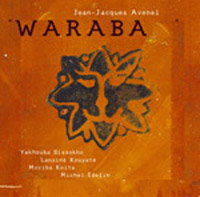
JEAN-JACQUES AVENEL
WARABA (SGL SA 1549-2)
There have been many profitable junctures between jazz and Manding music, the best being pianist Hank Jones' 1995 collaboration with the Mandinkas on SARALA. Fra-Fra Sound from Holland are also worth checking out. The latest (to my knowledge) is bassist Jean-Jacques Avenel who has teamed up with some traditional musicians from Mali for a mellow hour of jazz. There is quite a bit of continuity here: Cheick Tidiane Seck, who led the Mandinkas, also appeared on Fra Fra Sound's MALI JAZZ album, along with Toumani Diabaté, kora, and Lansiné Kouyaté on balafon. Lansiné Kouyaté appears on Avenel's album, along with Moriba Koita, of the Mandinkas session, on ngoni. Therefore we can assume these Malians are at home with Westerners' sensibility when it comes to soloing or accompaniment. It's a very low-level recording, in order to make the double bass audible, but quite soothing, without going off towards ECM (German for "on-the-nod") dozing. Michel Edelin, another Frenchman, joins on flute and it does get wet for a while but as Ray Charles said, when Bill Cosby pointed out that his backing band at the Playboy Jazz Festival were all white, "They don't sound white!" When the balafon comes in things rock out in a restrained way. I'm assuming it's a pentatonic instrument, but there is a definite "A minor--E minor" air about the jam called "Guelema," which starts out with a strong suggestion of "Louie Louie"! WARABA could use a little more percussion to wake it up, but all in all I'd recommend this album as a cut above dinner jazz.
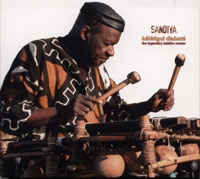
KELETIGUI DIABATE
SANDIYA (Contrejour 012)
I am not a huge fan of xylophone and can't abide the sound of the vibraphone, but the pentatonic Balinese gender and Malian balafon with their more "natural" sounds appeal to me in the right context. Veteran Malian band-leader Kélétigui has been enjoying a comeback of late, touring with Habib Koite, and has now resumed his rightful place in the centre stage with a fine album of acoustic Malian traditional music pummeling his wooden keys with an array of guest artists. Kélétigui started out over 40 years ago as leader (& left-handed guitarist) of the first National Orchestra of Mali, known as National "A". The band split into Rail Band and Ambassadeurs, with Kélétigui going to the latter formation. He also played behind Salif Keita in some of the more grandiose formations of that inconsistent star. But he works best in an instrumental context and on this album he is well-served by being teamed with kora player Toumani Diabaté and guitarist Djelymadi Tounkara as well as Habib Koite and a roster of lesser-known performers. With the kora in the lead on track two, the album takes on the right dreamy feeling to settle you into a contemplative state of mind. Once the musical Vikodan takes effect, you are ready for any amount of flute or violin overlaying the continuo of balafon. To bring you round with no ill effects, the album ends with a big bomber: the Ensemble Traditionnel du Mali (a dozen female vocalists with kora and djembé) doing a version of the epic "Soundiata," followed by a novelty: Gershwin's light and refreshing "Summertime," done Bamako style by Kélétigui with his touring band, Bamada.
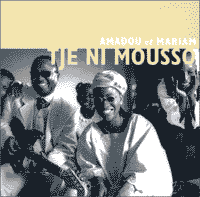
AMADOU AND MARIAM
TJE NI MOUSSO (Universal/Polydor)
TJE NI MOUSSO, the second releases from Amadou and Mariam, the blind duo from Mali, builds on their last CD, SOU NI TILÉ (recorded in 1997 and released Stateside by Tinder), adding a little more punch to the up-tempo numbers and a jazzier flavour to their horn & keyboard parts. After meeting Mariam at the Institute for Young Blind People in Bamako, the capital of Mali, and marrying her over the objections of their families, Amadou took her to Ivory Coast where they attained great popularity through a series of cassette releases. Returning to Bamako, Amadou gigged for a while in the late sixties with Les Ambassadeurs du Motel, the group that also launched Salif Keita's career. On tour in Europe they met a violinist from Syria, a Cuban trumpeter, a Colombian trombonist, and other musicians who performed with them. Their music has been called the Bambara Blues, and thanks to the success of artists like Ali Farka Touré, Boubacar Traoré, and Lobi Traoré, it's becoming more familiar to Western ears accustomed to John Lee Hooker & Mississippi Delta blues.
An interesting conjunction in the electric blues is what's known in the USA as the "Bo Diddley beat" (think of the Stones' "Not Fade Away"), which is in fact the Cuban clavé, or five stressed notes in a four-four measure. That underlies the second track on the new Amadou and Mariam album, "Djagnèba," which has a rocking trombone solo (it's a twelve-bar blues progression but the solo veers towards "House of the Rising Sun"). It's a simple song but the band tears it up.
While the songs are rooted in the Malian griot tradition, they do show the signs of the foreign influences brought by the international band members. "Bali Maou" features flamenco guitar played by Manuel Soto; Pedro Soares plays cavaquinho on "Sini kan," a track that has a soukous feel to it. Valentin Clastrier plays vielle, a four-stringed instrument played with a small wheel (like a hurdy-gurdy) on two tracks, and is featured on "Minaga Titi," a call to arms to the farmers of Mianga. All the stops are out on the last track, "Nangaraba," which goes "Trouble maker! I'm talking to you! That's enough!" The bass player works up a sweat and the trombonist returns for two solos. The engineer throws a little dub at the end of his breaks for added excitement. TJE NI MOUSSO is a very satisfactory album that is extremely well produced and nicely packaged, and bound to garner Amadou and Mariam many more fans.
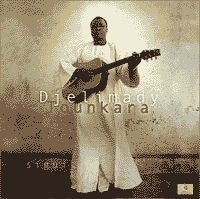
DJELIMADY TOUNKARA
SIGUI (Indigo)
Djelimady Tounkara is not a household name but his music is beloved by fans of modern Malian music. For years he has been composer/arranger and lead guitarist of the sensational Super Rail Band of the Buffet Bar of the Station Hotel in Bamako. Not only one of the longest-lived (& titled) bands in Mali, it launched the careers of Salif Keita and Mory Kanté, while through it all Tounkara and his guitar remained at the helm. He toured the US last year with a stripped-down band, lacking horns, and now has temporarily abandoned his electric guitar (gone fashionably unplugged) for a new release on the Indigo label, SIGUI. It certainly stands above the majority of acoustic pop albums from Mali but I'm sure many fans would prefer what he does best, as the market seems already saturated with Traorés, Tourés, Diabatés and Manfilas. But change is good. When Sekou Diabaté Bembeya (aka "Diamond Fingers") went solo, he nodded to his influences by covering Peter Green's "Albatross," a song on the influential Fleetwood Mac album THEN PLAY ON. (Fans still think "Black Magic Woman" is a Santana composition). Tounkara's Western influences are more of the (Andrès) Segovia variety and he turns in a stellar solo cut redolent of Spanish classical music, titled "Samakoun." The ensemble returns and he takes his place beside a rhythm guitar and ngoni. The riffs may seem familiar at this point, but the recording is very clear and Tounkara acquits himself brilliantly throughout.