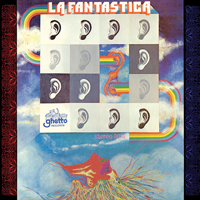
LA FANTÁSTICA
FROM EAR TO EAR (Vampisoul VAMPI 355)
Joe Bataan is a Filipino-AfricanAmerican known as the "King of Latin soul," for his blend of two popular strains of American music. He grew up in Spanish Harlem, a safe place to be in the 50s if you were of mixed race. He liked doo-wop and boogaloo and his first record was a cover of Curtis Mayfield's "Gypsy Woman." Unhappy with the financial deal he was given by Fania, he started his own label Ghetto Records, with backing from a local gangster. He coined the term "Salsoul" to describe his soulful salsa sound and issued seven albums on his label in the 1970s, before it crashed. Vampisoul has picked up the pieces to find these forgotten classics and reissued Orquesta La Fantástica's From Ear to Ear, with moody blues numbers as well as slamming salsa tunes. Bataan's business partner, the gangster George Febo, heard Orquesta La Fantástica one night at the Village Gate and was blown away by their sound. Instead of the piano, timbales, and two trombone line-up they had two tenor saxes, two trumpets and a piano as well as vibes. The album is all originals; the opener "Borinquen" suggests that the composers at least were Puerto Ricans. Saxophonist Sammy Léon was the main composer and the vocals were handled by Ralphy de Jesús, a.k.a. Chuleta (fried pork chop)! Highlights include "M&M" which is not about the candy but a jamming guaguancó about someone called "Maisonave" who discovered the band. "Telegrama" is a fast number almost in the merengue style of Dominican Republic: it pounds along with horns in counterpoint, cowbell against timbales and fierce congas in the mix.
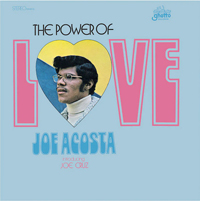
JOE ACOSTA
THE POWER OF LOVE (Vampisoul VAMPI 354)
This is another overlooked gem from Joe Bataan's short-lived Ghetto Records which spun in clubs and bodegas back in the early 70s. Born in Puerto Rico, Joe Acosta was a pianist and bandleader fronted by Joe Cruz, a salsero and deep soul singer. This other Joe also sang in English which pushed songs like "I Need Her" into the Billboard charts. The Latin soul sound was better known on the West Coast as the Low Riders' soundtrack, but in New York Joe Acosta and his men threw down a mean guaguancó and son montuno. The hard salsa of "Bendita Ilusión," driven by timbales and brash trombone licks, is still a dance-floor favorite. Looking on bandcamp I find this came out from Ghetto Records in December 2023, so if you are in the USA it might be easier to cop the vinyl from there. The line-up includes piano (Joe Acosta himself) and uncredited tres and features Joe Cruz on vocals. A little digging turns up the other personnel which includes three trombones! As Frederic Chopin might have said, "If one trombone is good, three have to be killer, amirite?" Joe's brother Hector plays bass, plus the group includes the tripartite attack of bongos, conga and timbales: a truly deluxe lineup for a salsa band whose album gives a hint of how sharp they must have been in concert. The second slow number is a cover of Glen Campbell's "By the time I get to Phoenix" which seems dated; the album ends with another ballad "La Realidad," with this accomplished outfit showing how fine they were. The key to the groove on the restrained numbers is "Suave y tranquillo," as he says on "Juliana."
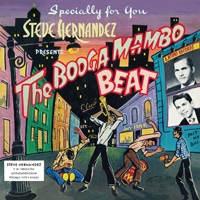
STEVE HERNANDEZ Y SU ORQUESTA LATINOAMERICANA
THE BOOGA MAMBO BEAT (Rocafort Records)
Steve Hernández, whose name is on this album is nevertheless not the bandleader. He was a fan of mambo and the nascent salsa sounds who wanted a bigger role in the music so he assembled a supergroup of his favorite players and booked studio time for them to record this one-off LP. This much has been surmised as there is no real information about him or this rare disc. In 2025 someone turned up the master reel-to-reel tape of the session which was labeled May 1967. Reports claimed that the album had been originally recorded in Puerto Rico so these tapes found in New York were the mix-down masters. The compiler of the current issue did some further research and found that Hernández was in a traffic accident which left him in a wheelchair but that tragedy gave him a cash settlement which allowed him to follow his dream. The compiler by chance ran into Ray Santos who led the session and who gave him the scoop that this was not a working band but Santos did use arrangements he had written which had been popularized by other bands such as Machito, Puente, and others. The tracks are in all styles: Boogaloo, descarga (jam), mambo and merengue. There is still speculation about who is on the album and the list of guesses includes Roberto Roena on congas and Kako on timbales, even Cabrerita on trumpet. But the guessed guests are just an indication of the quality on here. There are fine horn solos on the opening track "Steve's Boogaloo" which has a smooth big band pulse. Steve's choice in arranger was right on: Santos was a Latin jazz devotee who had studied at Juilliard and he wrote arrangements for all the big bands, including Eddie Palmieri, both Titos and so on. He won a grammy for his soundtrack to the Mambo Kings and an album with Linda Ronstadt, Frenesi. And the talent he brought to this session is truly stellar. The lead singer is Vit’n Avilés who was a lifelong friend of the arranger. It's lush big band jazz in a Latin style, we can assume Santos is one of the sax players but it doesn't really matter who is playing trumpet or timbales: they are at the top of their game.
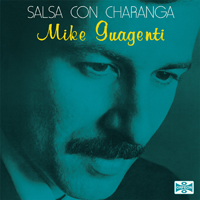
MIKE GUAGENTI
SALSA CON CHARANGA (Vampisoul VAMPI 313)
This is a jamming album and kicks off with the rocking title track. It has a really powerful drive despite being a big band led by a vibraphone (Oscar Garcia), an instrument that I don't think has the power to lead a salsa band. But the the timbales and congas are grooving, and there is a relentless vamping tres, so my personal antipathy to vibes, plus flutes tweetling away, is overruled by the energy of the piece. Also it is the Cuban multi-instrumentalist Pupi Legarreta on flute, as well as violin. He is abetted by Panamanian Mauricio Smith also on flute to boost the charanga aspect. The opener fades out after four minutes. Guagenti is the singer and steps up after the opening instrumental. No other personnel are listed though the production notes tell us that the producer was the great Bobby Marin and this was released on Orfeon, a Mexican label, and did well at the time despite the musical hegemony of Fania and its subsidiary labels in New York. Discogs tells us that Smith plays "Delirio" bass (perhaps a brand?); other bassists are the great Andy Gonzalez, as well as Mike Amatin. If all this is true then it is a compilation from different sessions. A Venezuelan release from 1977 (found on discogs) fills out the picture of the line-up which is truly a who's who of the Latin scene in late-70s New York, including Adalberto Santiago, Willie Torres and Yayo "El Indio" on coro, Joe Loco on piano, Louie Ramirez on timbales, the great Nelson Gonzalez on tres, Barry Rogers on trombone and many other notables, including Frankie Malabe on congas. After a bolero and a few Guaguancos we are full tilt into Guaracha mode for the second side of the album, beginning with "Los Muchachos de Belen," where Pupi plies his fiddle, and ending with an assault on the classic "Tibiri Tabara."
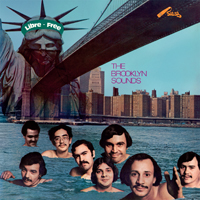
THE BROOKLYN SOUNDS
LIBRE/FREE (Vampisoul)
This is the reissue of a brash and bawdy salsa dura album from 1972. Characterized by heavy trombones and wonky piano with loads of percussion high in the mix, salsa dura was another rebellion against the mainstream, played enthusiastically by a new generation of immigrant children in Brooklyn. They have not forgotten their parents' melodies like "Lagrimas negras," but their version is far from elegiac, more like the soundtrack to a bar-room brawl. They also pay homage to Santa Barbara and Elegua in an incantation to "Chango Santero." The wild dissonance of the horns going toe-to-toe with the nearly yelled vocals make it far from the contemplative sound of Cuban septets and more like a contest to see who is playing further "out." The out-of-tune piano excels on their epic "Las Margaritas," which is not the Chucho Valdes ballad. Their parents must have thought they were loco or on drugs, both of which seem self-evident. If you don't have any Hector Lavoe or Willie Colon you might want to stock up on them first as their production values and musicality is the highest, but if you need some raunchy loud music to accompany you while washing dishes or vacuuming, check this out.
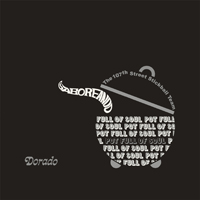
107th STREET STICKBALL TEAM
SABOREANDO - POT FULL OF SOUL (Vampisoul VAMPI 307)
This is an alternative musical history for those of us who grew up in the 60s. We were aware of Soul music through Stax-Volt, and heard dances like the Boogaloo and the Shingaling (or giggled at them on black & white TV shows), but our main diet was pop with a little R&B. We listened to Pye and Fontana records, produced by the likes of Mickie Most, Kit Lambert & Chris Stamp. We were unaware of Bobby Marin and artists like Ricky Marrero or Louie Ramirez (of "Ali Baba" fame). Nevertheless the psychedelic Latin soul gems of these artists have stood the test of time and are not nostalgic in the sense of reminding us of teenage heartaches, etc, but evoke a time when the world was young and, decidedly, groovy. This latest discovery from Vampisoul is a replica of a great boogaloo album that came out on the obscure Dorado label in 1969. The now-fifty year old rhythms are occasionally corny but funky and there's a lot to love here. Orlando Marin plays timbales, Ricardo Marrero is on piano and Louie Ramirez on percussion. The wild trumpet is uncredited. If the brief LP leaves you wanting more, you can also pick up a 7 inch 45 of Los Africanos (VAMPI 45108), also produced by Bobby Marin at the same time. This group was a studio project featuring Chico Mendoza and New Jersey band Ocho. The A side "Together People (Pamoja Watu)" is a New York take on African funk with a Manu Dibango-style horn and a James Brown rhythm; more heavy Latin funk populates the B side, "It's your thing," which is a cover of an Isley Brothers' hit, replete with wailing Hammond B3 organ.
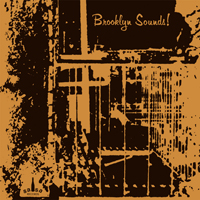
BROOKLYN SOUNDS
BROOKLYN SOUNDS! (Vampisoul 297)
Big farty blarty brass defined the Latin Soul branch of Salsa as it filtered through the sounds of New York City in the early 1970s. With roots in Puerto Rico and Santeria, the young rebels who rejected the Latin ballroom dancebands of Titos Puente and Rodriguez liked ragged vocals and heavy horn leads on twin trombones. The percussionists (bongos, timbales, guiro, etc) were not put behind baffles to mute their acid tones, but came up front to fry the microphones in the studio... And let's imagine that scene: A clandestine midnight session organized by Boogaloo pioneer Bobby Marin on a frosty night, colder than a proverbial you-know-who's you-know-what, with a bunch of freezing punk kids from the barrio eager to get their big break. You can feel the thawing as the singers collide and brawl on the first cut "Suéltame ya," but they get more serious for "Mirame, San Miguel," where they have something to prove. They are in sync: the cowbell and timbales and shekere are battling to drown out the vamping piano and the singers have to really reach deep to outmanoeuver the horns. It's gritty and fraught with tension, which comes out on the track "Rain" sung in English by Leo Rosado. The cover is a monochrome shot looking up at a snow-covered fire escape: this exemplifies New York for these expats from the Caribbean: An escape to what, to where? "Perdicion" is the stone groove on side B where the horns are following one another without any sure idea of where they are going, and the pianist Willie Rodriguez (who worked with Celia Cruz and Johnny Pacheco), takes a fine turn, before turning it over to the singer and the hard hands of the percussionists (Julio and Kelvin Fonseca, Eddie Rodriguez).
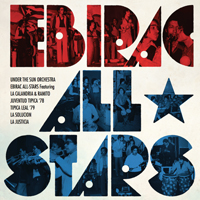
EBIRAC ALL-STARS (Numero Group NUM505)
During the salsa boom of the 1970s, the heat was generated from the East Coast urban centers of New York and Miami whose barrios teemed with la gente of Puerto Rico, mixing with expatriates from Cuba and second-generation immigrants from all over the Caribbean. Willie Colon, Hector Lavoe, Fania All-Stars, Alegre All Stars ruled the airwaves, and those waves fanned out across the continent. But the beat did not stop there. In Chicago, an entrepreneur named Carlos Ruiz started the Ebirac label (Caribe backwards, or in the mirror!) to record the Puerto Rican musicians who lived on the west side of that great metropolis. These bands would gig in city parks, rented halls, or wherever they could get a space with electricity, even the Holiday Inn (as I can attest: I used to regularly hear Haitian bands in the Berkeley Holiday Inn back in the 80s and 90s, and these were family-attended affairs with food as well as drink). Now half a dozen of the best bands are brought together for an electric set of 8 tracks on vinyl. As well as salsa there's plena, son montuno, guaguanco. Tipica Leal '79 – a name that places the group into a very mundane context – really excels with splendid tres and sax solos then a brisk burst of trumpets on "Donde estabas (Where were you?)" Clearly we were not there, and missed out on some highly danceable grooves. Cow bells are beaten frantically, piano keys are ruffled, congas are pummeled, and back there a tres is working through some wild changes. There are three tracks from Justicia, the most experimental of the bands. But it works better as a compilation rather than focusing on one group, and the diversity makes for exciting competition between tracks as we shift from guaguanco to plena. On the last track "Under the Sun," the instrumentation is changed, there's electric organ and an electric guitar, recalling how Miles' electric band with John McGlaughlin changed the minds of many people who thought rock and jazz should stay in their lanes.
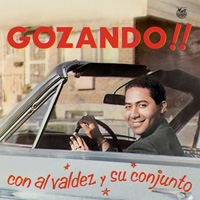
ALFREDITO VALDEZ JR Y SU CONJUNTO
GOZANDO!! (Vampisoul VAMPI220LP)
Al Valdez (as he is called here) is the son of another Alfredo Valdés, a Cuban singer with Septeto Nacional, whose family emigrated to New York in 1956. When he was 18, Alfredito (Little Alfie) joined the conjunto of Arsenio Rodriguez, another Cuban expatriate and the pivotal figure in the development of Latin music. Two years later, in 1961 Alfredito joined Ray Barretto's Charanga Moderna as the salsa music pioneered by Arsenio took hold in the US. He still played with Arsenio, and picked up gigs with Tito Puente and Machito's bands. In winter 1964, Machito brought him along on a South American tour, but as often happens in these junkets, the Argentine promoter forgot to pay them and they were stranded in Lima, Peru, running up a hotel bill they couldn't pay. Trumpeter and arranger Mario Bauza (Machito's brother-in-law), flew back to New York to raise the money to repatriate the band but they were on the verge of starvation, so ever-resourceful Alfredito approached MAG records' owner and asked if he'd like them to cut a couple of discs at bargain prices. The result became one of the lost grails of salsa, since few copies made it out of Peru (there's no listing on discogs, though some singles from the second disc show up there). I don't have info on the personnel other than Alfredito plays piano and you can hear "Chocolate" Armenteros on lead trumpet in a driving set of pachanga, mambo, guaracha and descargas. Brew Moore had left the line-up in the fifties but his influence can he heard on the sax player. Herbie Mann had also moved on but there's a good flautist holding his own. The opener is really exciting, with powerful timbales, but fades out at the three minute mark, and then they perform Tito Puente's "Aprieta" which became a pop hit a decade later as "Oye como va." The big band sound is in full effect on the bolero "Si me pudieras querer," a Bola de Nieve (Ignacio Villa) ballad normally performed by Graciela (whom I guess did not tour with them). I checked some of the contemporary Machito albums to see if they duplicated material, but they seem to have had a lot of tunes in their repertoire. There's even a Colombian cumbia to appeal to the locals: the romping "Tabaquera." Sadly none of the tracks exceeds 3 minutes; still it's a gem from end to end. Alfredito went on to have a successful career, but notably (from my point of view), he was producer and arranger of the Lassissi sessions (a forerunner of Africando) when African salseros, such as Laba Sosseh, Amadou Balake, and Doh Albert, came to New York in 1979 and sang with real salsa musicians backing them. He later toured with Cachao and always had legendary buddies he could call on for recording dates.
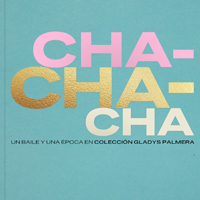
COLECCION GLADYS PALMERA
CHA-CHA-CHA (Gladys Palmera)
This set of 18 lively cha-cha-chas is a free download from bandcamp made to accompany a deluxe coffee table book, the very first publication from the legendary Spanish archive of popular Latin music, which also hosts a radio station. The book shows 800 covers in over 400 pages. The Gladys Palmera website displays the treasures of the archives, not only rare records, but posters, photos and other ephemera that tell the story of Latin and Caribbean music. The cha-cha-cha book looks interesting (and given the depth of the archive there is probably some excellent commentary too), but bear in mind that the visual appeal of those albums was mostly of the cheezy pin-up variety. However there are some who get a vicarious thrill out of looking at albums they can covet but probably never find, hence the proliferation of such books that cover things as diverse as Ska covers or Blue Note jazz sleeves. I have the latter because Reid Miles' work is very inspirational to me because of his use of (pre-computer) mechanical processes. From a graphic point of view they are an interesting aspect of visual design culture and pastiches of them continue to be created to represent the look of cool '50s jazz. The cha cha became a craze in the 1950s (evolving out of the mambo), though it was homogenized to become very "white." It replaced the foxtrot which had held sway for thirty years (after replacing the waltz). Interesting to note here is the flatted keys used in "Chinese cha cha cha" by Alfredito Levy and "Chinita cha cha" by Manuel Sanchez Acosta, from 1957. This tradition goes back to 1877 when 16-year-old Euphemia Allen wrote "The Celebrated Chop waltz" which became known as "Chopsticks," for its choppy rhythm and notable for its insistent flatted seventh. From the earliest days of recordings we had songs with titles like "Comet Chop Suey" and "Oriental Strut" by Louis Armstrong, or "Shanghai Shuffle" by Fletcher Henderson. Back in the roaring 20s American jazz bands played "Shanghai Honeymoon" (which was covered by half a dozen bands in the decade from 1927). The Chicagoans hit with "China Boy" in 1928. In fact these "Asian" tunes seem to be a more popular and durable theme than the African ones seen in tracks with Zulu or Congo in the title, e.g. King Oliver's "Zulu's Ball" 1923, Clarence Williams' "Zulu Wail," 1927, Armstrong's "King of the Zulus," 1926, with incongruous Trini vocals, or "Lament for Congo" by Bert Ambrose, 1935. There's even an "Ubangi Stomp" from Warren Smith, mid-50s, brought to my notice by Luke Batarang. Musically, these tracks have nothing to do with Africa.
I am not complaining about this gift horse of a set, which led to these reflections, but the music mostly seems like novelty numbers, even the big names: Tito Rodriguez turns in a wet performance in English. Despite a promising start, "Cha cha cha flamenco" by Hermanas Navarro also degenerates into musical cliché. The most striking thing I discovered about this set of music is that we really do become our parents!
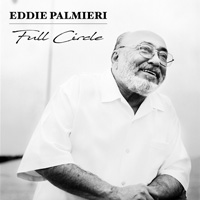
EDDIE PALMIERI
FULL CIRCLE (Uprising Music)
With the recent tragic death of Jerry Gonzalez, trumpeter, conguero and bandleader of the Fort Apache Band, we have to start totting up who's still standing among the pioneers of Latin jazz. Fortunately, some of them are on this album. Jimmy Bosch on trombone, Nicky Marrero on bongos and Nelson Gonzalez on tres are still turning it up behind the pianist and renowned moaner, Eddie Palmieri. Nicky has been with the band since the early days (1969), back then Eddie's brother Charlie showed up on the Hammond organ to torch their rendering of "Vámonos Pa'l Monte" which is reprised here in two versions to open and close the set. Other tunes like "Muñeca" from 1964, "Azucar" & "Oyelo Que Te Conviene" from 1965, and "Lindo yambu" from 1969, are still key parts of the repertoire and the band knows what to do with them. Younger players like Cuban refugee Yosvany Terry on sax, and the bassist, Luques Curtis, jump in with seasoned players from the mainstream jazz world like Gary Smulyan on baritone and Conrad Herwig on trombone. Ronnie Cuber, another baritone, like Herwig from the Metropole Orkest, appears. There's no lack of energy, the whole thing blasts off, like they got on a bandstand and tried to levitate it as they are wont to do in performance. Another bongocero, Anthony Carillo, doubles the pleasure on the percussion alongside Little Johnny Rivero on congas, switching to cowbell when he wants to press home his point. After 60 years of performing Eddie Palmieri still continues to improve.

¡ESSO! AFROJAM FUNKBEAT
JUNTOS (self)
¡Esso! Afrojam Funkbeat (I think that unwieldy soubriquet is their full name) is a pan-Latin band based in Chicago. On first listening I liked this album but couldn't figure out an angle for reviewing it. My problem stems from the fact that it doesn't have a focus, but covers many styles of music, changing from track to track, from Colombian dub to Puerto Rican hiphop, to general funk. So it comes across more like a program than a single coherent album. The cumbias appeal to me most, but they are separated by a couple of tracks I don't like: "Mi gente," the irritating spoken word "Stone Eagle," and "Meet me out" which sounds like 80s disco with African guitar. Inevitably I get frustrated and take it off about halfway through. There might be a hit single in here (perhaps "Baila" which is a credible Sidestepper knock-off), I am not sure, but the various elements in the band, self-described as Mexican, Puerto Rican, Irish, Italian, Jewish, Colombian, African American, male and female musicians, pulls it in too many directions at once.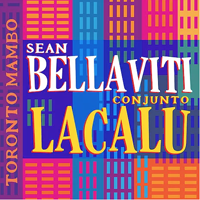
SEAN BELLAVITI & CONJUNTO LACALU
TORONTO MAMBO (Lulaworld LWR005)
No surprise that as one of the liveliest, most diverse cities in North America, Toronto is home to a very active Latin music scene. We've known about this since Jane Bunnett surfaced in gigs with the likes of Don Pullen and Paul Bley before her Spirits of Havana album put her in the spotlight in 1992. Toronto is also closer culturally, I'd wager, to New York than to Quebec. This fine new outing has a mix of locals and arrivals who keep the classic salsa of Eddie Palmieri's 70s sound deep in the groove. "Suavemente canto yo" is the most obvious nod to La Perfecta with its cool laid-back sustained slow smolder. "Micaela" has a thinly disguised cover of "Tea for Two" in the piano solo! Yes, the oldies are best. "En San Leopoldo" -- a guaguanco -- takes it down to guiro, congas, and suddenly you are listening to the gaps in the baby bass riff, with just comping piano, before the tres sparks up and then the coro and horns all blaze forth and the place is simply pulsating. Lacalu are not lacking in ambition and to prove their chops are at the top level, the great Jimmy Bosch shows up to blow on one number. A quick search of the interwebs shows some of their personnel, e.g. Alexis Baro on trumpet, are recognized stars in their own right. Many of them moonlight in multiple bands. There is one cover song, "Caballo viejo," loosely based on a Simón Díaz original. The tunes sound classic but are otherwise original compositions -- by pianist Sean Bellaviti or Cuban-born tres player Pablosky Rosales, formerly tresero with the great Cubanismo, before he decided to settle in Toronto. Cumbia, montuno, mambo and jazz all blend together for a great spicy salsa blend.
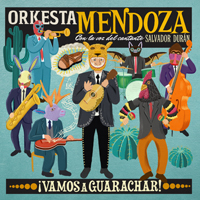
ORKESTA MENDOZA
ÁVAMOS A GUARACHAR! (Glitterbeat)
Here is a versatile outfit that can generate the electronic cumbia sound of Colombia as well as post-punk ska and even mambo. Based in Tucson, Arizona they started out as a cover band doing the lively poppy Perez Prado mambo repertoire until their rock 'n' roll instincts took over. Their leader Sergio Mendoza grew up on both sides of the Mexican border, so can reach into the Latin bag for merengue and ranchera flavors. Salvador Duran adds vocals to the moody "Misterio," in which I hear a wild whistling -- can it be a theramin? It's bombast with tongue-in-cheek, reminding me of Question Mark and the Mysterions and even the highly accomplished Dengue Fever when they delve into a retro-rock sound. Their horn man plays both trombone and clarinet, the keyboard player doubles on accordion. I can't place "Caramelos" but it reminds me of something on Latin-American kids television; however they turn it into a rave-up that recalls Paul Revere & the Raiders' "(I'm not your) Stepping stone." Clearly a great band to catch live: their versatility shines forth as the six men switch instruments and styles with panache.
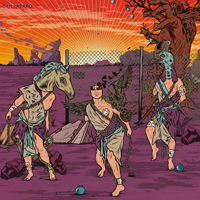
SAN LAZARO
LA DESPEDIDA (Hope Street)
My image of Australia is of a white culture a lot like Texas with big hats and a peculiar drawl, and the last thing I would expect is a storming hot salsa band. But then back in the 1990s we were blown away by Orquesta de la Luz who gave us salsa caliente from Japan. And I suppose Australia is changing as more immigrants from Latin America are making it their home. San Lazaro are Chileans and Cubans with big appetites. They have digested salsa romantica, cumbia, son, funk and psychedelic rock. The result is a wonderful, beautifully recorded and mixed cornucopia of sound delights. They start quietly with a traditional rumba, adding a tres in dialogue with the hard hands. From there it continues to raise a notch for each new selection. In "Hielo Azul" there's an acoustic guitar playing a changui style riff while the electric guitar goes into a chicha mode and big horns on echo punch through, and it works. I am sure there's a story behind their being named for the man raised from the dead, but their debut disc is alive and kicking. Or they may be named for the old Lazaro of Cuban lore, also known as Babalu Ayé, lord of pestilence. I am sure the cover art holds the clue, and it's great art, even if the Duchess sniffed at it and dismissed it as a "guy thing." There are quite a few guests on here, notably trumpet and baritone sax on "Amor de despedida (love farewell)" -- they are not credited plus the liner notes are illegible, but then the design is not up to the quality of the art, or the music.
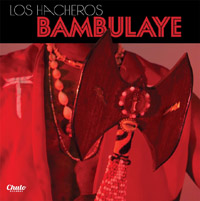
LOS HACHEROS
BAMBULAYE (Chulo/Daptone)
My mind is blown by this compact big band from Brooklyn. I have been playing this set and enjoying it in the assumption it is an old-time salsa band who have perfected their groove for years. Now I discover two things about them: It is their second release, and there's but five of them. I swear if you told me it was a 12-piece conjunto I would believe you. They have voice and coro, bongos and percussion, electric bass, flute, violin, horns and tres. How do they do it? Listen and discover. They should be called the Versatiles. Their repertoire sounds like the kind of stuff fans of charanga, salsa, and bomba thrive on: swirling riffs delivered with a live urgency. There's even a dash of danzón. They get deep in the pocket then the tres and congas fight it out. They are up on the real McCoy (Arsenio) as well as the traditional bands like Revé who still can hold a groove with the best of them. So what's their secret: multi-instrumentalists! Eddie Venegas (ex-Orquesta Broadway) plays violin and trombone and sings coro. How's that for versatile? Itai Kriss sings and plays flute and guiro (though not simultaneously); Papote Jimenez is lead singer and also plays congas. William Ash (who has backed Alfredo de la Fé) plays tumbao and baby bass; Jacob Plasse is the distinguished tresero. Check him out on "Timbalaye." On their video there is a sixth guy, playing timbales. Now I am not complaining. If they added baritone sax and piano it would be jake by me, just don't bring Otto da Fé. "Pintate (los labios, Maria)," made famous most recently by Elaides Ochoa, is one of the chestnuts they cover, check it out here.
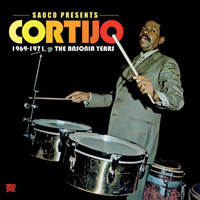
CORTIJO
THE ANSONIA YEARS 1969-71 (VampiSoul 166)
Roots, mon. What kinda roots? Bomba y plena: two of the roots of salsa. Rafael Cortijo y Su Combo took Puerto Rico by storm with their tropical dance music before the principals moved to the Big Apple. (Those who remained reformed as El Gran Combo.) Cortijo lived in the Bronx and was part of the immense wave of Latin music that transformed the real capital of the USA as Puerto Rican elements merged with Cuban, Colombian and other styles to create salsa. But Rafael fondly remembered Sunday in the park from his boyhood in San Juan, Puerto Rico, with groups of drummers jamming. So in 1970 he decided he wanted to record a stripped-down sound with fewer instruments, to focus on the drum and vocals and indeed push the drumming to the fore, instead of letting it be buried in the mix, and recreate this remembered sound. There's still a nice piano montuno part (Javier Vázquez, ex-Sonora Matancera) low in the mix, and the odd horn comes in, but the coro is riding on some Afro-Cuban percussion -- conga played by Cortijo, timbales, bongo, cowbell, guiro -- that is loud and clear. Cortijo's partner in this project was fellow percussionist, timbalero Kako (Francisco Bastar), along with two leading Puerto Rican singers, Ismael Rivera and "Chivirico" Davila. Ansonia released three albums of this style: Ritmos y Cantos Callejeros (Rhythms and Sounds of the Street), Noche de Temporal (Stormy Night), and Volume 2, between 1969 and 1971 and the best of them is presented here in 16 3-minute tracks. Interestingly the last track brings the full band in, the piano is up in the mix with bass, trumpets, sax and trombones, and it is really fine.
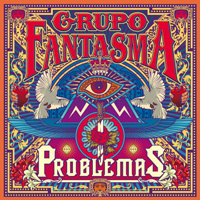
GRUPO FANTASMA
PROBLEMAS (Blue Corn)
It is hard to know where to classify this new release from Austin, Texas-based Grupo Fantasma. The singers think they are fronting a Latin band, the percussionists think they are in a Columbian salsa-cumbia band, while there are rock guitarists, jazz horn players, banda trumpet guys, and other members who have their own ideas. Check out their live performance of "Burnin' down the House" on Youtube. Es muy Rock en Espanyol! After a wobbly bit they come together with a bolero based on "Because" by Lennon & McCartney from Abbey Road. On this album, they try out the currently popular psychedelic Peruvian cumbia sound as well as bits of bomba and funk, but what they excel at is a straight-forward descarga -- "Dura y Pura" as one of their titles has it. The brass and vocals roll off the timbales and there are plenty of stop-start breaks as trombone and baritone sax get up to throw down. The Chicha style returns for a Goth-cumbia called "Otoño" -- one for the Haunted House set: Link Wray guitar meets muted trumpets and clarinets from Max Fleischer cartoons. There's quite a mix of styles on offer here, but mostly resolved into a Latin groove in some way or other, with forays into jazz and rock bleeding out.
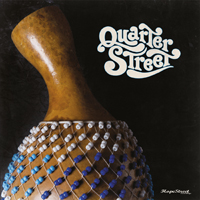
QUARTER STREET
QUARTER STREET (Hope Street Recordings)
Excellent set of salsa dura. You wouldn't know this band is from Australia, they do such a good job of channeling their influences: Willie Colon, Eddie Palmieri, Hector Lavoe, Ruben Blades. As children of Latin-American immigrants to Melbourne they grew up listening to the music of their homeland, the classic Puerto Rican/New York salsa. Sergio Botero has the requisite rough-hewn voice of a streetwise salsero. The conguero, timbales player and baby bass, who form the core of the group, are all so deep in the pocket they might be lint. They are embedded in the groove. Cuban brassista Lazaro Numa brought a bit of old Havana in his luggage, along with his trumpet. If you like the non-slick analog sound of Tico and Fania albums -- not too jazzy, just a load of groove and sparking attitude from metal being hit or skins being slapped, punctuated by crisp horns -- this is one for you. Check them out on their website, linked above, where you can download the title track for free, or on Youtube. And hey, yes, it is didgeridoo-free.
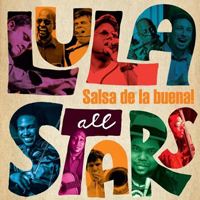
LULA ALL STARS
SALSA DE LA BUENA (Lulaworld Records)
Toronto is home to many diverse populations from across the globe. There are Italian and Portuguese suburbs, and also neighborhoods full of Trinidians and Jamaicans, Cubanos y otros Latino-Americanos. And there the Lula Lounge is home to a vibrant salsa scene. The debut CD from the 11-strong house band (catch them Saturday night) is a scorching tribute to internationalism. A top set of salsa dura is belted out by a roster of talents that have been sidemen to big names like Jimmy Bosch and Alfredo de la Fe. You might think they have a nerve calling themselves All Stars when no one has heard of them individually, but they aim to follow the Fania All Stars and, like the Spam All Stars from Florida, they are hardworking and have an energy level that doesn't quit. Fania were a New York phenomenon, and while Toronto is not that far away, it's a world apart and today's Salsa musicians have roots in Colombia, Venezuela and other parts of the New World in addition to Cuba and Puerto Rico. Another aspect of their homage to the Fania name is they are well-versed in Son and Timba as well as the hard Salsa that rides on sharp congas, guiro, punchy trombones, fierce piano montunos and a coro that keeps the vocalist in the pocket though in your mind's eye you can see them rocking back and forth off the mike. There's also timbales, tres, baby bass, sax and trumpet to round out the essential line-up. Flute and violin are sprinkled in as needed. It's all sung in Spanish so you might not notice lyrics like "Esto es Canadá" about multiculturalism, or the self-explanatory "Exceso de información."
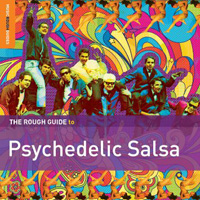
ROUGH GUIDE TO PSYCHEDELIC SALSA (RGNET 1304 CD)
We fans of Latin music (amor musicae nos) thought we had heard it all until our ears were pinned back by some really wild Latin grooves from the least likely place: Psychedelic Cumbia from Peru. The interest in different aspects of Latin music continues to grow. Now Rough Guide have turned over the reins to DJ Bongohead to compile this Psychedelic Salsa compilation. Some of that Peruvian madness, which sounds like salsa or cumbia with added Farfisa and guitars playing through a Roland Space Echo is included. The album kicks off with the pioneer Larry Harlow in a powerful track with Grupo Fantasma, "Naci de la rumba y guaguanco." It starts with an almost reverential prescience, invoking some Orishas, moves to a processional, then adds contrapuntal horns to groove up a storm. There are what I would call "straight" tracks, like old standby Fruko, "Londres" by Nelson y sus Estrellas or "Dub y Guaguanco" by Quantic performed by Flowering Inferno from the 2010 Dog with a Rope album. Piano montuno, boss horns and fine timbales overflow the latter. I believe Fruko is from Barranquilla and Nelson is from Cali; I think Rough Guide could compile an excellent Salsa goes to Colombia with little effort. The late-60s early-70s tracks feature fuzz-tone guitars and electric keyboards which really distinguish them from the more stately tres and piano of their elders. The modern bands included, in addition to Quantic (who also lives in Colombia), are the superb Bio Ritmo, San Lázaro, Bacalao Men and others who have cast a retrospective glance on the early psychedelic Latin acts and updated the sound for the modern dance floor. Just last month I was hyping the Alfredo de la Fé collaboration with Orchestra Rytmo Africa-Cubana as "Essential," and right on cue there's a cut included here (to validate my enthusiasm): "Vamos pa' Dakar."
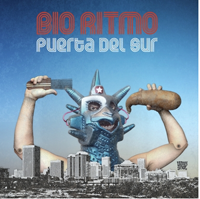
BIO RITMO
PUERTA DEL SUR (Vampisoul Vampi CD159)
It's not often you read polemical liner-notes. Bands often have a statement of their musical philosophy, but Bio Ritmo feel they are fighting a war against conservatism and formulaic music in what they call "The Battle for Interesting Salsa." It's true that many salsa bands repeat patterns and riffs, which ultimately killed off the old-school Nuyorican salsa in the 1980s. Nevertheless Bio Ritmo's latest set is familiar danceable salsa and has interesting changes and some great musical ideas thrown in. Though based in Virginia, USA, they have a huge fan base in Colombia where their eclecticism is appreciated. "Perdido" starts out as a danzon, even sounding like there's an old phonograph in there somewhere, but it gains momentum gradually evolving into a son montuno, then they throw in 8 bars of Colombian traditional music, with flutes, then jump back into their groove which has become a full-on descarga. Guests jump in on bongos, trombone and baritone sax. Their arranger and producer, keyboard-player Marlysse Simmons also adds sound effects, woops, and birds on reverb on their cover of a track by Colombia's Los Univox, "Pájaro pio pio" which shows them just having fun, but with serious chops. They also demonstrate their versatility on the last track, "Codeina," which has a string section and is straight outta the souk, an unusual development but not out of place on this great little musical trip.
JOHN SANTOS SEXTET
FILOSOFIA CARIBENA, VOL 2 (Machete Records M211)
Now here is a class act. You may not know John Santos but when someone can bring in a "Who's Who" of the Latin scene ("Maraca" on flute, Jerry Gonzalez on flugelhorn, Steve Turre on trombone, Orestes Vilató on timbales, etc) to guest star on their disc, you know they have some clout. Santos is a talented versatile percussionist as well as a deep scholar of his musical heritage. Thus it's natural he would explore Afro-Latino roots music in his groups and pay tribute to that rich legacy. The sobriquet of Latin Jazz covers many modes and here the various ancestors are given voice in Spanish, Yoruba, Brikamo, Ki-Kongo, Kreyol, English and other tongues. The styles vary too, encompassing jazz-waltz, rumba, bomba, merengue, and something called "crooked chá"! In addition to the stellar guest roster the recording includes some very talented musicians such as Marco Diaz on trumpet, Melecio Magdaluyo on tenor sax (who often reminds of Coltrane) and Santos himself on every imaginable percussion instrument. Among the deeply "rootical" tracks, "Bronze y Oro" stands out: it is a hymn to Oshún, Yoruba goddess associated with water and protector of women. "Maraca" (Orlando Valle) gets to go wild on flute with this against a ton of percussion and call and response chorus to play off.
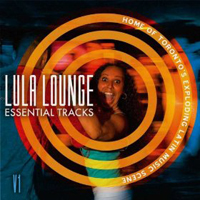
LULA LOUNGE
ESSENTIAL TRACKS VOL 1 (LLR2-1201)
I wouldn't go so far to call this essential, but it is a really fine set of salsa & other Cuban music from Toronto which has momentum. Not surprisingly there's a big expat community in Canada and the Lula Lounge is the rendezvous for those into Latin sounds. The first time I played it I had to stop it was so high energy, but then I discovered at certain times of day it's the right mood and not overwhelming if you don't have it up too loud! In fact it's sequenced well so it does wind down from time to time. There are lots of familiar riffs on here, though no familiar artists. Hilario Durán and Jane Bunnett are the only ones I have heard of. "Oye rumberito" is a classic of the son genre, though according to the credits it was written by the performers, the Puentes Brothers; it sure sounds familiar. Hilario Durán, a pianist lauded by Chucho Valdes as one of the greats, and his ensemble render a great take on "Cuando me toca a mi," a traditional guaracha recorded previously by Septeto Habanero. Saxophonist Bunnett shows up with "Ron con ron," which she co-wrote with Tata Guines. The liner notes dont give credits to the performers so the many great sidemen (and/or ladies) will have to go unsung. If this is from her Cuban Odyssey album then it's Papi Oviedo on tres, but i don't know who's playing the timbales and I am guessing it's Pancho Quinto on the congas. There's a kind of deadpan rap number "Que Equivocao" by Telmary which I didn't jump to take off immediately, so it was somewhat engaging. The whole project is worth hearing.
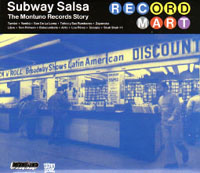
SUBWAY SALSA: THE MONTUNO RECORDS STORY (Vampi Soul)
I am always on the lookout for interesting new salsa albums to get me moving, but I usually end up with the oldies. Lately I have been digging Alfredo Valdes Jr album's A Cataño, which has been on my iTunes for 18 months and comes up frequently because it's filed under "A." Now checking I see it's a Lassissi album with Melcochita and other great singers on here. So I made sure to find out who was on Subway Salsa and was pleased to discover many old friends on here: Manny Oquendo, Son de la Loma, Zaperoko & Totico. Tambó reminds me of Ricky Ricardo's orchestra -- now that's old school! But we open with their smoking version of the Ignacio Piñeiro tune "Coco mai mai," which has rarely been done better. We move from Yambú to Zaperoco, for their smash hit "No quedó ni el gato," with its lovely interplay between tres and trombone -- and the hits keep coming. The story of this album is pretty fabulous also. Robert, my old boss at Round World Music, used to buy stock at this record store in the 42nd Street/Times Square subway station in New York called Record Mart. It's an underground booth stocked with Latin & Caribbean music; people would hang out there while waiting for trains and check out the sounds from their sound system. A great idea! (Sun Ra's Arkestra was playing Koncepts Kultural Gallery in Oakland -- before they were forced out of business by Yoshi's -- when a freight train rumbled past and they immediately swung into "Take the A Train"!)
As well as distributing some hard-to-find stuff, Record Mart also had a label, called appropriately Montuno Records, and their taste is spot on. It's not all straight-up salsa, instead it's something like the Anti-Fania label, in fact there's some son on here (the outstanding "Mariana" by Son de la Loma) and then, to completely surprise you, merengue, konpa and zouk too. It's a great move when suddenly you get Scorpio or Skah Shah thrown down in the middle of a salsa set. Something a DJ in a subway station could pull off with aplomb. Plus there's two discs so there's two and a half hours, with quite a few songs from most of the contributors, so it's a subterranean tour of the music as well as a concise "best of" featuring Zaperoco, Manny Oquendo, Tambó, Yambú, and others. The CD has a bonus track, a pure rumba, not on the 3LP set. Waiting for your train was never this exciting.
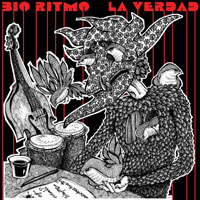
BIO RITMO
LA VERDAD (Electric Cowbell from Fatbeats)
This is a salsa band with a long track record. You can sample their album here. That's a 45 release from last year called "Dina's Mambo" and it gives you some sense of their proficiency. The band hails from Richmond, Virginia, but don't let that discourage you. Originally two percussionists from Puerto Rico who met in art school got together with a punk drummer to jam. Subsequently they added other musicians from jazz, rock and even reggae backgrounds to produce an old-school salsa band and have now been playing together for two decades. Their style is influenced by Sonora Ponceña, Roberto Roena and Bobby Valentin but they also cite The Who, the Buzzcocks and Roots Radics as having an impact on their sound. The producer has worked with Spanish Harlem Orchestra so elicited a "street sound" from them. In addition to the driving clavé and fine soloists (trombone, trumpets, etc) there's a Farfisa organ tinkling away that adds a 70s retro touch, and a Moog pops up on the outtro to "Caravana del Vejicante"! The Remix of "Dina's Mambo" shows some of the dubbier side of the band with what sounds like a scratched record but is probably just the guiro or a sample. The Farfisa noodles pleasantly while the trombone and baritone sax have a dialogue. A good ending to the set.
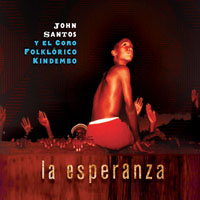
JOHN SANTOS Y EL CORO FOLKLORICO KINDEMBO
LA ESPERANZA (Machete M209)
I have high expectations from John Santos and he does not disappoint on this latest venture. One of the most talented bongoceros in America, Santos is often to be seen jumping on stage and driving visiting musicians to excellence. This latest outing is brilliant: it flows easily from an invocation to Eleguá to an elegy for some departed pioneers of the true rumba. Tres enters (the great Nelson Gonzalez), then trombone (Jimmy Bosch, Raul Navarrette!!), then violin, but essentially it is a spare sound with the focus on the percussion: bata, cajon, chekere, and so forth. About five minutes in it pushes up a notch and swings from elegy to celebration. As you can hear from the calibre of the sidemen on this project Santos is not messing about: this is top of the line and he has called on about 40 friends to participate, many of whom lead their own groups. Two more traditional pieces, hymns to Shangó and Obatalá anchor the set, but they are interspersed with original compositions that feature more than drumming: a Puerto Rican bomba adds "Cubist" piano (Elio Villafranca) and bass for "Recuerdo"; after the austerity regime of Obatalá another homage, this time to Jimmy Bosch who is featured on trombone, beefs up the band with bass and tres. Santos's aim is to promote peace and understanding through music, and by George he can do it!
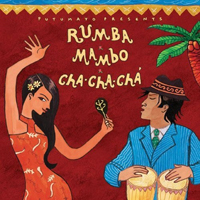
PUTUMAYO PRESENTS RUMBA MAMBO CHA CHA CHA! (P308-SL)
As usual a short (42mins) but sweet set from Putumayo, including Fruko y Sus Tesos and an array of lesser-known artists from Latin America & beyond to help us polish our Latin. "Difficile est proprié communia dicere," as Horace would say. But I will try to be as un-hackneyed as possible in selling you on this disc. Right from the start, "Guajira y chachacha" by Conjunto Massalia guides us smoothly onto the dancefloor with the assurance of a Len Goodman or Carrie Ann Inaba. It used to be that there was a divide between youngsters hearing this music and their parents who had grown up learning the steps from Arthur Murray and actually knew how to ballroom dance. But with the popularity of TV shows like "Dancing with the Stars" & "Bailando por un Sueno," the glamour and excitement has returned to Latin dance. Even a dorky lump like Sara Palin's spawn can learn how to do it, so it can't be that complicated! (By the way, don't name your kid after a British seaport until you research its slang meaning.) Yet the TV versions don't even have live bands of the calibre of the artists on here. This Putumayo set has traditional pieces complete with the expected timbales fills, coros and trumpet solos, but they still take flight. Tradicuba is a traditional group from Cuba, as their name suggests, and they bounce along on a sprightly tres performance with a clockwork-sounding guiro in the background. Fruko covers the famous "Mambo no 5" complete with the startled Perez-trademark "eeeooogh!" From stateside we get Orquesta La Moderna Tradicion who play danzón. If you recall Maria Navarro's 1991 Mexican film called Danzón, you will remember how sexy this dance can be. From Chicago come Angel Meléndez & the 911 Mambo Orchestra who turn in the chestnut or rather cherry-blossom perennial "Cereza Rosa," another Perez Prado classic, with excellent brass solos. Asere, from Havana, play a tribute to Henry Fiol called "Oriente," that is simply lovely. (Wow, I got through the whole review without one nasty crack about the cover!) The album winds down with a splendid cover of Jimmy Bosch's "Pa' mantener tradición" by Tres Muchachos y Companeros, who hail from Russia.
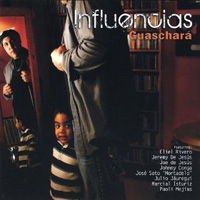
GUASCHARA
INFLUENCIAS (Salsaneo Records CD0822)
There are no big-name performers on here, however it is a very hip and happening set of lively salsa. Steve Guasch grew up listening to his dad's collection of Fania albums and always wanted to be a conguero like his hero Ray Barretto. For this album, recorded in Venezuela & Washington, he has assembled some top-notch young players to recreate the sound of the 70s on mostly original compositions. Lead singer is a Puerto Rican sonero called Joe de Jesus. Julio Jauregui, a young pianist, composed the title track and two others, and contributes some fine montuno grounding to the orchestra. My favourite cut is "Chango ta veni" which has all the immediacy of the numerous other versions of this classic by Celia Cruz, El Gran Combo, Machito, Sierra Maestra, etc. The two bassists, Jeff Norwood and "Mortadella" are exceptional and the smouldering triple trombones add the punch.
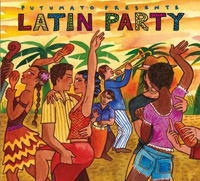
LATIN PARTY (Putumayo)
For me, a Latin party implies Salsa with some African covers and Cuban gems thrown in, but Putumayo has widened the scope to include ska, cumbia, and other tropical sounds. This is their latest entry in a series that boasts the excellent Salsa around the World, which has sold 350,000 copies, according to their publicity, and the almost-as-popular Afro-Latin Party and Latin Lounge. It's easy to heat up a dance floor with the hits of Los Van Van, Maraca or Cubanismo, but this set comes from much-less famous artists. The only big name here is Fruko, one of the diehards of the Colombian scene, and there are a couple of my recent favourites: Quantic Soul Orchestra and Ska Cubano. This album will definitely please party-givers as well as party-goers: it's instantly enjoyable (though I wish they gave you the option of a plain white cover instead of the wretched art that they sport). New York-based Yerba Buena turn it up for "Electric Boogaloo" featuring Cuban-born singer Xiomara Laugart. There's a good Afrobeat groove in there. I am beginning to think "Yiri Yiri Bon" has being covered too many times. Ricardo Lemvo does it in concert, and here Ska Cubano gives it their unique treatment. It is so closely identified with Beny More, I almost wish they left it alone, but the "Prince Buster" touch makes you feel good regardless. We return to the nostalgic sweaty glow of boogaloo for Quantic Soul Orchestra's "Regi Bugalu" which matches Regi Boyce on trumpet with Regi Johnson on sax. Ozomatli and Luis Mangual appear too, to guarantee a good time.
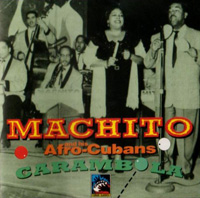
MACHITO & HIS AFRO-CUBANS
CARAMBOLA (Tumbao24)
As it's been a quiet month for new releases, I have been listening to some old favourites. Tumbao is a wonderful Spanish label and their entire line is worth knowing. Machito was the most popular Cuban bandleader in New York in the 1940s. His sister Graciela sang and his partner Mario Bauza, trumpeter, wrote the charts which were emulated by other jazz groups as well as Latin dance bands. There are the hits "Blen, blen, blen" and "Mani picao." They do "Zambia" and "Tanga" twice (on different nights), but there are several other tunes I would love to hear multiple takes of, including Graciela singing "Si, si, No, no" -- in short, it's fabulous to hear these songs performed live. I swear in "Zambia," Machito is actually yelling "Cambiar," i.e. Change. The band includes Zoot Sims on tenor sax on two cuts, one of which sadly fades out. Brew Moore also pops in for one number, showing the fluid interplay of New York jazz men with the Latin bands of the period. This gives a be-bop edge to the Afro-Cuban groove. Solid.
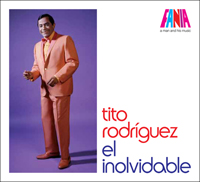
TITO RODRIGUEZ
EL INOLVIDABLE (Fania)
Alongside the other Tito (Puente, his rival) & behind Perez Prado, Tito Rodriguez & his orchestra took New York by storm in the 1950s. By 1970, after his return to Puerto Rico, he had his own television show. Rodriguez was perhaps the squarest of the big band Latin front men but he was a mainstream smash. It's exactly the kind of smooth sophisticated music your parents would put on when they dressed up and had friends over for cocktails, & since we all turn into our parents in the end, here's your chance to get a jump on it. This two-disc set includes 30 tracks and features, among others, the great Israel "Don't-call-me-Purina" Cachao on bass, and René Hernández on piano. The sound has been remastered so the bongo is crisp and there is a slight big-room echo to remind you of the Palladium where his success occurred. Some of the cuts from Live at the Palladium are included: "Yambu," "El Sabio," and his big hit "Mama Guela." There are other gems on here, the swinging "Bilongo," which is guaranteed to get you moving. The second disc kicks off with the steaming "Descarga Cachao," which was remade for the movie Como su ritmo no hay dos. Rodriguez is a singer, but don't forget he had the cream of New York backing him and, looking back, there are some exceptional moments on these tracks. I'm talking Nelson Riddle level arrangements, but with real rather than ersatz Latin percussion. Rodriguez discovered Cheo Feliciano and gave many others their first break. He reaches for the stars on "No Me Beses Más" but, inevitably, falls short of Beny Moré. He died in 1973. (Note these are not reissues of the 2 INOLVIDABLE CDs of a few years ago, but a fresh compilation, remastered.)
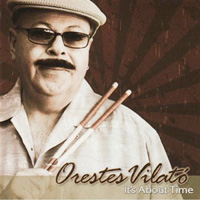
ORESTES VILATO
IT'S ABOUT TIME (SELECT-O-HITS RAFCA 01)
Orestes Vilató has long been a legendary sideman, playing timbales in many of the great Latin sessions (Fania All Stars, Ray Barretto, Cachao). It was Vilató's work on the classic pre-salsa ACID album of Barretto that led to Carlos Santana seeking him out way back when. After being in the limelight and playing countless shows and tours (-- because Bill Graham managed Santana they seemed to open for every big rock tour in the Bay Area throughout the 70s and 80s), Vilató joined the less-visible John Santos Quintet and got to play music closer to his heart. Last year's PERSPECTIVA FRAGMENTADA, one of the best Latin Jazz albums of recent memory, teamed him up with some of his old cohorts such as Johnny "Dandy" Rodriguez who played bongos alongside Orestes in Tipica 73 & other bands of the New York heyday. That session probably prompted him to decide to break away from the comfort of Santos' quintet and, for the first time, put out his own album. Here he assembles la crema of New York and L.A.'s Latin scene for a relaxed outing into some classics. It's reminiscent of the Cachao big band sessions. Alex Cuba's brother, Adonis Puentes, sings lead. He was recently on tour with Maraca. Rebeca Mauleon produced the album but limits herself to one track on piano, otherwise piano is by Alberto Salas, who with bassist Carlitos Puerto is the pulsing heart of Cuba L.A. "Como el macao, candela," a tune by Duo Los Compadres kicks things off and features Dandy Rodríguez. A non-traditional arrangement of El Guayabero's classic son "Como baila Marieta" features Orestes on bongo, and there's sprightly tres from Ramón Stagnara, as well as a soprano sax solo by Justo Almaria reminiscent of the Paquito d'Rivera contributions to Cachao's epic descargas. Producer Rebecca Mauleon opts for just one performance, and a fine one it is too: She takes on "La Mulata rumbera," and starts out in the style of Peruchín with deft ivory tickling until the midpoint when the timbales start to simmer and she goes into a vamp and it seems as if Orestes has eight hands and arms flailing away. Then Justo steps up on soprano to duke it out with the piano. The Virgin of Charity is up next. Well, not really -- it's "Olvido," a bolero by Miguel Matamoros, updated to a guaracha. La Virgen de la Caridad is the patron saint of the island of Cuba and this song carries all of Orestes' childhood memories and longings for that island in its heart. There's tres, a great New York style horn chorus, and high caloric cooking of the non-culinary type. You can tell this was a lot of fun for the musicians and it stays hot for a memorial jam in memory of Ray Barretto. But this is not merely a nostalgia-fest for old time Latin music fans, there are some serious modern touches & a great spacey jazz piece to end it, called "Despesdida." This has some Congolese ritual chants (!) in a pure Afro-Cuban frame, but is loose and open-ended. I could listen to a whole album like this, but the three-minute fragment presented here is a really nice way to wind up the set.
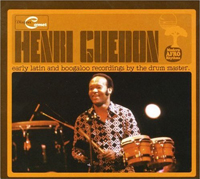
HENRI GUEDON
EARLY LATIN AND BOOGALOO RECORDING BY THE DRUM MASTER (Disques Comet CD036)
Henri Guédon is indeed a drum master, as the title suggests. If you haven't heard of him that's because he made his career in Paris. Originally from the French West Indians he eschewed the classic Cuban sounds of the mambo and cha cha that were popular in Paris in the 1960s and modernized their concept of Latin music with guaguanco, guajira, boogaloo and descargas. He also adapted Antillean rhythms from his homeland and continued having hits throughout the 1970s. Inspired by Tito Puente, Ray Barretto and Mongo Santamaria he put himself and his drumkit centre stage and played louder that the French were used to. His music even got back to New York where his album COSMOZOUK PERCUSSION was a hit in the mid-70s. He mostly recorded with unknown (to me) Paris musicians but Don Gonzalo, flautist and tenor sax who played with Grand Kalle, is here. Guédon got to record and tour with some of his heros including Barry Rogers the trombonist and percussionist Sabu Martinez. One of his big hits, included here, is called "Faut pas pousser"; he recorded it in New York with the cream of the Fania and Vaya records stable, including violinist Alfredo de la Fe, timbalero Nicky Marrero, & pianist Sonny Bravo. In a track like "Brujeria" his group captures the smoking bluesy Fania sound pretty accurately while the lyrics are an Afro-Cuban chant to Yemaya, Chango, Obatala, etc. "Los Antillanos de Paris" features a scorched-earth timbales solo by someone named Jacky, a member of Guédon's Parisian All Stars. At the heart of the album there's a percussive jam, "Machapia," which is described as a Bon Dié Couli, which I think is Haitian. This is a class act and will please fans of Latin jazz and those who like their descargas with an Afro-Cubist bent.
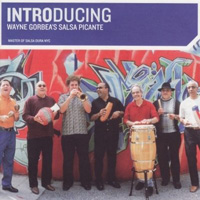
INTRODUCING
WAYNE GORBEA'S SALSA PICANTE (World Music Network INTRO108CD)
It's odd that Wayne Gorbea needs an introduction, but this British label has a harder task of bringing the great Latin music of New York to the rhythmically challenged Anglo-Saxuals than labels like Fania (NYC), SAR (Miami), Corason (Mexico), Ryco & P-Vine (Japan) or Tumbao (Spain). Now I am not an Anglo-Saxophobe (I was raised among them) but it's hard not to get in the groove when the Bronx salsa dura of Wayne Gorbea kicks in. Today Gorbea is an old fart (like me and many of my friends). Of Puerto Rican heritage, he was already hitting hard with Salsa Boricua in NYC in his twenties. In the 80s he was with the seminal Conjunto Libre and then on his own for years, promoting true salsa (then known as salsa brava) and successfully ignoring the synth-filled pitfalls of salsa romantica and the drum-machine trickery of reggaeton and hippy hoppy. Now that 'bone legend Jimmy Bosch and the Spanish Harlem Orchestra have made salsa dura a club favourite once again, it's time to take stock of Gorbea and what he has achieved. This "best of" retrospective drops back to the 80s for one or two choice cuts, but hits heavily on the 2006 album PRAKATUN for a slice of the happening sound of Gorbea's piano and assorted sidemen on angled saxophones, tripling trumpets and trumping trombones. Cleanly recorded, the groove is cooked by timbales, bongo, guiro, and conga, while brassy voices drop in to say Áechale! If you are a fan of Willie Colon and the suddenly popular Hector Lavoe sound (despite an apparently atrocious recent biopic which no one saw), then you will bask in the classics on here, like "Dejame un lado," from 1978. "Sigo pa'lante" from the 1986 album SIGAN BAILANDO also jumps up, rattles its cowbell and shakes its sweaty beads unremittingly. Yet there is a solid continuity with the bluesy sound of this and the recent material. Gorbea doesn't get better: he was already great. A class act. The disc ends with two live tracks from 2004, which are almost gratuitous as the whole thing smokes!
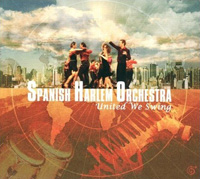
SPANISH HARLEM ORCHESTRA
UNITED WE SWING (Six Degrees 657036 1134-2)
The Spanish Harlem Orchestra has settled into a comfortable middle age spread with brilliantly recreated big band swinging cha chas that evoke the Tito era: the Palladium days of Puente and Rodriguez. Most of the music is written by pianist/arranger Oscar Hernández (who played with Ray Barretto, Machito, Puente, Celia Cruz, Ruben Blades, etc) & exploits the full colours of his large horn section, tight percussion and warm coro. Jimmy Bosch on trombone is the most famous member, but he is just one of many brass guys. There are three trumpets, two trombones and baritone sax. It's very danceable and covers all the styles from danzon to rumba to plena. If you like Africando then this is for you, as it is the sound they are also trying to replicate. It's not a snoozy nostalgia-fest by any means: "Ahora si!" catches fire, but there's nothing unexpected on here. You could drop "Salsa pa'l bailador" into a set of salsa and it would hold its own against all comers from Fania All Stars to Cubanismo to Maraca. A surprise twist comes at the end with the appearance of Nuevayorquino Paul Simon who delivers his "Late in the evening." I suppose he is now one of the elders of the American music scene. I don't know quite how that happened but he has a solid track record and has survived intact to reap the rewards of longevity. And, as an old pasticheur himself, it would be great to hear him develop some new ideas for the sound of this salsa band.
FANIA RECORDS
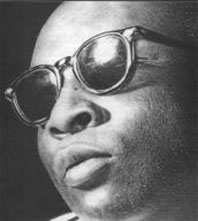
The roots of salsa are generally traced back to Arsenio Rodríguez [left], tres player and composer from the sugar cane fields of Eastern Cuba where his grandfather had been brought as a slave from the Congo. Blinded at age 7, Arsenio became an adept musician and moved to Havana looking for work. He started a group and dissolved it to join another, but was kicked out due to personality conflicts. At this point, in 1937, he already had a reputation as a song writer and so it was that Miguelito Valdés recorded a handful of his songs with Orquesta Casino de la Playa. Arsenio was invited to sit in and play a tres solo on "Sa va el caramelo," which soon became a huge hit. His experience with this big band gave him an idea. The bigger bands generally played danzon, a style of music more akin to classical music and intended for ballroom dancing. The smaller sextets and septets played faster, rootsier, guitar-based music called the son and guaguancó. Arsenio beefed up the sextet, doubling the trumpet, adding a piano and also a conga, which had been used for religious music, while the smaller bongo was used for percussion in the sextet and septet. In the middle of the son they would kick out the jambs and have a round of throwing down. This part became known as the montuno, and livened up the sound the way that the seben would affected Congolese music in the 70s. Arsenio formed his first conjunto and had a series of hits, beginning in 1940. He recorded 144 sides for the Victor label, many of which were issued on 78 RPM discs. One of his hits "Dame un besito (give me a kiss)" was in a new style of son montuno he called a diablo. Arsenio credited this to Congolese folklore which he avidly studied as part of his heritage. This song popularised a new dance which became known as the mambo. By the time Arsenio moved to New York, Miguelito Valdés had preceded him and there were several big bands, notably Machito's & Tito Puente's, making a scene playing mambo, while Desi Arnaz popularized Cuban music to the white audience (copping Valdés's hit "Babalu" in the process). Arsenio continued to experiment, adding saxophones to his line-up, but failed to have the impact in America he had had in Cuba. Meanwhile a new style of music, harder and more swinging, which incorporated jazz, funk, and new rhythms such as boogaloo came along and was recorded by band-leader Johnny Pacheco (an immigrant from la Republica Dominicana) and pianist Eddie Palmieri, among others. Arsenio suffered the true fate of the avant-garde, dying in obscurity in 1970 just as salsa was beginning to take hold.
Small labels such as Alegre, Tico, Inca, Vaya, and Fania sprang up in New York to record the new wave of immigrants creating what was now called salsa (a piquant blend of wholesome ingredients). After its recent sale to Emusica Records, the Fania label has reappeared with a new look, that is to say the old look buffed up a bit (elegantly framed reproductions of the battered LP covers!), with expanded liner notes and remastered sound from the original tapes. This seems like a good point to take stock. They have started their reissue series with 30 titles. Though the albums are generally less than 40 minutes long, this can be a good thing: just enough to hold your interest without getting redundant and you can jump back and forth between albums and styles.
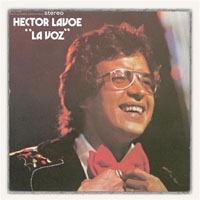
HECTOR LAVOE
LA VOZ (Fania records 773 130 008-2)
Buying music CDs is an expensive habit, but you have to think of it like a utility bill: it's as necessary as light and gas and when it's light and a gas simultaneously, it's worth every penny. Hector Lavoe, known as "la Voz" (the voice) is the real deal, and if you are into salsa you undoubtedly have it already, but the remastered Fania album is worth plonking down your folding green for. This is one of Fania Records' greatest achievements. Now, remastered and with liner notes, we get to bask in its sonic glories all over again. Lavoe had a distinctive rather high and nasal voice, and was famous for ad libbing witty & risqué lyrics. As a teenager he sang with a band in his native Ponce, Puerto Rico but at 17 dropped out of school and moved to New York to "make a lot of money." Fania co-founder Johnny Pacheco heard him and brought him along to sing lead on Willie Colon's debut album for the label, EL MALO. The band was originally formed by Willie Colon, but he decided to disband it in 1974. Lavoe was upset and asked everyone (including Colon) to stay together to be his backing band and this is the result. There's the characteristic twin trombone lead, plus two trumpets, played by Hector Zarzuela and Ray Maldonado. Timbalero Nicky Marrero is on hand and there's the great rhythm section of Milton Cardona on conga, Jose Mangual Jr on bongo and Eddie "Guagua" Rivera on bass. Then there's Marcolino Dimond on piano (a sad waste of talent certainly with his early OD, but here at his peak), tearing up the ivories on the Chappotin classic "Rompe saraguey" and trinkling tastefully on the ballad "Un amor de la calle." It's a relaxed in-the-pocket (en la tronera?) groove like the best salsa, but not without tension: this is clearly a band that gigged together for 7 years and probably played some of this material regularly. Dimond is one of my favourite salsa pianists though I only have two other things by him (Angel Canales' MAS SABOR [1977] and BEETHOVEN's V, also from 1975). His solo on "Rome saraguey" recalls that on Beethoven's Fifth: he pushes it but manages to show restraint, there are flashes of showiness when it seems as though he has an extra pair of hands throwing cadences at the glissando, but then he pauses on the edge and listens to the rock-solid conga, guiro, bass and timbales, before trying something else. It's 2 and a half minutes of vertiginous joy. The album ends with what is still a heavily requested song: Lavoe's cover of Johnny Pacheco's "Mi gente (my people)", a true pan-Latin anthem. This album is only half an hour long, which is a problem with these FANIA reissues: they manage to whet your appetite but in the CD age we want at least an hour of music. Still you can change the mood, or spend more money and get more of it.
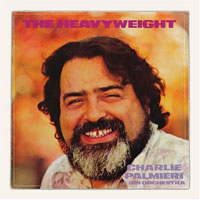
CHARLIE PALMIERI
THE HEAVYWEIGHT (Fania 773130 065-2)
The latest batch of remastered Fania reissues includes Roberto Roena, Ray Barretto and two from Charlie Palmieri. Palmieri's THE HEAVYWEIGHT (originally on the Alegre label in 1978) has six long jams aimed at the Latin dancefloor. Perhaps the title also puns on his own corpulence. Charlie Palmieri loved to eat and the opening cut is a paean to fish and rice, though probably he went more for ribs and chops, a fondness that gave him a weak heart and led to his early demise in 1988. Panamanian Meñique and Julito Villot share the lead vocals, but it's when they stop singing we get to hear the piano wizardry of the elder Palmieri, usually preceded by the introductory phrase: "El gigante de las blancas y las negras!" On "Chaleco" there is a great cowbell propulsion and the smoky voice of Meñique balanced by the smooth chorus: "Mucho blah blah blah por aquí, mucho blah blah blah por ayá!" Here we also hear a touch of melodica which was clearly a new toy of Palmieri at the time. Side A (metaphorically speaking) closes with a scorcher, "Tiene sabor," which is credited to Rolando Valdez. I have another version of it by Abelardo Barroso where it is a cha-cha-cha, credited to Ignacio Piñeiro. This version is steamier with bongos, conga and tres taking a bite out of the dancefloor for a seven-minute workout. "Melodica in F" by Anton Rubenstein is a novelty danzon featuring melodica, which doesn't sound that weird in actuality. It starts sleepily with a quote from "We'll meet again," a World War Two chestnut. I don't know if it was multitracked or whether someone else played piano on here but it builds for a couple of minutes (I almost said minuets) till Charlie gets confidence to start throwing dissonant melodica chords at the wall of horns (two trumpets, trombone and sax), then he leaps to the blancas y negras for some grandstanding. For the outro he returns to the car-horn twiddling of the melodica and even finds "El manicero" in there.
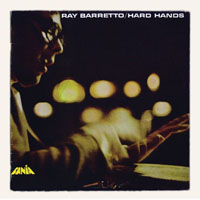
RAY BARRETTO
HARD HANDS (Fania 773 130 091-2)
Boogaloo, funk and soul are the main components of this Latin jam session, the sequel to ACID, released in 1968. Barretto had come up as a conguero, working for Tito Puente and others but went solo after he had a hit with "El Watusi." Perhaps because of the strong R&B component in his music, the vocals are in English, which obviously would give it a broader appeal in New York's radio airwaves of the time, particularly among the African-American community. The title cut refers to the thundering power of Ray's conga-playing, and is followed by "Abidjan," a tribute to the Ivorian capital. Bobby Valentin lays down a pattern on the bass and the great Orestes Vilato (still ripping it up today with John Santos' Machete Ensemble) shows why every timbales player in the world studied him. The tune starts as a mozambique, segues into a mambo during Vilato's solo and them ends as a bembé, a West African rhythm. Vilato also gets to showboat during "Son con cuero," where the vocalist exclaims, "Vilato has outdone himself! He's knocked it out to China!" The move is from son montuno to up-tempo guaracha during "Mi ritmo te llama." The vocals are by Adalberto Santiago and corista Jimmy Sabater yells "Salsa!" which, the excellent new liner notes by Bobby Sanabria suggest, is the first time the word was used in this context. Also present, Louis Crúz, a superb pianist who flits between jazz and soul riffs, and contributed arrangements to the session.
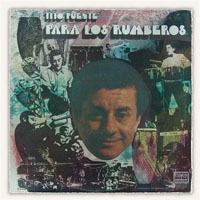
TITO PUENTE
PARA LOS RUMBEROS (FANIA 773 130 028-2) 36 minutes
After the Second World War, Tito Puente held sway at the Palladium in New York while Birdland rocked to Machito, and Tito Rodríguez gave both a run for their money. But by the late sixties younger bands were drawing the crowds and Puente had to reinvent himself beyond the "Mambo King" image as former members of his band, Ray Barreto, Johnny Pacheco and Charlie Palmieri were the new dominant sound. It wasn't Puente that initiated the change however, but the young San Franciscan psychedelic guitarist Carlos Santana who scored hits with Peter Green's "Black Magic Woman," and Tito Puente's 1962 "Oye como va," which became an anthem of the Hippie generation. Young rock fans in New York started going to check out Puente and he responded by growing an afro, wearing platform boots and wide-lapels to go with his already established shtick as a showman behind his timbales. This album marks the transition to the second phase of Puente's career and his sudden fame as a pop icon. The music is grounded in his old style (he even redoes some old favourites) but it has a contemporary sheen with lotsa percussion, a big horn line like a sputtering fuse heading for the dynamite, and solid rhythm from Izzy Feliu on an Ampeg electric baby bass and Charlie Palmieri on piano and organ. Lead vocals are by Menique Barcasnegras (of whom I had never heard); Yayo el Indio sings coro. The arrangements are superb and the mambos and cha-chas never sounded so sleek, all of them pivoting around the timbalero Tito, teetering on his platform toes.
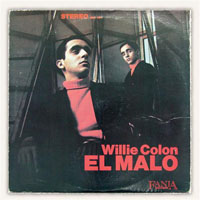
WILLIE COLON
EL MALO (FANIA 773 130 029-2) 30 minutes
Willie Colón is a trombonist who had the good fortune to hire Hector Lavoe and Ruben Blades as vocalists. Lavoe is on this album and again Yayo el Indio sings coro. He also has Dwight Brewster on piano, who is a jazz artist with considerable chops. In addition to a pan-Latin blend of bomba and plena (quite unusual at the time), Colón also introduced funk and disco into the mix. This album marks the beginning of the boogaloo craze in Latin music. It didn't seem odd to Colón, being raised in New York, to take his parents' music and add the R&B and do-wop and jazz he had also heard growing up. Lavoe had the perfect nasal delivery associated with traditional Cuban soneros, but coming from Puerto Rico to New York he had an urbane grit also. As if that wasn't enough, the band also included Eddie "Gua Gua" Rivera, solid as a rock on bass, and Nicky Marrero on timbales (later of Fania's All-star band). Though they were just teenagers, Fania signed them and this disc was their debut bomber. While a set of nothing but boogaloo would be hard to take, they mix it up with Latin soul, salsa and other styles. Older fans dismissed their stuttering mambos and weird melanges of rhythms, but the unknown youngsters had confidence and eased from son montunos to boogaloos exuding an infectious sense of fun.
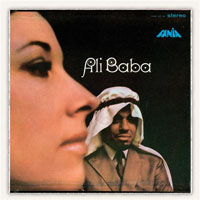
LOUIE RAMIREZ
ALI BABA (FANIA 773 130 017-2) 32 mins
Despite the appalling patter spattered throughout the record ("I hope you will buy this record. I need the bread to buy a camel: you see I haven't had a hump in a month..."), it's a favourite. The first song riffs off "Love potion number 9" with stupid lyrics but great horns. The third track, "I dig rhythm," takes off from "Land of 1000 dances," and ends with the vocalists mimicking the bass humorously, going "deen deen" until someone says, "Hey, I thought it was 'doon doon'!" Louie is a timbalero, yes, another one -- with a sense of humour as well as rhythm. (The combination of humour and musicianship reminds me, of course, of the Alegre All Stars, a rival outfit at the time.) Vocals are by Bobby Marin and Rudy Calzado; Sonny Bravo handles the piano; John Rodríguez Jr on bongo & bell is noteworthy. Ramirez was already leading the field of mambo bands in 1970 when he tried his hand at boogaloo. But appropriating tunes from pop wasn't Fania's only problem, for Ramirez was under contract to another label, so they suggested the Ali Baba persona for this album. "What can I do?" starts as a weepy ballad, slides into a blues and then ups into a boogaloo tempo, driven by John Rodríguez Jr on cowbell and Victor Allende on conga. "Cooking with Ali" is a son montuno handled as a mambo and stews nicely, avoiding the cheap laughs for a moment. (Ah, but wait till the end: a bit of vinyl humour...) The sexist frivolity of "Open Sesame" on the title cut is only excused because it's clearly a man faking the girl's part! ("I ain't opening my sesame!" -- I got some sesame seeds! "Well, that's different!") Thrown into all the zaniness is some genuinely great playing.
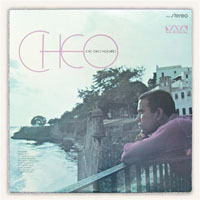
JOSE "CHEO" FELICIANO
CHEO (FANIA 773 130 006-2) 36 mins
No this is a different Jose Feliciano! Puerto Rican native "Cheo" has a really mellow, rich voice and in 1974 was recovering from drug addiction when he teamed up with songwriter Tite Curet Alonso to create this album. The band is an all-star line-up: Johnny Pacheco on conga, Larry Harlow on piano, Bobby Valentin on bass, Louie Ramirez on the vibes, Orestes Vilato on timbales, Johnny Rodríguez on bongos, Ismael Quintana on clave & coro, Charlie Rodríguez on tres, and the only one I had never heard of, Vinnie Bell on electric guitar. I love the sound of the tres and it is hot in the mix, though Spanish guitar dominates the ballad "Mi triste problema." I have a hard time with vibes but managed to play this all the way through without getting itchy to hit the "next" button, because it is smooth and there are some fine moments (even on the vibes). The opening cut "Anacaona," which was a hit at the time, has abrupt tempo changes as breaks, and a swinging groove. My favourite track is not one of the ballads but the traditional rumba "Mano caliente," where the youngsters show they can play it straight. Put this disc on the stereo, mix a martini, sit back and realize -- you have become your parents!!
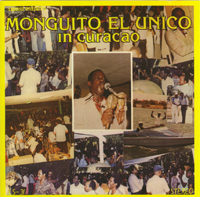
MONGUITO
LASSISSI PRESENTE: MONGUITO EL UNICO IN CURAÇAO (GB Records New York LS 31 Sacodis)
Yes you read that title right. I jumped on this newly reissued album figuring it wouldn't be round for long. Monguito is known as El Padre de Son Montuno. He is also called El Unico because his powerful voice is very distinctive. Real name Ramon Quian, Monguito is a classic salsero with a gravelly somewhat nasal voice and this is the real deal: the best Latin musicians New York producers could find subway fare for, along with some great vocals. Monguito (born in Matanzas) moved to Havana to pursue his passion for the music, fronting Conjunto Modelo. Then Mexico was his home, where he appeared in three movies, before he came to the US. In 1962 he sang lead on Arsenio Rodriguez' classic PRIMITIVO (originally on Roost Records, reissued in Japan as P-Vine CD 4729) before joining up with Johnny Pacheco and settling down for a spell with the Fania label (The best of their sessions can be found on Pacheco Y Monguito LA CREMA [Fania JM567]). The Lassissi story is curious. An essay I wrote about him appears on Papa Lars' website bolingo, though much of what I wrote is speculation. Lassissi did put out some stellar music in Abidjan, Ivory Coast, in the late 70s and I am fortunate to have a stack of it (perks of working in a record store with a pipeline to Stern's London basement & knowing what I was looking for). About 1980 Lassissi moved to the USA and brought African singers like Doh Albert and Laba Sosseh to New York to record. (I could be wrong: he continued to market music in Ivory Coast and perhaps just visited New York to make salsa recordings for release back in Abidjan.) He hit on the formula of getting top session guys to jam on well-known Cuban standards, setting the stage for Estrellas de Areito and many other successful endeavours. Alfredito Valdez recalls he made about 50 dates for Lassissi. Now a dozen of the Lassissi salsa productions have been reissued on CD including this one recorded in 1980. The sound is a bit rough (especially Side 2 which is taken from a worn record) but the music is essential. It's mainly son, guajira and charanga. This album (I doubt it was recorded in Curaçao) has Alfredito Valdez (i.e. Alfredo Valdez, Jr) on piano, three trumpets including Tony Marrero, and tresero Charlie Rodriguez, one of the greats. Adalberto Santiago sings coro. It's only 32 minutes long, typical for African LPs, but it packs in a lot. There are better (recorded) Monguito albums but once you hear him you will want it all.
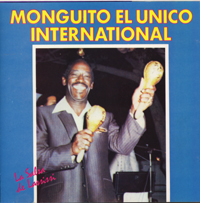
I am so glad these are being reissued again. Partly so I can rave about some of my favourite music, but mainly so I can steer you towards a musical moment 25 years ago when all was right with the world.
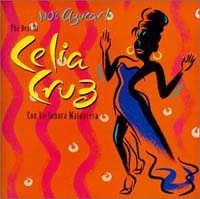
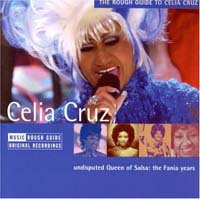
CELIA CRUZ
100% AZUCAR: The Best of Celia Cruz and La Sonora Matancera (Rhino Records #72816)
ROUGH GUIDE TO CELIA CRUZ (RGNET 1150CD)
I've listened to a lot of uninspired compilations lately, from Indestructible African Beats to Africa Remix, from Latin Cafe to Italian Cafe to Cafe Latino to some other damn cafe. Most of them make you wonder why the labels bother. There's generally one or two good songs (which are the ones you already have) and at this point people are just going to download the tracks they want and skip the filler. Now a Celia Cruz compilation is a different matter, she produced so many great recordings over her long career, any slice is going to turn up gold. If you don't have a lot of her music already here's a good place to start.
There are two discs here and this is the first time I am going to review a CD I don't own. The Rhino compilation contains Celia -- la Reina-- 's classic songs with La Sonora Matancera and I have them all on vinyl, so I will review the CD hypothetically. Actually I don't have every track, and surprisingly there isn't a lot of overlap with the 3 disc set I have ALBUM DE ORO (Orfeon JM-322), which contains her 30 Greatest Hits, and a more modest LOS 14 GRANDES EXITOS DE CELIA CRUZ (Profono TPL-1404). The Rough Guide set focuses on her middle period: the Fania years. Her most characteristic & classic tracks are "Yerbero Moderno," "Santa Isabel de las Lajas," "Bemba colora," "Melao de cana," -- and only the latter is on the Rhino disc, but no matter, once you get into this collection you can seek out more. "Burundanga" is a song that became a classic thanks to Celia's recording. She gives it an impish delivery. With La Sonora Matancera, Celia brought the guaguanco and guaracha to Mexico in the 1950s and chalked up innumerable hits until a bus accident decimated the ranks of her band (Touring was such a large part of their success they even posed with the bus). She has a remarkably robust voice, a good match for the fat arrangements. I don't know if it's still in print but my favourite of her many Sonora Matancera recordings is HOMENAJE A LOS SANTOS (TH RODVEN CD-136), in which she sings to the Afro-Cuban deities, but with a big band arrangement, including muted trumpet chorus and lots of her trade-mark vocal drama.
In the 1960s Celia Cruz and her husband Pedro Knight moved to New York and started recording with Tito Puente and brought Salsa to the American mainstream via the Fania label. I have fewer of her Fania recordings. Though they generally have better sound, other than some of the live stadium recordings which are rough but nevertheless crucial music. "Cucula" which traveled with her from the early days is here (on the Rough Guide), and even "Elegua" a pure ritual chant with West African percussion, though it seems she largely threw off the Afro-Cuban religious trappings once she moved to the Belly of the Beast. There is some slack playing on "Metida con You," which has an off-key trumpet solo that is only mildly irritating as the cut fades. Celia refers to one of her most famous tracks, "Yerbero moderno," on "La Campeona," without going there. In the 70s she teamed up with Johnny Pacheco and recorded the deliriously great song that became her signature: "Bemba Colora." You need to find that and hear it, preferably in a live version. I played it for an opera singer once and he said it was an epiphany! One of the great surprises here is her version of "Sugar Sugar" which is a joy, since she is famous for her catch phrase AZUCAR!! it is perfectly appropriate she should cover the Archies hit. (I can see I'll have to start a new compilation with the Big Youth version also.) Cruz's career spanned 70 albums, 5 grammies, and regular appearances on Spanish-language TV, from music shots to characters in telenovelas! She was busy and exuded joie de vivre. This is essential music.
EDDIE PALMIERI IN CONCERT AT YOSHI'S
Oakland, 5 December, 2006
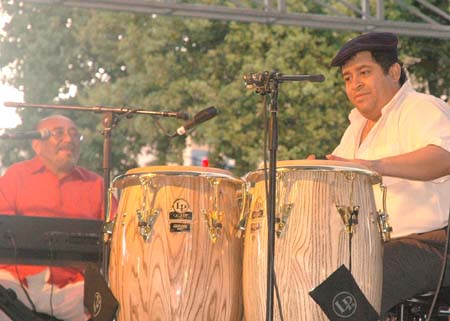
photo: Arturo Riera, San Jose Jazz Festival 2005
(Used with permission)
It's true I don't get out much anymore. I used to get free concert tickets and would be out two or three nights a week checking out live music. Now it has to be a special event to get me out driving at night, and of course with the US being the world's pariah who would want to tour here, assuming they could get a visa? Yoshi's is easy to get to (in Oakland's "green zone") though the sound is often muddy and they prefer having tables to push drinks than a dancefloor but I was not going to miss Eddie Palmieri with La Perfecta Dos. I caught the second set on the first night & it was incendiary. Every person on the bandstand was a bandleader in his own right, even John Santos who jumped up to play guiro and sing coro, obviously thrilled to add this to his curriculum vitae. Eddie was mostly there to set the ball rolling and then comped while the singer, percussionists and trombones took over. He only took one solo. I recognised a couple of the tunes, or riffs rather, but didn't take any notes (I was singing along to "mi quierida bomba" at one point, whether or not that was the tune they were playing). I was too rapt in the performance. During the first number Jimmy Bosch, a small glabrous gent in the back corner, started signalling to the sound man to turn up the piano, I thought it sounded fine, but I didn't know what Jimmy had planned. He gestured to his cohort, Joe Fiedler, to cycle the riff on repeat and leaped into a blasting solo that blew the walls back. Even the other band members were taken aback momentarily before rising to the challenge. I am not a big flute fan, though I make an exception for Maraca. Eddy Zervigon is one of the old-timers on the scene, who started out with Orqesta Broadway and played on the Africando sessions. He shambled on as the band was starting and suddenly Eddie threw the solo to him and, unprepared, he tried a few stock trills but then just went off and when he was done Eddie waved him on for another 8 bars. He showed he still had it. Anthony Carrillo, of Descarga Boricua fame, was bongocero and the great Giovanni Hidalgo slapped the congas. Eddie Resto on bass and Jose Claussell on timbales completed the rhythm section. The trombones consistently stole the show, but towards the end the percussionists got to solo and it was memorable. John Santos was no slouch on maracas & got respect from the band for his spontaneous contributions. There was one ballad, in it Herman Olivera (a long-time collaborator of Eddie's who has sung with Manny Oquendo as well), told the sad story of his life on the streets of Puerto Rico. It reminded me of "Bemba colora" by Celia Cruz, an autobiographical portrait that was quite moving. But the all-stars gave it another blast to send us away joyful. And only the $28 ticket stopped me coming back another time.