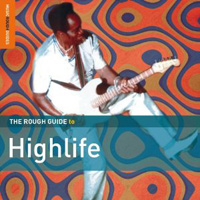
ROUGH GUIDE TO HIGHLIFE (2nd edition) (RGnet 1280CD)
Here's a Rough Guide you can get your teeth into. You'll laugh, you'll cry, you'll kiss $10 goodbye. While anyone who is a fan of Highlife will have the best tracks on here, it is well-sequenced and a great introduction to the genre (as well as related styles like "Joromi" and palm-wine) that spanned Nigeria, Ghana and Sierra Leone as they emerged from colonies to independent states. Some stalwarts are placed strategically between lesser-known artists to give a really good momentum to the set. Last time Rough Guide did a Highlife compilation I complained that Gentleman Mike Ejeagha and Prince Nico Mbarga were absent, and they still have not made the cut. I suppose the licensing is too steep for Rough Guide's budget. The centrepiece on this outing is the sublime "Osoni Owendi" by Chief Stephen Osita Osadebe. He released scores of albums over the years but that disc remains his most brilliant. He remade a couple of favourites on a trip to the USA, for his Kedu America album, including this track, but here is the full eleven minutes. The pillars are Fela with "Highlife time," an early offering from his Koola Lobitos before he discovered James Brown, Bobby Benson's perennial favourite Caribbean-style "Taxi Driver," Sweet Talks' "Juliana" from the essential Hollywood Highlife Party album, Celestine Ukwu's "Igede part 1," and the Chief Stephen track. Other big names Roadmaster & Agyemang, Victor Uwaifo and Victor Olaiya, are represented by less-well-known entries. Koo Nimo shows up with the lead cut from his new album (reviewed above). Pleasant surprises are delivered by the Professional Seagulls Dance Band (Rex Lawson's backing band who continued after his death), with "Atabala Woman," and "Tsutsu Tsosemo" by the Black Beats which (like the F. Kenya track "Memia" also included) was on the Electric Highlife from the Bokoor Studios compilation a decade ago. The only sour note is the gospel track that closes the disc, but it does remind us that at some point in the 80s Highlife went to Hell in a handbasket. The bonus disk is Seprewa Kasa's eponymous album which came out on Riverboat in 2008.
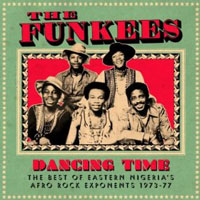
THE FUNKEES
DANCING TIME (The Best of Eastern Nigeria's Afro Rock Exponents 1973-77) (Soundway Records CD039P)
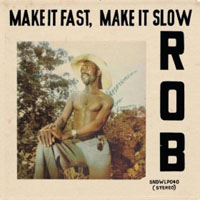
ROB
MAKE IT FAST, MAKE IT SLOW (Soundway Records CD040P)
Dancing Time is a cut above most West African funk reissues. In their mid-70s career the Funkees covered a lot of British and American pop tunes like War's "Slipping into Darkness" or Marley's "Get up, stand up," and wrote originals that sound like Kool & the Gang, but added solid drumming and percussion and acid-washed lead guitar. It's poppy as well so among the 18 cuts collected here there's bound to be something to tickle your fancy. That being said, there seems to be no end in sight for the Afro-funk craze. There are reissues, as well as bands trying to sound like Egypt 80. If I don't notice some of the reissues people will think I am prejudiced against it, but the truth is I am a bit sick of it. The half-hour Rob album, Make it fast, make it slow, includes that cut which was on the first Soundways CD Ghana soundz. Now Soundways has released the entire album for anyone who wants to gobble the whole pie. The album came out on Essiebons in Ghana in 1977 but did not fare well. It was Rob's second release, more religious, and more contemplative than his first (also reissued on Soundways), and featuring an army brass line-up known as the magnificent second battalion. Frankly, "Make it fast, make it slow" is the best track on here, and only completists or fanatics will want it all. But now that I think of it, I have the same feelings towards Rocksteady remakes of Motown ballads that some people clearly have for Afro-funk. The Funkees' Dancing Time is an example of the curious parallel-universe of American songs that are mutated by culture and enhanced by age. So yes: more Afro-Rock from the 70s for those who can't stop 'til they've had enough.
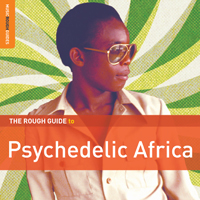
ROUGH GUIDE TO PSYCHEDELIC AFRICA (RGNET1270CD)
OK, I have to say this is weird. I am not going to go on about how simplistic the Rough Guides can be, how their compilations seemed aimed at people who just arrived from another planet and never heard of African music before, or any of that. Here's their Rough Guide to Psychedelic Africa which is a lamentable compilation. The songs, while familiar, don't even hold together as a set or flow in and out of one another. One or two may be loosely called psychedelic, but that's not the point. The reason I am bothering to mention it is the bonus disc: It's the 1973 Sir Victor Uwaifo & his Melody Maestroes' Ekassa - Talk of the Town Vol. 2 (which came out as Philips [Lagos] 6361 033). It's a fantastic statement of highlife (not the rock and roll pretension of "Guitar Boy" or his reported showboating, which you don't see on a recording). This should be the featured disc, presented as a reissue -- forget about trying to wrap the tag of psychedelia around Baobab, Poly-Rythmo, Ebo Taylor, etc. The market is sophisticated enough and knows the value of this stuff -- see the rave reviews on WithComb&Razor or Global Groove. Rough Guide did this before with their feeble African Guitar Legends comp where the bonus disc was an excellent Syran Mbenza set, bound to get overlooked. Anyone who buys the disc because they've heard of Baobab is not going to "get" the Uwaifo disc. Making this a thrown-in freebie (with ZERO documentation) to a clutch of familiar reissues is bad strategy and a disservice to Victor Uwaifo's fans. (And if you want psychedelic African music, get a Monomono CD!)
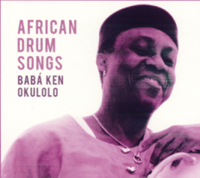
BABA KEN OKULOLO
AFRICAN DRUM SONGS (Inner Spirit Records)
Though best-known as bassist for Victor Olaiya, King Sunny Ade, Joni Haastrup's Monomono, O.J. Ekemode and other Nigerian superstars, Baba Ken Okulolo has produced a solo album of drumming, percussion and vocals. After moving to the US Okulolo formed several groups, including Kotoja (to play highlife-rock fusion), the Nigerian Brothers (traditional acoustic music) and West African Highlife Band, comprised of some legendary members of Highlife groups like Sweet Talks and Egypt 80 who jammed on oldies, and most recently another fusion band The Afrobeat Connexion. This new solo venture, like everything he does, is thoughtful and well-crafted. It coasts along on buoyant rhythms in which you will hear a wide variety of sounds from the Old & New Worlds, made by udu, djundjun, djembé, agogo, shekere, cajón, congas, talking drum, clay drum, pennywhistle and koi koi. By the mid-point, "Ewa bawa se" you are totally entranced and though this is the longest cut at 5 minutes, I would have loved to have it go on longer. But Okulolo changes gears and throws down a new rhythm and more enchanting melodies for "Iyeye O." Though there's no thumb piano it reminded me of Francis Bebey from Cameroun; the vocals particularly conjured up the meditative Chants à penser from Centrafrique more than Twins Seven Seven or other traditional Nigerian drumming albums. It's an accessible and fun album.
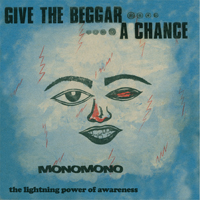
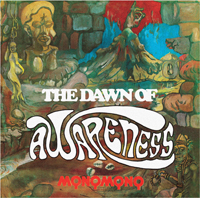
MONOMONO
GIVE THE BEGGAR A CHANCE (Soundway/Tummytouch TUCH2027CD)
THE DAWN OF AWARENESS (Soundway/Tummytouch TUCH2026CD)
WAKE UP YOUR MIND (Soundway/Tummytouch TUCH2028CD)
How do we explain the vast upsurge of interest in African funk? I suppose it's that it is both good and nostalgic with the added appeal that we have not heard most of it before, so we are able to revisit the sound of our (Western) youth without indulging in maudlin flashbacks to specific events in our past that the music of our own youth is likely to invoke. We have come so far so fast in terms of African music. Before the Internet it was hard to find out about older albums. There are a few books (apart from the dull enthnomusicology journals) like Stapleton & May's African Rock, Wolfgang Bender's Sweet Mother, Ronnie Graham's Da Capo Guides and Graeme Ewens' Africa Oye!, but even with those you might miss out on some important developments. About a decade ago albums began to fly on EBay and names like Super Eagles and Monomono came to our consciousness. Joni Haastrup's Monomono first re-appeared on Nigeria 70, a great collection on the Strut label that came out ten years ago. Haastrup's story is pretty unique. He started out with Victor Olaiya & scored a hit with O.J. Ekemode, singing on "Super Afro Soul," but then went to UK with Ginger Baker's Airforce where he played with Graham Bond, Steve Winwood and other super-talents of the white rock scene who were creative and innovative beyond the labels normally associated with rockers. This gave Haastrup insight on what might be possible back home where he formed Monomono in 1971. Baba Ken Okulolo was bassist, Jimmy Adams played guitar and the percussionists were Candido Obajimi and Friday Jumbo. Haastrup sang and played organ. Though the band only lasted two years it was an important element in the Nigerian Funk scene. Soundway has reissued their two LPs & Haastrup's first solo album from 1978 in a burst of crazy funk & flame. Now that we know Haastrup's story the title cut of "Give the beggar a chance" suggests the influence of Traffic, something I didn't expect to hear in African music. The main sound on here though is Afrobeat & this album, their debut, written in London and recorded in Nigeria, is fine. The follow-up The Dawn of Awareness also has jazz and soul influences but moves to more of a San Francisco psychedelic sound in the guitar added to the Yoruban percussion groove. The title cut "Plain fighting" goes out with Duane Allman guitar combatting Ray Manzarek organ in a tasty flourish. The third album, Haastrup's solo debut, has pops on track two suggesting it was too much effort to de-click it. Either that or Soundway is trying for the authentic "used vinyl" sound.
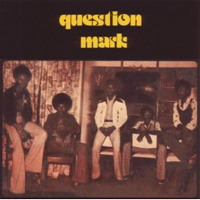
QUESTION MARK
BE NICE TO THE PEOPLE (Normal Records QDK CD054)
This is not Afrofunk, it's English-language pop, but recorded by Nigerians back in the day, like they say. It came out in 1976 and pretty much vanished and the band broke up. Of course there was a famous band called Question Mark & the Mysterians who scored a huge hit with "96 Tears", but this not them, though they do have a Farfisa organ in the line-up. Said organ is drowned out by Victor Egbe on fuzz-tone guitar who cranks it up for his solo in the opening track "Have you?" a real scorcher. Their influences, from the Beatles to the Byrds are close to the surface, suggesting something like the Monkees, a bunch of enthusiastic kids. However they did learn to play, and took the name Question Mark when they couldn't decide on a name -- the Sensations or the Dee-Mites -- and went on as "?" on a talent show in Lagos. They snuck out of their boarding school to spend the weekend in EMI studios recording their first two singles. While they cite Monomono's first album as a big influence there is very little than can be called African about this effort. It's a novelty disc with good guitar and pretty corny lyrics.
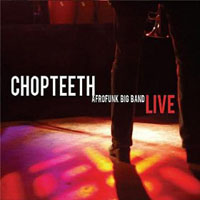
CHOPTEETH
AFROFUNK BIG BAND LIVE (Grigri discs GRIGRI003)
Chopteeth is a Fela cover band based in Washington, D.C. It's obvious African funk is bigger in the West than in the homeland. Back in Nigeria they've gone on to hiphop, the Congolese & Kenyans have nuevo Gospel, while other decadent modern musical entities pervade the African landscape; but white kids from Berlin to Bangor are now discovering the sounds of African acts from Dakar to Djibouti who got into the James Brown sweat-drenched groove and made it their own. Reissued Fela LPs go for $750 on line (I sold my originals for a fraction of that years ago). At a certain point you've heard something enough and don't need to go on hearing it, which is why I don't have Abbey Road or Let it Bleed in my collection. However I am interested in artists who can take something and make it new which is why I don't dismiss the new Chopteeth album out of hand. For all his legendary status Fela was crap live! He made great albums and clearly generated a lot of excitement in his home base but when he came to America on tour he was so arrogant, so full of disdain for the audience, such a lousy instrumentalist that you left wondering why you even bothered to come. He also perplexed audiences by never playing his "hits" in concert: once he recorded a track it was dropped from the repertoire so audiences expecting to hear "Monkey Banana" or "Roforofo Fight" in concert left disappointed. Yes he was a first rate poet, but he was a second-rate saxophonist and a third-rate keyboard player. However the success of the Broadway show and enduring interest in his work is enough to validate his position in African culture. Chopteeth have got inside the horn and percussion groove and also stretch further afield to cover Afrisa, Baobab and Simandou de Beyla. They even do a Duke Ellington piece, "Didjeridoo," which is atmospheric and has a low trombone pulse simulating the aboriginal instrument. In addition the tenor and baritone saxes work wonders on this number. They make a bold attempt to cover "Jiin ma Jiin ma" by Baobab but unfortunately fall short: they really shouldn't try to stand up against one of the great African bands who are still touring and performing. The vocals and flute are really weak on this. In fact they should ditch the vocals entirely (apart from the pidgin on the Fela tracks) since their French pronunciation is really bad, and stick to instrumentals, which they do very well, until they find someone who can really sing. By all means check out their act, if you get a chance: maybe they will start writing new material, or like the Afrobeat Academy of Berlin, find some African artist to back.
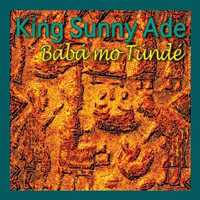
KING SUNNY ADE & HIS AFRICAN BEATS
BABA MO TUNDE (IndigeDisc 2147)
It's been a decade since King Sunny Adé's last album and when he came through town recently I seriously thought about going to his show, but then remembered how hard it is to park on Divisadero Street in San Francisco at night & how I was too worn-out to stand in a sweating crowd half the night. So I guess that shows I am officially past it as a clubber. Had I heard this album though, I would have been there with my dancing pumps on. Nigeria is back in the news with the fiftieth anniversary of their independence from Britain; it's not my top destination, much as I love Igbo highlife and the market literature that used to appear in Onitsha. I met their most famous author Chinua Achebe in 1988 and told him his books had inspired me to go to Africa. And how did you like Lagos? he asked. Well, to tell you the truth, I admitted, your books rather put me off going there, so I went to Zaire instead! Bethatasitmay, we all respond with a smile to the Juju beat as the talking drums drive up the pulse and then that sweet sauna-dripping electric steel guitar slides in followed by the mellow voice of King Sunny. Ever since 1982 when Adé signed to Island Records he has brought joy to the world, starting with "Ja fun mi." I remember I first heard him on John Peel's BBC radio show and, hearing Peelie's droll Liverpudlian namecheck after the song, I wrote "Sunnier Days" on the tape, thinking that was the band's name. To me the music always signals brightness. The music tends to get lost in its expansiveness, so it's nice that this is a two-disc set as it can stretch forever (like a cassette tape on auto-reverse, though not so literally). It doesn't break substantial new ground from 1983's classic Synchro System (which came out in a wonderful expanded remastered set from IndigeDisc in 2003). The lyrics are traditional Yoruban folklore; the music gets grooving and stays that way. Adé not only has a sweet voice, he is a fine guitarist. A synth and organ have been overdubbed: they add lots of atmosphere, especially to the last cut on disc one, "Baba l'oun S'ohun Gbogbo."
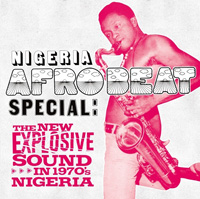
NIGERIA AFROBEAT SPECIAL:
THE NEW EXPLOSIVE SOUND IN 1970s NIGERIA (Soundway SNDW021CD)
Miles Cleret has brought us a fourth (or is it fifth?) collection of '70s Afrobeat. Once again his selection is of rarities that have not been reissued outside of Nigeria in the last 40 years. The set kicks off with Fela, performing "Who're you?", a track he re-recorded at Abbey Road for Fela's London Scene, here heard it its original home-pressing from a 45. Other, by-now familiar names, include Bongos Ikwue, with the eccentric "Otachikpopo," and Orlando Julius, one of Fela's main rivals for the Afrobeat crown, who turns in a jazzy "Afro-Blues." Jazz is also the mood found in Segun Bucknor's instrumental "Gbomojo," and the Black Santiagos wind things up with "Ole." Fela emerged with his new lineup, called Africa 70, and quickly eclipsed the Soul craze that was sweeping Nigeria with this harder groove. Among the unknowns are Madman Jaga, who was discovered by Victor Uwaifo. As usual, the obscurities are the best part. There's a really killer groove from Bob Ohiri and his Uhuru Sounds called "Ariwo Yaa" with two, or maybe three guitars all taking a different approach to the tune. If you can't get enough of this, there's a triple LP set that includes five additional tracks not on the CD.
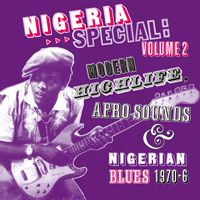
NIGERIA SPECIAL VOLUME 2:
MODERN HIGHLIFE, AFRO SOUNDS & NIGERIAN BLUES 1970-6 (Soundway SNDW020CD)
This set is more laid back than the Afrobeat volume that Soundways released simultaneously. The tracks are shorter, mostly three-minute ditties, unlike the churning 10-minute jams of the Afrobeat set. Again, only one or two familiar names are sprinkled throughout the playlist. Twins Seven Seven add a glockenspiel to their normally pure percussive groove; The People Star is so familiar I did a web search to discover what I suspected: it's Stephen Osita Osadebe playing under an alias because of contractual problems. He returns under his real name for "Onyebu chi," which is based on the Peanut Vendor changes, and has a great muted trumpet backing his smoky vocals. The muted trumpet is one of my favourite Nigerian sounds and returns on Paulson Kalu's tune. I also like the way guitarists try to fit in notes around the very complex drum patterns, as on "Motako" by Fidel Sax Bateke & the Voices of Darkness. As usual the CD comes with a fully annotated 24-page colour booklet (which I haven't seen yet) with history, trivia and alluring visual morsels; the triple LP this time out has two added tracks. Samples can be heard on Soundway's website.
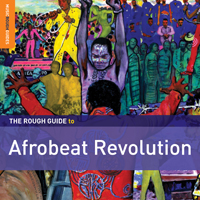
ROUGH GUIDE TO AFROBEAT REVOLUTION
(RGNET1222)
The Western public's taste for Afrobeat seems endless, so here's another set of the stuff for greedy consumers. Rough Guide has a good track record but they can't all be winners. Souljazz Orchestra kicks it off with a rocking cover of "Freedom no go die" (If it is not a cover, it is a pretty good imitation of Fela Kuti). The only brand name act on here is Tony Allen. The others are, I think modern practitioners of this historic style. It's sequenced well because all the tracks use the same beat so it just flows along from one Fela imitation to the next. And, as obnoxious, sexist, ranting and egotistical as Fela was in concert, there's no replacing him. These bands are all pale imitations. The sound is there, but not the spirit of the man. Fela is even now a Broadway musical. I kid you not. I am sure Disney's Lion King team are working on the movie rights. Even Tony Allen who has the distinction of being a key part of Fela's sound, brings a really vapid vocalist to his track, "Kilode." Then we get to a gratuitous cover of "Get up, stand up" by Kaleta & Zozo Afrobeat, including an imitation Bob Marley vocal. There really should be a moratorium on bad covers of Bob Marley songs. This song went on too long and then the next one was irritating so I pushed it forward, fully expecting more preaching in a track titled "Saro-Wiwa" but it is a pleasant and inventive instrumental by Ted Sirota's Rebel Souls. This one only for die-hard Afrobeat fans. If you want something real, buy Orchestre Poly Rythmo de Cotonou instead.
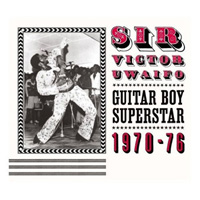
SIR VICTOR UWAIFO
GUITAR BOY SUPERSTAR 1970-76 (SOUNDWAY CD012)
I hesitated a long time before buying this. Some things become so familiar we stop hearing them. I would put on "Joromi" or "Guitar boy" by Victor Uwaifo and anticipate every beat. So I purged most of my Victor Uwaifo albums a couple of years ago, keeping only two songs. One of them, "Kirikisi," kicks off this album and is, I think, one of his best. The other "Dododo" is also here and was included on the Strut compilation NIGERIA 70. I recall a lot of posturing rock-god style guitar showiness from his music in the 80s that didn't survive the test of time, but fortunately that is absent here (despite the oft-reproduced cover image of himself pretending to be Jimmy Page or Jeff Beck). This set focuses on the early Ekassa singles of the early 70s which is his peak. There's a lot of diverse rhythms, percussion grooves and only a touch of rockstar flash. Victor hails from Benin City in Nigeria which is the site of the ancient kingdom of Benin, famous for its brass sculpture (of which Uwaifo is a modern exponent) and other arts. However modern Benin (which used to be Dahomey until 1975) is named after the Bight of Benin. Confusing, I know. But it is to the ancient rituals of the Edo people that Uwaifo turned for the new sound which underlies these recordings. From his teenage debut as a guitarist in the band of the other Victor -- Olaiyo -- he branched out as a highlife star with the Melody Maestros and created Akwete music in the 60s. Interestingly he claims this was based on a fusion of colours and sound. He heard notes as colour, so assigned notes of the scale to different colours and then "interpreted" traditional Akwete cloth textiles as scores. "Dodoko" which was released as Ekassa no 1 is one of his most pleasing tunes. It was based on the coronation dance of the Edo Obas (kings of Benin). Then he set traditional fables and folklore to music keeping it fresh with his psychedelic guitar leads. Fifty songs were recorded in this style between 1971 and 1975 at which point Victor switched to a new style and the famed Titibitis were born. "Obodo eyo" is pure rock but with loose percussion; there is a loping quality to the rhythms and a load of percussion -- bells, drums, congas, shakers -- underneath it all. But then a smoking sax will start wailing. "Agho" starts off like "19th Nervous Breakdown" and goes into funk with two guitars setting up a "Land of 1000 dances" nah-nah-nah-nah-nah exchange in opposing channels. (The understated & often surprising rhythm guitar is one of the joys of this disc.) Then the organ and trumpet play "Tequila!" It's all fair game. "Iye Iye oh" brings it back down to a more familiar highlife groove that would have done credit to Celestine Ukwu himself. "Madaka" is a bluesy number with hints of "El Manicero" in the muted trumpet & wah wah guitar on echoplex. The last track is almost a novelty number, it is an instrumental jam with walking bass over palm wine sounding guitar, then a wailing blues harmonica by John Collins brings it all back to the Yardbirds. Despite overmodulation on a couple of cuts, this is a solid and thoroughly delightful hour and fifteen minutes of Sir Victor at his best.
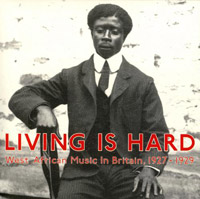
LIVING IS HARD
WEST AFRICAN MUSIC IN BRITAIN 1927-29 (honest jons HJRCD33)
This is a handsome and lovingly packaged set of two dozen 78 RPM discs that show a hidden aspect of African culture in Great Britain. It was never easy being black in Britain: even in my youth I recall Enoch Powell wanted to ship all the blacks back to Africa (which would have been a shock to those that were from the Caribbean). But sailors were allowed to stay and so black communities first took root in port towns. There's a story of returning troops from the First World War marching into Cardiff and opening fire in the black neighbourhood, like they were taking down Zulu warriors. Fear of the virile black men having their way with white women also led to lynch mob rampages in Liverpool at the same time. So the mood of black immigrants at the time of these recordings can be said to be generally grim. This is traditional West African music of various ethnicities; some of it is brilliant and it is all crystal clear. The first West African recordings on the Zonophone label were made by Fela's grandfather, J.J. Ransome-Kuti, and were Christian hymns sung in Yoruba! But he came to London to record while the music on this disc was seemingly all made by Africans living in Britain at the time. Track three is a previously unreleased chant by Ben Simmons: it is a possession ritual and really astounding. Zonophone had no idea what to do with it. These recordings were not part of the black tradition -- music hall minstrelsy, Negro spirituals, African-American jazz -- but unabashedly rooted in Africa and aimed at an exclusive African audience. No whites in England would have been down the record shop looking for the latest Harry Quashie release. Prince Zulamkah's "Ligiligi" seems like a nonsense song, but it has call and response vocals which are very catchy. Most of the songs are in Fanti, and the lyrics are translated. The sequencing is clever so that some of the more rudimentary numbers are followed by complex pieces with guitar and percussion to sustain your interest. Like a shot and a chaser.
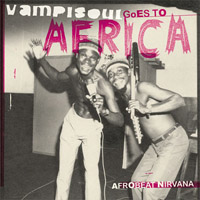
VAMPISOUL GOES TO AFRICA
This disc is subtitled AFROBEAT NIRVANA and contains an hour of Afrobeat, drawn from discs on the Vampisoul label licensed from Premier Music of Nigeria. It starts strong with Bola Johnson, opts for a churning instrumental groove from Fela then gets interesting with a highlife oldie from Opotopo, called "Belama." This is a new band to me, and is drawn from a Vampisoul double disc called Highlife Time. The sweet old-time 60s sounds of Victor Olaiya are up next with "Okere / I feel alright." There are two tracks from Tony Allen's AFRO DISCO BEAT which sounds a lot like Fela, as you can imagine. There are also two cuts from Orlando Julius' Super Afro Soul, which is a swinging psychedelic compilation. A second Fela cut comes on which is so thrashed-sounding and irritating you have to skip forward, then we get a Motown cover: OJ & His Afrosounders doing the Temptations' "My Girl." Fred Fisher Atolobor gives us "WTFS" which is disco, and the set closes with another rousing Tony Allen funk instrumental. All in all this compilation is not a patch on, for example, MONEY NO BE SAND, the 1995 set assembled by John Storm Roberts (Original Music 031), but it's good to be introduced to Opotopo & I may break down and get the Highlife Time comp that features them.
Chief Stephen Osita Osadebe died 11 May 2007. His was the voice of Nigeria for many years and he put out scores of top albums throughout the 1970s, 80s and 90s. And what a great voice it was. His music is so laid back it's like being in a warm bath. You never want it to end, and in fact it goes on and on! He was voted Top Highlife Star in 1991 and had a US hit in 1994 with his CD KEDU AMERICA. I believe he moved to the US at this point. His music is a continuation of the traditional Ibo Highlife of the 1950s and 60s, complete with sweet guitars, muted trumpet, trombone, sax, and tons of percussion. Three horns, three guitars, congas, clave and shakers keep it moving behind the Chief's sweet sleepy vocals. His albums were generally one long track on each side so they unroll slowly and deliberately with a sustained pulse.
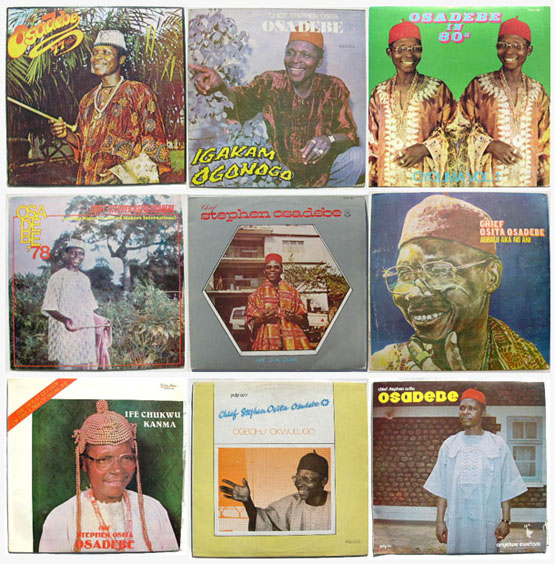
He was born near Onitsha in 1936 and started his own band, the Soundmakers International, in 1964 just as the Beatles were changing the sound of pop music in the West. But Osadebe kept to his own course and refused to adulterate his pure Highlife. In 1981 he achieved his first gold record for sales, and continued to release albums in praise of various Ibo Social Clubs that would attract his fans to hear him perform. His biggest hit came with OSONDI OWENDI, released on Polygram Nigeria in 1984. His sparkling recording KEDU AMERICA, a CD that recreated many of his great songs but in shorter takes, was aimed at the international market and beautifully produced by Xenophile records of Connecticut. Seven of his albums are available as downloads from Emusic and iTunes, or you can hear a great selection of his hits from 1970-85, remastered (& abridged), on the CD SOUND TIME on Pulse records distributed by indigedisc. Obituary here.
AWON OJISE OLORUN:
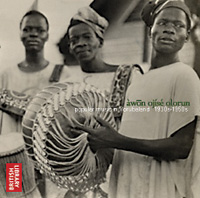
POPULAR MUSIC IN YORUBALAND 1931-52 (BRITISH LIBRARY / SAVANNAHPHONE CD AF 010)
I recently purged a lot of Nigerian LPs from my collection, but if you know me for the mouldy fig I am, you can imagine I held on to the oldest stuff, some 10-inches on PHILIPS & DECCA. For most of us the 60s is the beginning of Nigerian music. There's a great series of classic West African recordings that came out on John Storm Roberts' Original Music label in the 1990s, like YORUBA WOMEN OF THE DRUM, LUCKY STARS & ROSY MORNINGS (which covered the Ibadan Juju scene of the 60s), TELEPHONE LOBI (which covered Ghanaian danceband giants of the 50s and 60s) and MONEY NO BE SAND (which featured the sparkling Lagos pop of the 60s). Original Music also put out hits on individual artists such as Ignace de Souza, Godwin Kabaka Opara & Orlando Owoh. Anything predating 1950 has been terra incognita except to a few devoted collectors. There was one Rounder LP from 1985, JUJU ROOTS, that covered the 30s to 50s. The only overlap with the present release is in one or two artists: Irewolede Denge (who stands out) and Ayinde Bakara, not exactly household names. Modern Nigeria is less than a century old and is still going though infant struggles. The government is violent and among the most corrupt in the world, but as long as their violence and corruption benefits foreign interests (like big oil), the rest of the world thinks of Nigeria as a functioning democracy. Juju and Apala were already well-established musical forms when recording technology arrived in 1930. Britain had taken over the land in 1862, so many of the songs are about throwing off colonial oppression and restoring the glory of the Yoruba kings. Because of the ethnic diversity of the kingdoms annexed under the tiny crown of Queen Victoria, it was hard for a pan-Yoruban sound to emerge and to this day there are different styles of music in Benin, Nigeria and Ghana. Apala, the drum-based, rhythmic style reached a zenith in the 60s and 70s but Juju and Sakara (originally street-music played during Ramadan, Sakara became courtly music with the addition of the goje, or one-string fiddle) predominated. All three styles are heard here. The recordings are occasionally rough & it may not be something you play repeatedly but the collection is an important piece of the history of modern African music. The lyrics are translated and annotated which adds considerably to the enjoyment. However the one song which is not translated, Theophilus Iwalokun's "Iyawo o ra mi," is my favourite piece on this collection. Though it clocks in at under 3 minutes (like everything else on here), Iwalokun still manages to get a sleepy juju groove going.
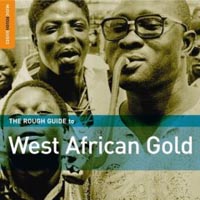
ROUGH GUIDE TO WEST AFRICAN GOLD (RGNET1137CD)
Never set your hopes too high. I was looking forward to this release, thinking I might discover something new or fill in gaps in my knowledge of West African music. Last year's excellent GOLDEN AFRIQUE VOL 1 from Network Medien showed the depth of West African music and covered a large swath of the West African landscape, leaving out the Anglophone countries. Though some of it was familiar, there were many surprises. Rough Guide jumps into the fray with a compilation that covers the whole place, from Senegal to Nigeria, and spreads itself far too thin. There is not a single track on here that is not available on some other CD published in the last few years. Their goal seems to be to sample what's out there as an introduction to newcomers, but the least they could have done is found some rare King Bruce, Mike Ejeagha or Victor Olaiya track. There are two tracks, Celestine Ukwu's "Ife si na chi" and Victor Uwaifo's "Ekassa No 34," leased from Premier Music of Nigeria whose CDs are harder to find than the Sterns, RetroAfric, Dakar Sound and Popular African Music albums they have sampled for the other selections. We go from the roots to Afrobeat to Bembeya Jazz without passing GO or collecting $200 (which we could have used to buy some rare LPs on EBAY and spice this set up a bit). The Bembeya track "Whiskey Soda" is a gem, but it is poorly recorded and by no means the best cut on HOMMAGE A DEMBA CAMARA. This is followed by an even worse recording, Dexter Johnson doing "Manicero." There's an Estrellas Africanas LP with Johnson that sounds heaps better & covers similar material. On the whole this is great music, but it is all too familiar and the transitions (like Eric Agyeman to Rail Band) are incongruous. Call me a purist but I like to separate sets from different cultures unless there is a musical bridge than will connect say Bembeya quoting "El Manicero" in "Dya Dya" to a Congolese group like A. H. Depala doing "Moni Moni no dey." Why doesn't someone take the AFRICAN MUSIC LP (Dutch Phonogram 1983: See my African Top 50) & reissue it on CD? That would be a better service than skimming the surface of this musical ocean.
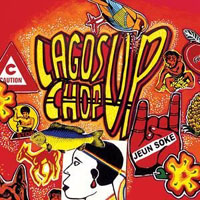
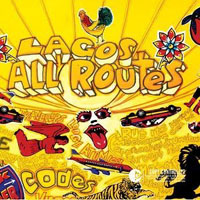
LAGOS CHOP UP (Honest Jons HJRCD15)
LAGOS ALL ROUTES (Honest Jons HJRCD17)
These are two separate CDs, but constitute a set. In contrast to the elegantly designed Lobi Traoré disc (from the same label), these two have hand-lettered covers (in the Fela tradition) that are a drag to try to decipher. Ghariokwu Lemi's imitations of the awful cover collage by Martin Sharp for Cream's DISRAELI GEARS quickly descended into shorthand for Nigerian funk and is now a tawdry cliché. The text has been run through a fax machine and pasted up crookedly over solid colors to give it a funky retro look. Memo to H-Jons's art director: Bad typography is never cute, it's only bad. While it's true bad typography usually goes hand in hand with lousy copy, in this case it is something we would actually like to read, if we could. The music is familiar: you probably have the classics like "Joromi" by Sir Victor Uwaifo & "Softly softly catch monkey" by Ikenga Super Stars, but they flow together nicely in this well-arranged sequence.
LAGOS ALL ROUTES is subtitled "Juju & Highlife, Apala and Fuji," so it's the traditionally grounded music of the 70s, while LAGOS CHOP UP has Afrobeat instead of Apala, putting a slightly different spin on this disc. But the shots of Apala and Fuji are interspersed with the other styles and it works well. I like the way the music lilts back and forward between the older dance bands with trumpet and scratchy vocals (like Victor Olaiya) and the percussion driven grooves. Afrobeat is represented by the Nigerian Army Rhythm Group, every bit as good as Fela. Mike Ejeagha is surprising (another aspect of bad typography is you instinctively don't trust it, so I will have to check to see if the track listing is right). Lots of gems here: Shina Williams stands out, Rex Lawson delivers with his Highlife classic "Owuna Derina," while Ebenzer Obey keeps us swaying to his classic sound with slide guitar.
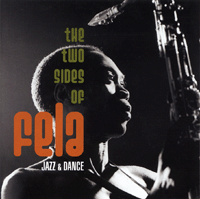
FELA ANIKULAPO KUTI
THE TWO SIDES OF FELA JAZZ & DANCE (Wrasse Records WRASS 077)
To know Fela's music is to love its churning momentum, but to know Fela is to have second thoughts. I've said it before, Fela was a fanatical control-freak who ran his little empire (Kalakuta Republic) almost as a religion. He was like David Koresh with a better band. It's silly to separate his music into "Jazz" and "Dance" as it's all one. I think he fits more into an R&B category than jazz proper (whatever that is). But if you think of jazz saxophone, i.e. Ben Webster, Coleman Hawkins, Pharoah Sanders, for example, Fela doesn't cut it, not even as a keen student. Or take jazz piano: not even Chick Corea or Keith Jarrett would allow this playing out under their name. (I would have said Air Supply but is that classified as jazz?) Anyway, Fela's music is to enjoy and not to dissect. Like James Brown it's all about him and not the individual musicians who really make the sound. I didn't rush out to get the many Fela box sets that came out since his death in 1997; this is the first repackage I've sprung for and it's a well-chosen nine tracks. It's a shame I had four of them on vinyl but that shows that the best stuff is the perennial picks: "Water no get enemy," "Sorrow tears and blood," "Roforofo fight," and "Kalakuta show." New to my collection is "Just like that" with its tedious chorus, and "Pansa pansa" which is a gem that riffs on "Go slow" as well as "Monkey banana."
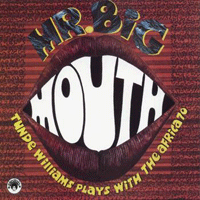
TUNDE WILLIAMS
MR BIG MOUTH
LEKAN ANIMASHAUN
LOW PROFILE (Honest Jon's Music, two LPs or both on one CD)
A couple of Nigerian rarities: Fela Anikulapo Kuti's band, Africa 70, at the height of their popularity in Africa at the end of the seventies, jamming on four tunes. Each jam is about 12 minutes of the the slow sweaty groove you associate with Fela and each features one of his sidemen. Mr Big Mouth was Tunde Williams, lead trumpeter, and clearly a fan of Miles Davis. He turns in a brace of tunes. The second pair comes from Baba Ani, the baritone sax player. Fela sticks to keyboard and second sax. No hassle, just a mellow late-night groove. Actually there are lyrics, but not Fela's, some of the other band members recorded indistinctly do a sing-along chorus in what sounds like a live recording. A slice of low-fi funk n' fun from the clubs of Nigeria: It's one for the die-hard Sufferers and Shmilers.
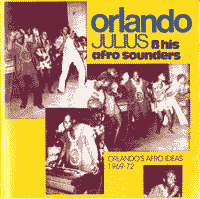
ORLANDO JULIUS & HIS AFRO-SOUNDERS
ORLANDO'S AFRO IDEAS 1969-72 (Ekosound 001 2003)
Here's one for fans of Afrobeat. One of the great Juju artists in an early incarnation doing the funky thang. Nine tracks available outside Africa for the first time, show another side of O.J., as well as another take on Afrobeat. It doesn't take long to build to the groove and, once there, it locks in. While Fela is usually credited as the pioneer of AfroBeat, it was O.J. & his Modern Aces who, from 1965, began pushing the Highlife sound towards American R&B, releasing SUPER AFRO SOUL in Nigeria in 1966. Four members of O.J.'s band defected to Fela's Koola Lobitos, taking the sound with them.
O.J. is best known for his early 1980s American hit DANCE AFRO BEAT. I remember running into him in Leopold's Records in Berkeley in 1984 and being amazed to learn he was teaching African percussion on campus just two blocks away. After working in the US for two decades, he returned to Nigeria in 1998 and continues to make music. This album fills in an important gap in his career as well as a big piece of the story of Afrobeat. After two of his early singles (one a welcome to Nigeria for James Brown), we get the whole of the album ORLANDO'S IDEAS from 1972, where the band are stretching out. It was right after this important album that he decided to emigrate to America. Who knows where the music would have gone if he stayed, however some statements only need to be made once.
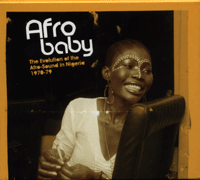
AFRO BABY
THE EVOLUTION OF THE AFRO-SOUND IN NIGERIA 1970-79 (Soundway CD002)
The next installment in the story of Nigerian soul, funk and R&B comes along in a handsome package with more great near-lost sounds from the 70s. Following up on the great GHANA SOUNDZ album from Soundway last year, this one shows why Afro-beat and Afro-funk have such staying power and continue to attract new fans. Fela is here but he is only one of a roster of great Nigerian artists who took the message of James Brown, "Say it loud, I'm black and I'm proud," to heart. The Afrocentric beat had strong reverberations in Lagos. For me the strongest tracks on here are by the stalwarts of the sound: Victor Olaiya and Orlando Julius, whose track "Mura Sise" is the outstanding gem here. (It can also be found on OJ's AFRO IDEAS CD.) But there's lots to discover here. Fred Fisher's "Asa-sa" thumps right to the middle of the dancefloor with its heavy beat. It's something of an all-star session with Fred on trombone and Tunde Williams of Africa 70 on trumpet adding some punchy horn stabs. Fred's twin brother Bob Ohiri, lead guitarist with King Sunny Ade at the time, plays a Famous Flames riff while monster bassman Ken Okulolo (from Johnny Haastrup's Mono Mono and now of West African Highlife Band) keeps it booming. Call and response vocals in the style of Fela make it instantly memorable.
VARIOUS ARTISTS
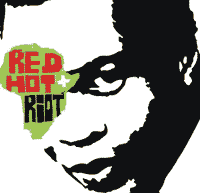
RED HOT + RIOT (MCA/Universal Music)
I went off Fela Kuti for reasons other than his popularity in the West. I always liked his albums and he deserved crossover success as a contemporary of James Brown. But I saw him in concert three times and each time he was insufferable and not "Shmiling." He hogged the spotlight, taking over the solos from his more talented sidemen, made long ranting political speeches, and generally showed what an egotist he was, flaunting his gaggle of young and pretty wives who were paraded like chattels on the stage. Nevertheless his music was supremely important and who can fault a lack of humility given his situation in the realpolitik of Nigeria. His worst break was of course dying of AIDS-related illness in 1997. We've all lost friends, teachers, and those we admired to this disease but it seems to be leveling off in our society. However in sub-Saharan Africa more than 20% of the adult population is affected by HIV, and in the next 20 years 55,000,000 Africans will die of AIDS-related causes. (This will not alleviate the problems already there brought by famine and war.)
The latest installment of the AIDS benefit CD series is called RED HOT + RIOT and is totally devoted to the music of Fela, remixed sampled and spun out with varying degrees of success by a batch of mostly African artists. Fela's music, of course, lends itself well to this treatment as it is cyclical, groove-oriented and trancelike and can be broken down into samples easily. Also there are the famous riffs: "Suffering and Shmiling," "Water no get enemy", "Zombie," to name the most obvious. These riffs are even famous in the US and everyone knows at least the chorus. So when a talented bunch of people including Djelimadi Tounkara, Roy Hargrove, Blackalicious, Jorge Ben Jor, Cheikh Lo, Les Nubians, Dead Prez, Meshell Ndegeocello, Archie Shepp, Baaba Maal, Sade, Lenine and Tony Allen (Fela's original drummer), sample Fela tracks and rework them, the result is bound to be interesting. Add in snippets of Fela saying things like "I have death in my pouch, so I can't die," and you have a very interesting document, and a solid addition to your Fela collection that goes a lot further than, for example, the posthumous Bob Marley tracks with dancehall additives that did nothing for the music. I thought of Marley's Ghost because the remixing inevitably uses dub techniques.
Cheikh Lo's "Shakara/Lady" is a good example and is a real dance hall crasher. It segues into a dance mix with Manu Dibango honking pontifically. Djelimadi Tounkara adds great "pan-African" guitar to "Tears and Sorrow" delivered by an artist known as Common.
"Zombie" is the first weak track (#13, at 37 mins in!), delivered in a bad cover version by Bugz in the Attic featuring Wunmi. I have no idea who they are but assume they have some hairstyle-of-the-month status that got them aboard the project. (Aha! Instant answer: "You saw her first as the famous braided Soul II Soul dancer showing the world the moves of the new soul vibes in her self designed clothes." -- Google search result.) Part Two is much better with Roy Hargrove on trumpet, adding to the original baritone bomp of Oluwaseyi Clegg.
The producers, made a smart decision in putting the mellow stuff at the end. After Sade, we get Lenine, one of Brazil's great singer-songwriters with a band called Yerba Buena (!) doing "Colonial Mentality" for a brief ninety seconds then it turns into a Baaba Maal album for the last ten minutes. Kaoding Cissoko's kora adds the magic to transport us to Mali, but the band on this cut, New York-based Antibalas, are one of the best Fela tribute bands. Added to this is Taj Mahal doing the English vocals and playing acoustic guitar. This is an excellent fusion, and a great rounding out to the album. A fine concept, well executed.
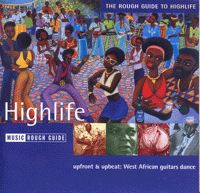
THE ROUGH GUIDE TO HIGHLIFE
(Rough Guide RGNET 1002 CD)
Graeme Ewens compiled this set, and what a pleasure it is! From the blissfully dystonic Celestine Ukwu to the squelchy Burger Hilife of George Darko, the disc tells the story of one of the happiest, party-ing-est (!?) musics known.
One of the cornerstones of the Highlife sound is an out-of-print album simply titled AFRICAN MUSIC that came out on Dutch Phonogram in 1983 (cat 814 480-1). It's due for reissue as it features the crème de la crème of Highlife; Rough Guide could have simply reissued it. Two of the artists on there are conspicuously absent from the Rough Guide: Gentleman Mike Ejeagha and Prince Nico Mbarga, who in their way bracket the music from the sixties through the eighties. However, all the other great highlife stars made the Rough Guide, and certainly all the choices are hits. It kicks off with Celestine Ukwu's "Igede" which can only be described as a Desert Island disc, one you have to have. But again, as on the Dutch compilation (and even Ukwu's GREATEST HITS compilation that Flametree did in 1997), it's only Part One of this scorcher. (If any future compiler is interested, Part II is on Polydor LP polp 093, that also contains his hit "Money Palaver.") Like so many of these musicians, Ukwu's career was truncated by the Civil War and tragically cut off by his premature death.
There are two tracks by Sir Victor Uwaifo on AFRICAN MUSIC: "Ekassa 24" and "Five days a week love," either of them a better choice than the obvious pick, "Guitar Boy," which wears thin. I'm sorry Mike Ejeagha and his Premier Dance Band, who ruled the sound in the early sixties, didn't make the Rough Guide, but it is truly surprising that Prince Nico was omitted. He was the biggest Highlife star (He died in a motorcycle accident a couple of years ago). Perhaps the fact that his songs were hits outside Africa has damned him to exclusion, but then George Darko had one hit in Germany, compared to the several hits Prince Nico had internationally.
Ewens' love for Franco is evident in his choice of Alex Konadu's "Asare" which has a flanged guitar imitating the style of the Grand Master. Inyang Henshaw is new to me. A member of the minority Efik people, his track is light and pleasant in a "Blue Spot"-ish way. These old-time songs are great and it's wonderful to have them all being recycled again, but I wonder what is going on in West Africa right now. The political and economic news is bad and it could be that indigenous music is in a sorry way. Highlife itself fell victim to reggae, and a curfew effectively killed the club scene. People stayed home and listened to cassettes.
The big shocker on this Rough Guide album is the licensing credits. Most of the tracks, including the classics like "Bere Bote" by Rex Lawson, "Omo Pupa" by Victor Olaiya, "Guitar Boy" of Victor Uwaifo, as well as the bracketing tracks by Ukwu and Darko are currently unavailable. If you don't have these artists' albums, you'd better grab this Rough Guide and then you'll know what it is you are supposed to be looking for!
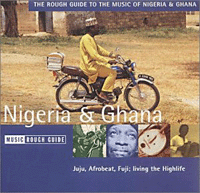
THE ROUGH GUIDE TO NIGERIA AND GHANA
(Rough Guide RGNET 1075CD)
Even without liner notes you'd recognize the music on THE ROUGH GUIDE TO NIGERIA AND GHANA -- I.K. Dairo, King Sunny Ade, C.K. Mann, Tony Allen, Captain Yaba, Adewale Ayuba, Sir Victor Uwaifo, E.T. Mensah, Eric Agyeman, Chief Stephen Osita Osadebe, and Sweet Talks comprise this album. From Highlife and Afrobeat to Juju and Fuji this CD covers all the bases in Anglophone West African pop. The only artist I didn't know was the last one, Amazeba Nat Brew who has five albums out in the speedy kpaalogo style which owes something to soukous and other international styles. This may be the future of the music but the more traditionally based artists like Chief Stephen still sound great (& appeal to me more). This album also reminded me we haven't heard from Captain Yaba since his killer debut funk album, TINANURE, six years ago. I'd have liked to see Celestine Ukwu in the line-up. But then there's also the African Brothers, the Oriental Brothers, Prince Nico Mbarga, the Ramblers and Rex Lawson -- enough artists in fact to make up a sequel, or call it a prequel and emphasize the roots. Then again Adewale Ayuba's "Fuji Shuffle" is as rootsy as it gets and will delight anyone just getting into Nigerian music backwards, that is through the recent popularity of Afrobeat. Unfortunately it's only a 6 minute piece, and Fuji kind of takes over so you need to play a whole hour's worth. But then the point of any successful sampler is to get you to buy the whole album sampled. This Rough Guide does a great job of covering all current styles while paying homage to the pioneers like Dairo and Mensah. This must have been an easy and fun compilation to put together and hopefully will expose more people to the deep riches in Nigerian and Ghanaian music.
VARIOUS ARTISTS
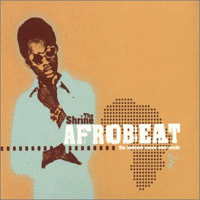
THE SHRINE AFROBEAT (Union Square Music)
What explains the sudden surge in popularity of the music of the late Nigerian superstar Fela Kuti? His numerous albums are appearing on CD; the original scratched LPs are going for ridiculous sums on EBAY; there's boxed sets and a slew of Afro-funk albums. The answer is quite simple: it's easier to display a stuffed tiger than a live one. While Fela was alive he was a tricky even problematic character, always giving promoters a hard time, putting out brilliant albums then going on tour and refusing to play anything the audience might be familiar with. THE SHRINE AFROBEAT is a compilation of Afro-funk from England's Ocho label that kicks off with a typical if obscure Fela cut, "Fefe naa efe," based on a Yoruba proverb in praise of breasts. Then it goes off into dream space for "Yegelle Tezeta," an Ethiopian jazz groove that is sort of dance-floor filler material while people get drinks & the deejays find their direction. Then an old fave, "Washi Wara," a Latin groove by the great Bantous de la Capitale rocks the house. Surprisingly the fourth track sounds like rockabilly: that's Jimi Solanke's "Eje Kajo." C.K. Mann's "Funky Hilife" takes a typical highlife ballad and halfs the tempo adding a bassline from funk. Historically it's interesting but I don't see it making it on the dancefloor which allegedly was the criterion for inclusion on this compilation. Similarly King Sunny Ade's "Synchro system" was important in its day (July 20, 1984) but it's no longer something you play at parties unless you are really a neophyte. Captain Yaba, on the other hand, is waay cool, and the Ghanaian's "Yaba funk" from his 1996 CD TINANURE really slams. (Yes I know the origin of "cool" comes from Yoruba.) Manu Dibango's "Wakafrica" is pleasant but his playing is very lounge. He lacks the creativity of Jean Serge Essous or the real edge of Momo "Wandel" Soumah. The CD ends with a new cut from trappist, er trap-drummer Tony Allen, co-creator of Afrobeat with Fela, adding dub to a characteristic slowly building percussion piece with chicken-scratch guitar. Overall THE SHRINE AFROBEAT is an interesting concept and a tribute to a style of music that essentially died with Fela. There are many other Highlife artist worthy of this compilation like Black Masters or African Brothers, but the serious omission here is Sonny Okosun. Artists like Captain Yaba will take elements of it and help it evolve. (I'm assuming readers have the Captain Yaba album, if not, buy that instead of this.)
WEST AFRICAN HIGHLIFE BAND
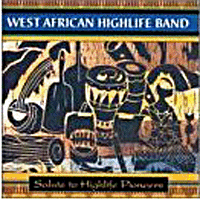
SALUTE TO HIGHLIFE PIONEERS (Inner Spirit IS03CD 1998)
A great party album that goes to the roots of Highlife and enlivens your spirit from the get-go. The band (who rightfully should be called West African Highlife All-Stars), based in Oakland, California, are almuni of some of the great Nigerian bands of the 1960s, when they were all starting out. Now elder-statesmen of the music, with busy fingers in other bands like Kotoja and Nigerian Brothers, the modest quintet put together a "greatest hits" of their youth rife with memorable riffs. But this is no "Stars on 45" reprise, it's an all-out jam! Bobby Benson's "Taxi Driver" will be best-known to new ears (it was even covered by the wacky 3 Mustafas), but the others are equally gold, from Rex Lawson's "Bere Bote" to Victor Olaiya's "Omo Pupa." My only regret is that there's no trumpet, which would have sweetened the sound. Instead Pope Flyne's keyboard takes the part. Flyne, ex-Sweet Talks, contributes two songs and bassist Ken Okulolo appends the closer, "Kajo." As one of the many hits on this glowing disc attests, "It's time for highlife!"