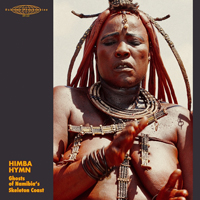
HIMBA HYMN
GHOSTS OF NAMIBIA'S SKELETON COAST (Sublime Frequencies)
Like good little children, the Himba are seen and not heard. Seen because they are a tourist attraction like pygmies at the world's fair in the nineteenth century. As they walk around wearing only the barest loin cloths they appeal to those camera-wielders who seek the sight of nubile breasts in the wild. Listening to these semi-nomadic hunter-gatherers put me in minds of the Mbuti pygmies (the only "primitive" people I have personally visited) and also made me think about how man came to make music. Happily settled in their desert world, I believe they are closer to our African ancestors who left the caves 300,000 years ago to go hunting. They needed to signal one another over long distances so probably invented whistles from hollow bones or pieces of wood they could blow into. Hollow animal horns too amplified sound if you put your mind, and lips to it. Similarly, if you have ever swung a piece of kelp round your head on a beach you discovered the thrill of a bull-roarer. You can play with echoes in caves or rock walls: just some of the ways nature encourages you to make music. This engaging album presents a spectrum of their music with singing and rhythmic musical pulses made on primitive instruments such as a blown oryx horn. There is a beaten strung wire instrument that reminds me of a berimbau. The singers cup their hands over their mouths to create effects eerily like flanging, like kids beat-boxing. They also mimic wild animal noises, as one does. Ian Brennan the producer admits to using digital looping effects on three tracks, which enhances the sound. Brennan travels the world looking for under-represented people to record. He won a Grammy for Tinariwen's Tassili (2011) and has also recorded Ramblin' Jack Elliot among others. The label claims this is the first recording of the Himba people but I have an LP recorded by Gerhard Kubik in Angola in 1965 released by the Royal Museum in Tervuren that sounds like the same people. It is called Humbi en Handa so I am persuadable that it is a different tribe. Yet some of the pieces do sound familiar like the call and response, with panted response, "Who is going to welcome the white people?"
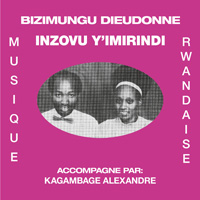
BIZIMUNGU DIEUDONNE
INZOVU Y'IMIRINDI (Mississippi Records)
Rwanda used to be in the news for all the wrong reasons. In the 1990s Hutu militias started wiping out Tutsis in a mad purge of ethnic cleansing, much like the Israeli Zionists are doing to the Palestinian Muslims right now. Rwanda settled down though it still raised eyebrows when Boris Johnson planned to deport undesirable aliens to repopulate the country. Britain managed to resettle 4 undesirables at a cost of £700 million before a court ruled the move illegal. They could have bought them a Caribbean island for that. Now the US has started shipping unwanted immigrants there. That's all they need: a bunch of Latin-Americans suspected of narco-terrorism. So there is great irony in the shirt-sleeves of Arsenal, PSG and Bayern footballers, and even the LA Clippers, which read "Visit Rwanda." Rest assured, once you get over the fear of never coming back, they have great scenery and gorillas. Of course there's no guarantee you can actually meet a gorilla (I know first-hand; I can tell you about it some time). But music, now they do, or did have music. Back in 1954 UNESCO made some field recordings of the three main ethnic groups — Tutsi, Hutu and Twa — everyone heard the thunder of the Royal drummers, but it was familiar from the more famous drums of Burundi, and as a friend said, was the soundtrack to drown out the slaughter. And the other recordings of flute or musical bow could have been from any of the surrounding central African nations. But something completely different was produced in the late 1980s by a small group comprising Bizimungu Dieudonne, his wife Agnes and other members of their family. As "Mungu" means god, I guess he was doubly blessed, since his last name means "God-given". Their otherworldly music is updated praise songs, with great studio effects adding a haunted sound to the melodic guitar (with occasional country licks), pumping electric bass and echoey beaten stick and rapping snare percussion. The latter oddly reminiscent of Moe Tucker of Velvet Underground. The singing reminds me of medieval church music at times, but you can decide for yourself. Voice of America host and blogger Matthew Lavoie cherished a cassette of their music he found, and brought it to the attention of Mississippi Records who asked a current VoA producer to see if he could track down the group's survivors or relatives. Sadly they were killed by Tutsi, but their daughter, 8 at the time, survived and held onto a precious CD of the original studio master recordings. This amazing artifact is now remastered and pressed on vinyl for all of us to treasure.
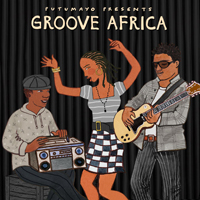
GROOVE AFRICA (Putumayo)
Many labels are run by monomaniacal bosses and this can be good or bad. There are ruthless moguls like Ahmet Ertegun of Atlantic and easy-going ones like Jim Stewart and Estelle Axton of Stax/Volt (who were swindled out of their catalog by Ertegun. Wait: to avoid libel, let me say they were diddled out of their catalog, since they did not read the small print). Putumayo had a singular vision, that of Dan Storper who passed away in May 2025. As I understand the story, he saw a river valley in Colombia called Putumayo when he was looking for ethnic goods to import to the US and this enchanted place inspired his label name. Instead of going through normal music retail channels he opted to place his product in boutiques, gift stores and cafes: they would be on the counter and the store would get a free display case and promo copies to play the music and create a tropical worldly vibe and hopefully lure customers into buying impulsively. He quickly found an artist named Nicola Heindl to create a brand identity with happy naive "we are the world" paintings that frankly are disgusting. They are so bad it turns me off to the music before I have even hear it. Yes, I am very sensitive to packaging! (When he signed Ricardo Lemvo in 1998, the artist insisted, naturally, on having his photo on the cover.) The Putumayo A&R man Jacob Edgar made some brilliant compilations, such as Arabic Groove and Republica Dominicana, and with a growing network of contacts, they issued some fine compilations. However, they leaned towards Easy Listening and that is true of this latest offering which could be called Sleepy Time Africa. (To me "groove" suggests driving hard, not laid back.) There is a Lemvo track on here, which is good, and Maher Cissoko's kora-driven "Minoyamba" from Senegal is a gem. The Lemvo track comes from La Rumba Soy Yo (2014) which came out on Cumbancha which, not coincidentally, is the independent label of Edgar, which in general issues deeper material.
I am not a sucker for punishment but I then tried out Latin American Women, another new issue on Putumayo, because it promised some unknown (to me) Cubans, etc. Now if anyone asked me, I would tell them Divina Banda is one of the hottest female groups from Cuba. They know how to groove, but the strongest entry here is a cover of "Patria Querida" by Rita Donte. I skipped through the remainder (very quickly through "La Paloma" by Juana Luna) and that was enough. I have known Jacob Edgar since pre-Putumayo days in San Francisco and he graciously covered for me on my radio show when I was on vacation. So he has heard these gripes from me before, and you may think it is insensitive to criticize his label when Storper has just passed away. But then recall Cyril Connolly who wrote a critique of A. E. Housman (in The Condemned Playground) and called him out on his feeble poetry in an obituary. When readers objected, he responded, you can be dead a day or a century, it makes no difference: there is no "etiquette of the grave" and one should re-evaluate a person's legacy when the memories are fresh.
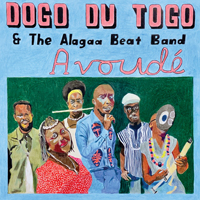
DOGO DU TOGO
AVOUDE (We Are Busy Bodies)
Dogo returns, backed by the Alagaa Beat Band, in a relentless whirl of guitar and complex pounding drums. He has synthesized traditional Togolese voodoo music with American funk and R&B. The production values are high; the tracks are brief, in the "hit it and quit" mode, rather than the Fela twenty-minute harangue we know from a lot of Afrobeat albums, though the feeling is similar in places. Overall it is poppy and upbeat. An excellent trumpeter comes in on "Enouwo Lagnon" which also has giddy synthesizer reminiscent of the 70s. The arrangements are tight, the rhythms churning, though the nostalgic element also stretches to a "phone-voice" mic. This brought to mind Flash and the Pan, whom I have not thought about in over 40 years! There are plenty of ideas, the songs reaching in many directions, all of them threatening to overflow the self-imposed 3- or 4-minute pop single limits.
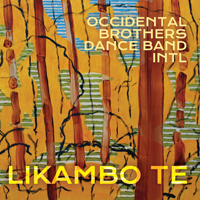
OCCIDENTAL BROTHERS DANCE BAND INTERNATIONAL
LIKAMBO TE (Self-published)
"Likambo Te (No more problems)" is the third and latest offering from Chicago's resident African band, Occidental Brothers. The opening track, "Zambiri," is pure soukous, reflecting, I guess, guitarist Nathaniel Braddock's recent pilgrimages to Congo where he jammed, visited guitar makers and the graves of some notable elders (according to his facebook posts). The group's bona fides are assured with the second track when the great Samba Mapangala of Orchestre Virunga shows up. In fact he sings on most tracks. Matthew Tembo from Zambia delivers two other songs. What sets this apart from other African-inspired bands is the high level of musicianship, such as the fluid jazz saxophone of Greg Ward, along with the interlocking guitars. Danceability comes in the form of a mbaqanga-flavored number called "Taxi drivers" and the jazzy "Asiri ni asara (A secret is a loss)," sung by Mapangala.
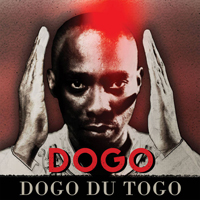
DOGO
DOGO DU TOGO (self-published)
I heard the first single off this album 6 years ago, so it has been a long-term project, and Dogo has put a lot of energy into making this a beautiful album of gentle acoustic guitar ballads with traditional melodies, rhythms and percussive backing. As it is a small country squeezed between Ghana, Benin, and Burkina Faso, Togo has a lot of music that is familiar from those neighboring countries too, whether they are Ewe or Kabye people making the music. One regional artist that Dogo's music brings to mind is Gnonnas Pedro. And of course other influences crept in, from James Brown in the 60s, to Highlife in the 70s, and Soukous in the 80s. Recorded in Lomé, Togo, Dogo brought together local musicians, including his own teacher to play lead guitar. This man, Serge Kodjovi, also know as Oya Yao has played in rock bands, jazz bands and of course understands the traditional guitar patterns also, whether pentatonic or otherwise. But the group of musicians are equally talented, in fact most of them are soloists or in other working bands too. Part of Dogo's sophistication comes from his global perspective. He now lives in the USA after coming here to study, but discovers, while he is a foreigner here, he is also a stranger in his homeland when he returns. I know how he feels. This gives you a keen perspective on both places however. There's an interview with Dogo on Afropop, if you want to learn more.
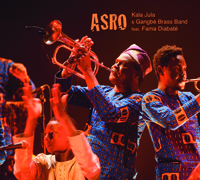
KALA JULA / GANGBE BRASS BAND / FAMA DIABATE
"ASRO" (HOMMAGE A KASSE MADY DIABATE) (Buda Musique)
This is a live recording, made at the Crochetan Theatre in Switzerland in 2021. I was thrilled to learn it was new from Gangbé Brass Band, who have not put out an album in a decade, but sadly they are only a third of the acts. However they come out blasting with a vivid rendering of the New Orleans favorite "Big Chief," renamed "Takin." Track two, "Gèdé," also catches fire when the gang jump in. This series, "Kala Jula," of acoustic performances was begun in 2011 and has toured the globe as showcases in Mali, Switzerland, Portugal, Cabo Verde, UK, etc. This is their third release and features band-leader Vincent Zanetti, a Swiss who plays kora and djembe. The other acts remind me of Rail Band-era Salif Keita and Mory Kante, which is interesting, in the choice of material and arrangements, but with kora instead of guitar. It could be because of the recording situation, live in a big hall, which echoes the Rail Band sound from their first albums on RCAM (Rail Culture Authentique Mali). You can watch the show on Vimeo with a paid account. Parts of it are on Youtube, including "Asro," the bluesy "Treme Cisse," & "Sanuge jimba." What make it stand out (for me) is the involvement of the horn men, with great solos and tight arrangements by trombonist Martial Ahouandjinou. The atmospherics also lend much to the guitar and kora duo on "Mali Sadio," and later tracks like "Mi dovi azomé" where they really let fly with guitar and djembe as well as trap drums and a big horn presence. The guitarist is Samba Diabaté, also a balafon player, whose father was part of the famed Instrumental Ensemble of Mali. He has toured with Sali Sidibé, and also with Rail Band's guitarist/founder Djelimady Tounkara. Aha! So my supposition was right. There are more Diabatés: Mahamadou Diabaté sings and plays djeli ngoni; he brought his 14-year-old son Fama Diabaté who also sings lead and plays balafon on here. Fama is now wearing the mantle of his late uncle, Kassé Mady (who sang with Badema National as well as solo and on collaborative albums with Toumani Diabaté). Without digging through my albums to compare titles, "An ka ke nyogen fè" also sounds like Rail Band, which is hardly surprising. Vocally, Fama is a nice throwback to that era. It's an interesting effort, mixing griot traditions with jazz-funk and afrobeat, but may not be to everyone's liking.

VIBRO SUCCES INTERCONTINENTAL ORCHESTRA
DRUNKARD (Dig This Way DWT0100)
A reader (Nick Beddow) alerted me to this fine disc that came out in February 2022, which I probably ignored because it was labelled "Afrobeat and Soukous masterpiece straight from Nigeria." First off it is from Bangui, which we all know is in the Central African Republic. And yes they do have their own music there, which if you were uninformed you might think was afrobeat or soukous. Sax-player Rudolphe Bekpa formed the group in the late 60s and they went from a nightclub stand to being promoted to official national orchestra. Their popularity spread to Cameroun and Chad and when they got to Nigeria on tour in 1976 they started cutting albums. This fine three-song gem came out in 1978. Side A is taken up with the title cut which really gets you grooving: it's a high energy riff with thrashing drums and a sax-led horn section; the vocalist begins to approach the mike around 8 minutes in! The whole band sounds like an express train. I assume the lyrics are about drinking too much, but the focus is on the guitar and drums and how long can they keep this up?! The second side has two tracks "Marine Yanzoni," definitely has an influence from African Fiesta, not only in the guitar and arrangement but in the vocals too, for the first 90 seconds then they go into their chugging rhythm which is more Vévé-style. The last track reminds me a little of Les Veterans from Cameroun, so it's safe to say they absorbed influences from the nearest Francophone countries; still they created a unique sound and it is as fresh as ever.
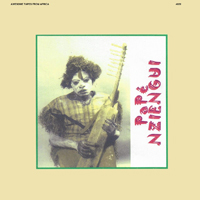
PAPE NZIENGUI
KADI YOMBO (Awesome Tapes from Africa)
Gabon is still one of the darkest parts of Africa, by which I mean you don't hear much in the way of modern music. We know there are strong traditional concerts being performed by the Bwiti. Papé Nziengui plays an ngombi harp, usually heard in Tschogo rituals, but he is outside of that tradition, and has added mouth-bow, guitar, percussion, synthesizers, and a female chorus. With all of this, Nziengui created a deconstructed modern mini rock-opera, which appeared on CD in the late 80s and will be reissued as a double LP by Awesome Tapes from Africa. This ritual music traditionally accompanies ingestion of the Iboga root, or Ibogaine, which causes hallucinations, as I can attest. (The drug is illegal in the US but could be useful in treating opioid addiction.) So you can expect a lot of echo and delay on the sound effects added to the album. The response to the album so far has been strong. A rare clip of Papé Nziengui on Youtube is possibly the motivation behind this interest. It's extremely eerie. Tetsuji-san posted a long piece of Bwiti traditional harp music on muzikifan's facebook page, and further musical comments, such as this gem, came from other muzikifans. As an apostate, Nziengui opens himself to condemnation, even the threat of execution, for betraying the sacred mysteries of the Bwiti. As a child he was spotted on a TV talent show and toured the world with the National Theatre. But now he has attained such popularity in Libreville that this may protect him from the conservative brotherhood.
KELEKETLA!
KELEKETLA! (AHED024)
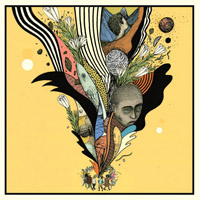
For years people talked about Fela Kuti as creator of the new musical form called Afrobeat, but listen to this latest (though not final) recording of Afrobeat and you can hear what makes it groove: it's the drumming of Tony Allen (who died in April 2020). This group is a London-based collective that encompasses musicians from Lagos but also a large cadre of Johannesburghers. The project began when Coldcut (producers Matt Black and Jonathan More) from the UK visited the Keleketla! Library in South Africa, a media arts center, and agreed to work with local talent, including jazz musician Sibusile Xaba and percussionist Thabang Tabane, son of the legendary Philip Tabane, founder of Malombo. The opening cut "Future Toyi Toyi" should be enough to sell you on this, however it quickly falls off with the wimpy lyric refrain of track two "International Love Affair," despite the best efforts of Allen and the baritone and tenor sax to keep the beat in the pocket. Sometimes instrumentals are just better. Diaspora albums don't always work well but this one congeals around the rhythm with the jazz horn section fully up to the mark. I believe the big horn section is from Antibalas. The searing sax solo in track two is stellar. Track 3, "Shepherd Song," is back on track. "Freedom Groove" and "Crystallize" with female rapper Yugen Blakrock don't do it for me. I liked the Last Poets & Gil Scott Heron in my youth, but political rants with a smooth jazz background seem anachronistic to me now. "5&1" has another good groove, though it starts out very loungey, a double-tempo drum kicks in and the piano comes alive. "Papua Merdeka" pays a surprise quick trip to New Guinea, with a call for the independence of the West of that island from Indonesia, and again Tony Allen is the hero with a great sax beefing up the big finish. The disc returns to short edits of the first three tracks. It's cyclical but also reminds you of what was engaging about it an hour earlier. Bottom line: worth checking out, but only the opener "Future Toyi Toyi" is a keeper, imho.
ALHOUSSEINI ANIVOLLA & GIRUM MEZMUR
AFROPENTATONISM (Piranha PIR3370)
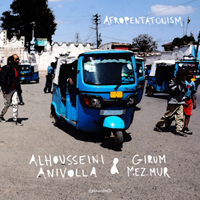
The Saharan desert stretches clear across Africa and if global warming continues it threatens to jump to Central America too and we will have more desert spreading where once were forests. In North Africa, cultures flowed in all directions like the desert winds and music came along for the ride, from simple one-stringed instruments to five-stringed lyres in the East and ultimately the arrival of the electric guitar in the Western desert. Alhousseini Anivolla came from Niger, first as part of Tinariwen the Toureg bluesmen of the desert who broke out with Festival performances in Mali and then Europe. His next project was Etran Finatawa another tradition-based group singing in the Tamashek language. Girum Mezmer is also a guitarist who comes from Addis Ababa, Ethiopia where he has led the band of Mahmoud Ahmed and also appeared with Angelique Kidjo. The two met at a 2005 Festival and decided to collaborate. To this album they brought a percussionist and several other talented East African musicians: Habtamu Yeshambel on masinko (a one-stringed Ethiopian violin that sounds like the Malian djourkel) and Anteneh Teklemariam who plays a five-stringed lyre. In addition a 78-year old mandolin player from Addis named Ayele Mamo joined in. Anivolla sings and the others jam. The album was recorded live in concert in Nairobi (the sound is beautifully captured) and it transcends the usual monotonous desert blues of the Niger bands with layers of interest here added by the guests, the violin, mandolin and lyre all playing in counterpoint and weaving their own ideas around the melodies, while the slapped calabash keeps the beat. The guitarists occasionally break out but are encumbered by the perpetual A-minor<>E-minor seesaw of the tunes. They do break forth on the instrumental "Isouwad." Although the participants don't speak the same language they share the same 5-note scale and communicate beautifully throughout this disc.
TOUKI
RIGHT OF PASSAGE (Touki)
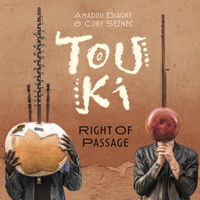
I am always a bit leery of white guys playing African music and spontaneous jam sessions that lead to albums, but I am willing to be wrong on both counts. Amadou Diagne, a kora player, first encountered Cory Seznec, playing his 5-string ngoni on the ancient pavements of Bath in rural England. The two hit it off and decided if the chance arose they would make music together. Touki, their collective name, means journey in Wolof. So they went their separate ways. Then a British Arts Council grant brought the Senegalese and the Franco-American together to record this album. It's mellow and very traditional sounding, though of course the English lyrics really put me off. "Met a girl, tied the knot, then I went on the road... listen to the sound of the train," etc, etc. Cory's background is in blues guitar and bluegrass banjo (some of which you can hear on "Yaen Yalay," very nicely pulled off); and he is steeped in American folk traditions. But Seznec is no parvenu: it appears from his past discs he has been skirting Afrobeat guitar and ngoni for some time, so adding a kora and singer is a step forward. Overall this is a most enjoyable excursion into African fusion music.
ORCHESTRE ABASS
(DE BASSARI TOGO)(Analog Africa)
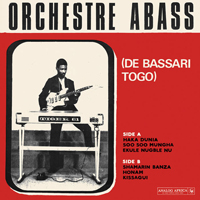
The latest discovery of Analog Africa comes in the shape of an album of Togolese funk from 1972-5, originally released as singles on the Polydor label. Organ, guitar, shuffling drums, and a vocalist grunting and growling in the best Afrobeat manner. Elements of Fela Kuti are apparent in the singing as well as in the riffs. All I can say about Orchestre Abass comes from label boss Samy Ben Redjeb who notes Arabic elements to their music from their location, the northern Islamic part of Togo. The founder of the group, Malam Issa Abass, was murdered in 1993, but Samy tracked down Abderaman Issa, the guitarist and one of the songwriters. It has been reissued on limited edition vinyl and is also downloadable from bandcamp. There are six tracks, two of them previously unreleased, discovered in a vast trove of abandoned Polygram master tapes in remarkable preservation in a warehouse in an undisclosed location in Central Africa. "Kissagui" the last track is the most interesting to me as it seems the least derivative of Fela. However Samy is a great champion of what he calls "the Islamic funk belt" which stretches from Northern Ghana to Northern Cameroun and includes bands like Super Borgou de Parakou as well as Abass. If you liked the Afro-beat Airways compilation, where they were featured, this one is for you.
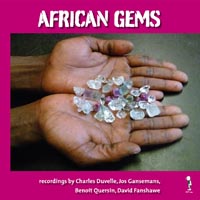
AFRICAN GEMS (Sharp Wood Productions 043)
The Charles Duvelle commemorative album, which I reviewed last month, got me to dig out some of my treasured OCORA albums and I started looking at the names of the people who recorded the music. Some other music pioneers, Hugh Tracey and John Low have been lionized, not only in the Sharp Wood Series, but also Original Music of John Storm Roberts who produced wonderful reissues of their recordings. What convinced me to buy African Gems was partly that it's what you might call "tribal Africa's greatest hits," but also that Sharp Wood's A&R man, Michael Baird, is a percussionist and drummer and is going to have a different take on what the great field recordings are from your humble reporter (I admit I got my Doctor of Rhythm doctorate from a mail-order college who gave me credit for "life experience"). The importance of these recordings is obvious: between 1965 and 1984 four white men, an Englishman, a Frenchman, and two Belgians, traveled the heart of Africa recording tribal music. Since then war, famine, HIV/AIDS, not to mention the onrush of modernity, have made this traditional music quietly disappear from the earth. But they captured vital musical moments, documents of life as valid as books or movies, maybe more so because of their immediacy. Tourists go looking for it, and perhaps are treated to a mock or recreated initiation ceremony but things slide out of reality, lose their context. In 1983 I visited the Mbuti pygmies (first celebrated by Colin Turnbull), and they put on a concert for my companions and me; they hocketed, jumped about imitating monkeys and generally tore the place up -- for a small fee. We spent a week camped near them in their forest village made of leaves and twigs, and traded them sugar and flour for pot, or to take us hunting. We were offered precious stones (probably bogus), gold (ditto) and even bark cloth, which was lovely but too fragile to transport. I traded a thrift store HARVARD t-shirt for a lovely sanza (thumb piano). (The t-shirt was immediately turned for cigarettes to the local "bigmies" -- normal-sized Africans who lived off the pygmies.) Several of the little people wore necklaces that had stones and seedpods on them. One day I asked one of them who spoke French the significance of those necklaces. Some Italians were here a few months ago and gave them to us, he said, would you like one? I have no doubt one of those necklaces is now in some ethnographic collection with a note, "Ituri rainforest 1983: Mbuti pgymy." So to the disc: the opening track comes from OCORA 25 Cameroun (the one with the cover that was plagiarized by Analog Africa for their disco reissue). It is outstanding, but then so are the 11 cuts that follow. A track like "Mbilé" by a kendé (xylophone) soloist is so rich you have a hard time believing it's only one performer. He accompanied a wrestling match in Chad in 1966 and here the track is restored to its full length. The kendé is an upright xylophone struck with four mallets, according to Duvelle, who also took a photo of the performer. Then we are treated to the "traffic jam" effect of seven ivory horns with percussion (Duvelle in Congo, also 1966). It's interesting that "out" jazz arose around this time and was also a product of African-American horn players. (Note the use of the word "horn"!) The segue into Alur horns from Uganda is great and the reason I wanted to give Baird the reins on this set! The horns from Chad performing "Sirhélé" are also extra-classic. It too slides seamlessly into one of the mind-blowingest pieces of "world music": "Gandja" music from Centrafrique. This is an initiation ceremony complete with chorus and ankle-rattles but the horn polyphony is completely trance-inducing. I admire the way the ten short themes flow together and marvel at their seeming lack of time signature. The anthology ends with an epic topical song sung to a home-made guitar with the choral singer frantically tapping a bottle. It brings us back to earth, though one can see why this music is the stuff that we sent into space to convince alien lifeforms that we earthlings have soul.
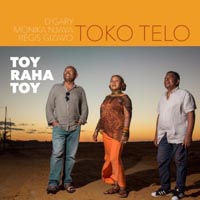
TOKO TELO
TOY RAHA TOY (Anio Records)
Remember D'Gary's 90s album of Malagasy guitar A World Out of Time which was produced by Henry Kaiser? After two decades he has returned (well, he has been touring with Bela Fleck and otherwise still plying his axe), and teamed up with Regis Gisavo who plays accordion, and Monika Njava, a singer who has performed with Deep Forest. They are called Toko Telo, which means trio, and celebrate their traditional Southern Malagasy music. Monika draws her lyrics from folklore but adds commentary from everyday life to keep them current, so corruption and environmental concerns, which we all share, are also part of her songs. In "Rapolany" a lonely woman stays out all night looking to meet men. She returns at sunrise and the neighbors whisper behind her back: her life floats up and down like a plane. It's a two-minute ditty which also floats up and down. In "Jiny Karo Karo" a young woman dreams of owning plaid jeans but can't afford them. Gizavo is unknown to me, but has the strongest pedigree. After winning Radio France's Prix découvertes in 1990 he performed with Cesária Evora, Richard Bona, Manu Dibango, The Mahotella Queens and Boubacar Traoré. That's some resumé. While he can adapt to any style his accordion is the perfect balance to the acoustic guitar on this mellow outing. His song "Mikea" is about the attrition suffered by the Mikea people whose forest homes are being destroyed. D'Gary sings about cattle rustlers, and in "Hainao Moa" about a drunk man who has to hitch up his cow to the cart carefully, because he wants to get home in one piece. We've all been there!
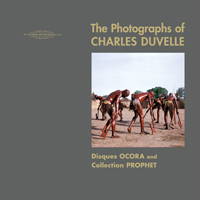
THE PHOTOGRAPHS OF CHARLES DUVELLE (Sublime Frequencies SF110)
There's a brilliant travel book by Redmond O'Hanlon called Into the Heart of Borneo. He and a friend undertake a dangerous trek into the depth of the jungle, hoping to meet a tribe that have had no contact with the outside world in over 50 years. One of the Rockefellers, Michael, was allegedly eaten while trying to make contact with these people in 1961. You learn that you don't pee in the river while bathing because there's a spiny fish that loves the warm piss and will swim up the flow and lodge itself in your urethra. But when the intrepid explorers get to their destination they find natives hoping they have batteries so they can play their boomboxes again and hear the Michael Jackson tapes they love so much. For much of the twentieth century, Africa had a similar shivering-dread/romantic appeal for daredevil travelers, but by the mid-century music explorers were going armed with reel-to-reel recorders and capturing the local music made in villages. While Hugh Tracey was working his way North from Southern Africa, the French National Radio had a man on the spot in the form of Charles Duvelle who covered West and Central Africa, then the Indian Ocean, South-East Asia and the South Pacific. Duvelle grew up in Laos, Vietnam and Cambodia, where his father was a colonial governor. Returning to France when he was 9, he studied classical piano and began to compose, and by chance came across a collection of tapes recorded in West Africa held by radio station France d'Outre-Mer. He offered to organize them and soon had a job. He saw a chance to escape the drab motherland and get back to the bright tropics. His radio station sent him first to Niger in 1961 to help set up a radio station there and he found many badly recorded tapes, done in the studio, and told his hosts that since the music was originally played in the field, as it were, they should go and capture it in situ. He set out with the radio host, who was his entrée to the villages, and brought along a Nagra tape deck and a Sennheiser mike. With griots or small ensembles he was able to set up his mike out of the wind and capture their performance, but he also got excited by the possibility of listening in on ceremonies and capturing the sound by becoming part of the action, moving around and adjusting his set-up so, in a sense, improvising with his recording equipment. Returning to France he issued three LPs: those from Upper Volta and Ivory Coast won the Grand Prix du Disque, and not only established him as a music producer but created a market for this music among anthropologists, musicians, travelers and fans in general. Duvelle ended up in charge of the sound archives of OCORA (Office de Coopération Radiophonique), which was established in 1964. The success of these early records led to the deluxe series published by OCORA with gatefolds, cloth covers, embossing, and booklets of photographs and notes that make these discs so attractive. Duvelle returned to Africa, visiting Cameroon and C.A.R. in 62, Dahomey (Benin) and Madagascar in 63, Kenya in 65, Congo (Zaire) in 66, Senegal in 1967, and then on to New Guinea in 1974 and so on. He was involved with FESTAC 77 and, bizarrely, the soundtrack to Fellini's Satyricon. The surreal juxtaposition struck Duvelle as a brilliant idea, making the African music seem like contemporary avant-garde music. Also in 1977 his field recordings from Burundi were selected by Carl Sagan to go on the gold disc sent into deep space aboard the Voyager spacecraft. And then those recordings of Burundi drummers were appropriated by Burundi Black. He felt that some of the royalties should go back to the people who created the originals so assigned the rights to the Burundi embassy. Here, in appreciation of Duvelle, we have a book the size of an LP with 230 pages of his photographs of musicians from all over the world, plus a discography (including 94 full-color thumbnails), OCORA catalogues from 1964 to 73, notes, articles and two CDs, one of African music, one of Indian. There are a few tracks from Papua incongruously interspersed in the African side, though one or two fit into the flow. This is a celebration of a remarkable individual and, for those like me, who grew up listening obsessively to the OCORA pygmy and ritual recordings, not to mention the mesmerizing Valiha Madagascar set, this is a wonderful treat. Rakotozafy from Madagascar became a celebrity in the world music world with his home-made bicycle spoke zither and you can hear him rock out on "Samy faly (Everyone can find happiness)" here. There's a thumb piano duet, a striking (ahem) xylophone piece from Gabon and another from Guinea which makes an interesting contrast. Then out of the blue we hear a bopal solo, which is a reed instrument made from a single millet stem, played by Moussa Sandé, a Peul shepherd, who just wails for 6 minutes. This Burkinabe could get up on the bandstand with Pharoah Sanders and fit in just fine. More balafons complete the African set. The second disc is a soothing collection of South Asian music including bansuri flute and drone from India and mouth organ from Laos. It's a completely different mood but rounds out the picture of this cosmopolitan and groundbreaking music pioneer.
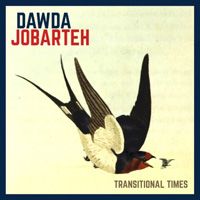
DAWDA JOBARTEH
TRANSITIONAL TIMES (Sterns STCD01128)
This Gambian artist, the grandson of the great Alhaji Bai Konte, is a kora player who has made the transition to Western music by hooking up with some Danish musicians. Gambians as a nation made the transition from their leader Dawda Jawara (who led the country since independence from Britain in 1965) to Yahya Jammeh who overthrew his predecessor in 1994 and rules with an iron fist. A BBC reporter called the Gambia "a cut-price paradise; a newly declared Islamic Republic where beer is cheap and sex is openly available to both male and female tourists." But there is a much darker reality to life there and many Gambians are "taking the back way," which means basically getting out of there. Jobarteh moved to Denmark and started performing as a percussionist, but his family traditions were so strong he had to take up the ancestral ax. Famously, he has collaborated with Toumani Diabaté in Mali, but seems very much at home with the Danske jazzmen, particularly Preben Carlsen who accompanies him on guitar on some tracks, adding a portentous jazz-rock Yes/King Crimson edge to "Efo." Jakob Dinesen adds lyrical sax to "Transition," which also has polyrhythmic undercurrents on djembe and traps to belie the mellowness. There's a flat patch in the middle with a jam that basically shows off the effects pedals and the drippy "Lullaby med Jullie," which I had to skip over.
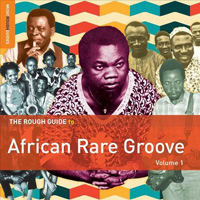
ROUGH GUIDE TO AFRICAN RARE GROOVE VOL 1 (RGNET 1323 CD)
The notion of African Rare Grooves is an interesting one in the age of the internet. 20 years ago you could find obscure albums on Ebay invariably selling for $100, but then more copies would turn up and the price would go down. The buyers became jaded and lost interest. I got burned by Parisian dealers, one of whom sent me a thrashed LP described as "VG" and when I complained snottily said, well stick to CDs then, and the other who sent me the wrong album twice! These parasites just change their online name when the negative feedback overwhelms them. When you have been scammed in England people call you a "proper Charlie"; no wonder "Je suis Charlie" is the French national motto. Inevitably this album will disappoint the hard-core collector: there are obscurities but not necessarily rarities; there is one unreleased track, "Kai Kai" by Yam Yam backed by Les Mangelepa. I doubt if many Mangelepa fans will be thrilled by this novelty. International Orchestra Safari Sound's "Homa Imenizidia" was on Zanzibara 7, it was also on Tanzania Dance Bands vol 2 (Monsun MSCD9.01117) and Muziki wa Dansi (Africassette AC 9403) so I have it thrice already! Yes it's a great track but by no means rare. On the other hand I have several unreissued cassettes by them and there are reel-to-reels waiting to be discovered in the Radio Tanzania Archives which would prove to be valuable finds (if they have not been plundered). So the World Network folk need to dig deeper, maybe involve Werner Graebner who is the expert on East African music, to go looking. Or else ask me for a copy of another one of their hits. Given that there are only 3 tracks by I.O.S.S. in general circulation it would be a real service to produce an album's worth, but possibly we will have to wait for Zanzibara 9 for that to become a reality. Three of the tracks on this Rare Groove were licensed from Premier Music who have reissued a lot of Nigerian oldies on CD. They are also available on Amazon, so I think "rare" needs to be qualified to read "perhaps previously unknown to you." The Nigerian Osayomore Joseph (from the early 70s) is worth finding. But then you can find this sort of thing on soundcloud, via bloggers or internet radio. There is a cut from Malombo, not the line-up that resurfaced last year, but the original group with the incredible Philip Tabane on guitar, who play a spacey kind of South African jazz. While this is not truly a "rare groove" compilation it is a pleasant hour of African music and may get you to go looking for Super Cayor de Dakar's Sopenté (which is on my African Top 50) or Celestine Ukwu's Igede. If you look at my Ukwu discography page, you will note that "Igede" has appeared on something like six reissue compilations. I am still waiting for someone to reissue "Igede part 2"! The sublime Celestine Ukwu would have been a good way to end but instead we lurch back into Cameroon for the quirky sounds of pygmy flute, funky bass, and a lyric from Francis Bebey that might be described as scholarly rap.
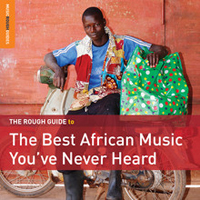
ROUGH GUIDE TO THE BEST AFRICAN MUSIC YOU'VE NEVER HEARD (RGNET1312DD)
Now here's a challenging title for a new release! Though it also conjurs up the notion of the "Best African Music You've Downloaded and Never Listened To." There is some truth to the statement: the only previously released tracks on here are from Rough Guides' subsidiary Riverboat Records, so they must know that no one has bought them! I like the Riverboat series: they usually find unknown talents who are a little further out musically than the artists who end up on the more mainstream Rough Guides. One hopes it will lead to wider exposure and, dare we hope, actual album sales and tours for some of the artists collected here. The whole thing rocks out from the start, the first three tracks are superb: Annane Sy Cissé featuring Zoumana Téréta (I have heard of him), give us "Bala" from the album Mali Overdrive, then Moroccan Simo Lagwani delivers "Baniyorkoy" from the album Gnawa London, then a wild Senegalese kora player, Noumoucounda Cissoko, winds us up with "Noumou Koradioulou" from The Rough Guide to Acoustic Africa. You probably have heard of Krar Collective if you are into that dissonant and droning Ethiopian jazz. Seems to me this is a fair sampling. Anergy Afrobeat is the name of the next group and they perform "Fela Chief Priest." Not only do I not have to tell you it is Afrobeat, I can also skip mentioning that it sounds like every other Afrobeat group who mimic Fela Kuti (& I wrote that before the singer & chorus came in sounding like the second coming of you-know-who). I am surprised the rhythm guitarist didn't fall asleep. But then we get positively mellow with a kora and guitar duet from Giuliano Modarelli (I am gonna stick my neck out and say he's Italian) and Sura Susso, a Gambian. But here in the heart of the disc is the reason to get it: "Yaye Boye," not by Africando -- I know you've heard that -- but the supergroup of Idrissa Diop, Thierno Koite and Cheikh Tidiane Tall whose group Le Sahel was rediscovered by Teranga Beat. If you have not heard this one, it will propel you to buy the Idrissia Diop album at once! Zoumana Téréta returns with his sokou fiddle and Djama Djigui on ngoni for a folky chunk of Bamako soul. Mali seems to be the default go-to place for African music these days, but next up is a welcome change of pace: "Anzoro: The Bells (remix)," a hypnotic loop from the village of Wayo in Southern Sudan. This comes from another Riverboat release, Trance Percussion Masters of South Sudan. [Yes, I downloaded and accidentally deleted this one so I have never heard it!] The album ends the way it began with Malian and Senegalese artists cutting up. Tani Diakite is the one to watch for here. The bonus disc to this set is Sotho Sounds' Junk Funk, an excellent album of acapella music by an enthusiastic group from South Africa (you can read my review of it on the Southern Africa tab).
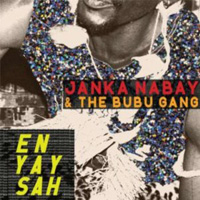
JANKA NABAY & THE BUBU GANG
EN YAY SAH (Luaka Bop)
I heard this on YouTube and rushed out to buy the album.
(Actually the chain-of-events was this: After hearing it I looked it up on amazon and saw there was a used copy for $5, so decided to patronize my local record emporium and went to Amoeba, determined to pay $10, sure they would have a second-hand copy. But they only had one copy at $17 so I then went back to amazon to get it for half as much. Much as I believe in supporting my local record store, Amoeba has several drawbacks: their world music experts are gone so they never have anything I don't already know about; if I ask about something I have heard about I get blank looks or misinformation; the place stinks; the jaded aged punks there play the worst imaginable music to make you not want to hang out; they give beans in credit for used CDs yet still price them at $10, etc etc)
Anyway, this adrenalin-charged disc reminds me a bit of Les Têtes Brulées, a strange African art-rock band I saw at Slim's in the last century. They have a manic energy and the whole thing is fun and relentless. The percussion is programmed and there is a bubbly synth so it sounds like old-style rumbustious afro pop, and while the leader and singer seems to be from Sierra Leone, I get the impression his band, the Bubu Gang, are a bunch of American kids who've been listening to David Byrne as much as Ziglibithy (or else sounded that way in order to get picked up by his label). Ah yes, they hail from Brooklyn but seem at home in a "world beat" space. I imagine they are great in concert.
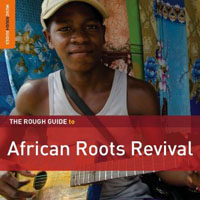
AFRICAN ROOTS REVIVAL (Rough Guide RGNet1269)
The phenomenal Staff Benda Bilili head the line-up for this excursion into the world of acoustic African music. As you probably gather this is a passion of mine. The roots music showcased here is not traditional folk-in-aspic but rather a vibrant movement that is ever-evolving, with instruments often born out of necessity. Large plastic jugs can be used over and over for carrying or storing liquids, they can also be beaten to make a satisfying thud. Africans have long made thumb-pianos from wood and nails, and more recently flattened tin cans and other recycled metals, which can also be fashioned into guitars, with bicycle wire strings. I was keen to check this out because, apart from Staff Benda Bilili, Konono Numero Un, Kasai All Stars, Seprewa Kasa and a few other familiar names there were some unknown to me. So I am thrilled to discover the Bedouin Jerry Can Band, whose music still sounds traditional, even when played on scrap ammo boxes backing their flute and five-stringed lyre. Then there are the bands that use more convention instruments such as mbira or ngoni. Two East African mbira groups are represented: Hukwe Zawose's offspring, known as the Zawose Family from Tanzania, and Zimbabwean Mbira Dzenharira who play lovely meditative cyclical music on their massed thumb pianos. Other thumb pianists are Konono, Kasai All Stars and, new to me, Papa Kourand, who all hail from Congo. Bassekou Kouyate and Ngoni Ba have become quite well known in the West with their bluesy Malian music featuring the (also pentatonic) ngoni. Before we get lost in the mellowness of it all, the abrasive electric likembes of Konono No 1 jar us awake, from their Live at Couleur Café album. I predict Jagwa Music will emerge to become more widely recognised, like Staff Benda or Konono. Then we get three lesser-known but accomplished acts, two of them from worldmusicnet's own Riverboat series: Zulu musician Shiyani Ngcobo and Mamane Barka, a harp player from Niger. This is portable, intimate music and the disc represents a good cross-section of current artists renewing their own musical traditions. But wait! There's more: the bonus disc is Kenge Kenge, which I already gave a rave review to on my Kenya page. Well worth the price of admission.
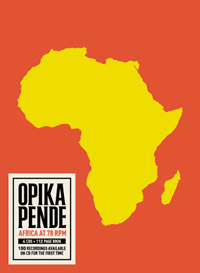
OPIKA PENDE: AFRICA AT 78 RPM (Dust-to-Digital DTD-22)
One thing is certain, as many sages from St Matthew to George Harrison have said, everything is transient. The compact disc seems destined for a quick exit & may have a shorter lifespan than 78 rpm shellac discs, though I doubt anyone will be collecting CDs in future the way collectors search to acquire vintage recordings made on the old technology. Even cassette tapes will in the long run be more durable than CDs. The problem with MP3 music, which is posited as the replacement for the CD, is organization and evanescence. If I download an album it may end up in my iTunes folder as Track01, Track02, etc, and then I have no idea what or where it is. I can burn it to CD but then I am back where I started with unstable media. The difference is between virtual music and visceral music. What is an MP3 after all? It's like radio waves, floating by. But drop the needle on a spinning disc and you are suddenly in a whole different relationship to the music. And, with LPs, the gatefold album was a joy: big art, easy-to-read text, and of course a perfect place to roll a joint. The 78 rpm disc was important to Africa because it didn't require electricity and, despite people constantly signaling its imminent demise, African music thrives and evolves as it always has. In 1928 Erich von Hornbostel wrote: "As yet we hardly know what African music is. If we do not hasten to collect it systematically and to record it by means of the phonograph, we shall not even learn what it was." But quite apart from ethnomusicological concerns, Africans were already recording and enjoying popular music then. This compilation has all the advantages of the gatefold album: It's a 4-disc set and comes with a lavish 6 x 8 112-page book in legible 12-point type (black on white paper: what a novelty!). It's a lovely package and contains almost 5 hours of rare popular recordings from Africa that span the continent and half of the twentieth century.
Dust-to-Digital has embarked on a series of "Excavated Shellac" (perhaps familiar to you from the blog of the same name) and this is their latest entry: Opika Pende, which is Lingala for "Stand Firm." Jonathan Ward is the compiler of this flawless effort. Clearly he has put a lot of effort into making this a brilliant, seamless tour from the Cape to Cairo and from Senegal to the Seychelles. The sound on the old recordings is remarkable, nearly all of them crystal clear; the booklet has lots of photos of picture sleeves, old snapshots of the locales and information on individual tracks. Disc One, Arabic North Africa, shows that traditions have not changed much: the Algerian and Moroccan selections could have been recorded this year. Sassi, from Algeria, welcomes everyone with his mandole. He was part of the Judeo-Arabic tradition known as Al-Andalus music and was prolific in the 15 years after 1924. Fatimah Bent Meddah and Kouider turn in a magical droning piece, "Adhouh, Adhouh (Gimme, gimme)" from the rough part of Oran, 1924, that is only the 3-minute- & 22-second "A" side of this disc but hits a stone groove that wont quit.
Banjo, brass band and thumb piano begin to pop up on the second disc, which is a tour of West Africa. The Greek-run Ngoma studio in Leopoldville may be well-known to readers of this column for the many rare and wonderful early Congolese tunes they waxed. However they also ventured into the field, and the recording of "Ngwop" by the Bamileké of Western Cameroun is a real gem. The first sighting of the "Peanut Vendor" ("Ma-ni!") occurs in the Jolly Orchestra's pennywhistle and guitar ditty "Egberun Buso." We sense the continuity of tradition in the early Black Beats' piece, "De Ehuo," from Ghana, featuring King Bruce on trumpet, as HighLife takes flight. The item that appears next is intriguing -- "Kurungu" by Onana Mbosa Isidore from Cameroun -- it's a percussion jam, but then legendary guitarist Tino Baroza jumps in playing Solovox organ, and there's a Congolese bassist too, on this novelty item from the Opika label. The mbira and drum solo that follows has no documentation: it's a French field recording from Yaoundé, 1950, & is also a head-banger's delight.
Disc Three moves into the area of Africa covered by Hugh Tracey in his musical peregrinations. We can almost hear him introducing the groups in his dry tone: "The mosquitos were as thick as Kamau's ugali porridge as we settled down to hear these gentle folk pluck their nyatitis..." But Dr Tracey would have stopped the tape before letting the Kiko Kids loose on "Tom Tom," a paean to their label: it's a weird highlife calypso sung in very bad Swahili, redeemed by a long smouldering sax solo. Ward completes the trifecta of great Congolese labels with a smash hit from Esengo: "Titi" by African Jazz, featuring Joseph Kabasele. Then he dives back into the bush with a nyatiti piece from the Luo of Western Kenya, followed by a moody Tanzanian piece by Pancras Mkwawa (two other numbers by this artist, also recorded by Hugh Tracey, can be found on Tanzania Instruments [Sharp Wood 022]). But Hugh Tracey was not solely responsible for preserving the great music of East Africa at this time: Peter Colmore commissioned hundreds of recordings and the guitar and Fanta bottle piece here is wonderful, suggesting a whole area of unknown early work to be explored. Ward is right in calling these recordings cultural artifacts because the discs themselves have label information and stories that are interwoven with the histories of colonialism and independence of each of these nations. The "Comic sketch" of Mbarak Talsum took me aback: I was immediately reminded of British music-hall numbers by Harry Lauder from twenty years earlier! Hugh Tracey doubted anyone would enjoy the manic fiddle piece from Uganda, played on the ndingidi: I love it, and it perfectly sets up the pristine clarity of "Masanga" by Jean Bosco Mwenda, the one track on here you surely know. This is magic: it would do credit to Johann S. Bach himself if he had written it.
The final part of this monumental tour is through the lower quarter of the continent. The opening track, an unidentified flute solo from Madagascar is sublime. It reminded me of Satyajit Ray soundtracks: immediately conjuring up deserted stone buildings on the edge of the desert, haunted by bats! An Mbaqanga number reminds us of the longevity of the 78 format; a crisp mbira recording by Tracey is superb, but also showcases his incredible skill as a sound engineer. This set, in fact, doubles as a great alternative sampler of some fine Hugh Tracey discoveries. If you like George Sibanda you are gonna love Josaya Hadebe, also from Zimbabwe, and his purring delivery. There's another Tracey alumnus, Americo Valenti (aka Feliciano Gomes) playing his guitar and singing in Tsonga, a language of Mozambique, among a whole flush of great Southern African guitar players on the last disc. There is a great variety of stuff on here, some of it may not appeal to you, but no matter, there is a whole spectrum of music that opens a window onto the past, and many undoubted pleasures you would otherwise have missed.
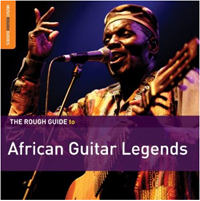
ROUGH GUIDE TO AFRICAN GUITAR LEGENDS (RGNET1259)
Bonus: SYRAN MBENZA & ENSEMBLE RUMBA KONGO
Here is a new Rough Guide with a bonus disc, and I have to say I am a lot more interested in the bonus disc. The album is called African Guitar Legends but they didn't make much of an effort to impress us. I know they probably couldn't afford the licensing fees to do it right, so then why bother? The main or featured disc kicks off with an absolute classic: Djelimady Tounkara's "Fanta." I can tell you a story about this, since I was present when he first played it, at a house party in the East Bay where he was staying a few days. The song is about his host, a woman named Fanta, and what I have to report is that "Stairway to Heaven" is her favourite song. If Djelimady dedicated a track to me I would completely forget Jimmy Page existed. Djelimady's track certainly rivals "Hairway to Steven" for emotional intensity. I am not going to second-guess the programmer, Dan Rosenberg, he usually does a decent job, but I have to say this disc strays from the true path and is not really a guitar legends album. It's hard to say what it actually is. There are a few fillers on here and a lot of stuff that doesn't begin to explore the jazz-inflected complexity or folk roots of African guitarists. The sequencing is bad too so it doesn't build. Above all, the Franco track does not demonstrate that man's legendary qualities. In fact it's a Nino Malapet showcase! Besides which it has been collected on four or five other comps. Jean Bosco is a reliable choice, but Tinariwen, the noodly Deadheads from the Desert, are excessive after Ali Farka. Shiyani Ngcobo is new but sounds exactly like Amaswazi Emvelo from 30 years ago. Philip Tabane would have been a more interesting selection from South Africa. Henry Makobi sounds like he was on a Hugh Tracey comp from 1950, but is a contemporary East African guitarist playing in the old style. The Kante Manfila track is pleasant and was a standout on his latest album, but where is the incendiary Lobi Traore? Sekou Bembeya Diabaté is absent, so is the greatest living African guitarist: Barthelemy Attisso. Considering how much time there is on a CD, omitting these two is inexcusable. And you know I am biased towards the Congo so I would have included Tino Barozo, Bongo Wende, Samunga Tediangaye and as many other great Congolese guitarists as I could squeeze in, but having no Dr Nico is a criminal offence. I downloaded the PDF to find out more, but there is no more, in fact the PDF is worthless as it doesn't tell you anything. They either did this one on no budget or were sleepwalking through it. As I said, I prefer the bonus CD, which is a reissue of Syran Mbenza's Riverboat release that was a tribute to Franco. If you don't already have the Syran album that makes it worthwhile, but you certainly have the better tracks on here and could probably do your own compilation, and you can download the Syran album for ten bucks.
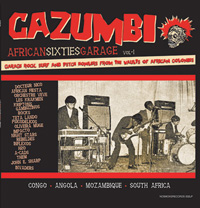
CAZUMBI: African Sixties Garage, Vol. 1 (No Smoke Records)
You've heard of punk bands the Kryptons and the Invaders, right? Uh, wrong. Here's a collection of garage band rock from Africa that came out on the Portuguese No Smoke Label in 2008. I skipped it at the time because it has two tracks by Dr Nico, "Save me" and "Eh bien mon ami" that are awful. However, in the context of this disc they work just fine. This is low-fi at its lowest. Monaural recordings of Africans jamming the 12 bar blues with occasional bursts of Surfaris or Shadows guitar, thrashing drum kits, yakkety sax, etc. I was in bands like this in the 60s. Seriously. But at least we knew what the words meant. We banged out Who, Stones and Buddy Holly and even the odd Yardbirds cover. This collection (first of two) kicks off in South Africa with a Chuck Berry cover-band called the A-pads doing "Down the road apiece", with all the balls of a gang of youth who have figured out how to arrive at the same note simultaneously. We hear "Save me" by Bovic Bondo and African Fiesta (a knock-off of "Gloria" by Van Morrison and Them), arguably the worst thing ever recorded by Docteur Nico. South to Mozambique, we turn on the massive echo machine for "You'll be gone," which was either by the Pretty Things or the Moody Blues, I don't recall, but definitely a B-side worth reviving, unlike the awful & wooden "Knock on wood" from Impacto. "Baby I love you," from Angola suggests the Doors: at least in the singer's histrionics.
Highlights are "I had too much too dream last night" covered by Mozambiquan Olivera Muge and his Conjunto (with shades of "Paint it black" and "Pipeline"), and "Venus" which was a hit for Shocking Blue, covered by Bovic Bondo, here fronting Orchestre Veve of Kiamunguana Verckys. Shocking Blue were a Dutch band who modeled themselves on Grace Slick and company and had this one international hit. The fact that English was not their native tongue doesn't matter, as you know, in pop. And it doesn't seem to bother Bovic who just blurs the syllables together. Bovic is also the vocalist for "Eh bien mon ami," a James Brown pastiche with the band playing "Papa's got a brand new bag," while Bovic grunts and yells. Arguably even worse than "Save me," but not as bad as his version of "Sookie." The second volume covered Ghana, Cameroun and Madagascar as well, but one was enough. Other than Nico the only other familiar name on here was Teta Lando from Angola. His "Muato wa n'Gingila" is a moment of calm in the madness. It has a kind of Tim Hardin vibe to it. H2O from Mozambique sound like some early Library of Congress wire recording of a bluesman! The CD has three bonus tracks not on the double LP. "I put a spell on you" by Os Rocks from Angola is a give-away of their source (BBC Overseas Service radio), because it's not a cover of the Screamin' Jay Hawkins original, but the Alan Price remake which was a hit in England (& the version I covered in my miss-spent youth). To amplify the difference, the guitarist adds "House of the Rising Sun"-style riffing with his plectrum. The rock feel is more Monkees than Beatles, oddly. Their other contribution, "Wish I may," is one of the low spots on here, but "I put a spell on you" rocks. This CD is a novelty disc, and also guaranteed to puzzle your friends with vaguely familiar rock & early psychedelic oldies in a new interpretation. The sequencing keeps your interest, and it's an hour of fun trying to guess the original.
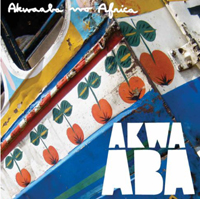
AKWAABA WO AFRICA
Recorded music is just over a century old but in the last few years we have seen an acceleration of the means of recording and reproducing sound so radical that it's hard to comprehend. Akwaaba is a new label with a great idea: Fair-trade African music. Since it's hard to find African music outside the continent the obvious approach is to go there and get it yourself. Akwaaba does that, records music by unknown and unheralded talent and gives them 50% of any income from their records. They are sold through CDBaby, eliminating the need for pressing, printing, shrink-wrapping, barcoding, shipping and returns, and all of that. While I personally regret the demise of the LP record it seems we are about to abandon all tangible musical vehicles and go to bits and bytes. Akwaaba's first sampler has a lot of promise. It kicks off with Rahmane Diallo's beautiful ballad "Sira," which reminds me powerfully of Baaba Maal in the "Lam Toro" era. According to the Akwaaba website, Ahmed Fofana is a Malian flautist but I swear I hear Ethiopian sax in this track "Baro." Iba Diabaté is a fine singer. His accompanists on guitar & bass seem to have been listening to Ry Cooder and Stanley Clarke. Western influences from Louis Armstrong, to James Brown, Peter Tosh and Bob Marley are well documented in African music but the first half of this sampler seems mostly traditional. It's when we get to part two that Tupak Shakur and Rap influences become more apparent (in the sound of Bradez), as well as the aforementioned Wailers. "Waiting for the news" by Jahman Eselem is a slavish imitation of the Tuff Gong sound. Similarly LIB Queen's "Liberia is free" is constructed around a recycled Wailers bass riff. I wish African reggae artists would do something a little more original. First BMW did it to perfection so why try? Second, there's so much more diversity in Jamaican music when you think of Count Ossie, Skatalites, Black Ark, Roots Radics, Eek-a-Mouse in a dancehall stylee, etc. How come none of this impacted Africa? But things kick up to top gear with the classic speedy Ashanti highlife sound of Kofi Sammy doing "Maame." He fronted the Okukuseku International Band of Ghana in the 1970s. Akwaaba is planning to reissue some of the hits of this neglected star. Michel Pinheiro steps into the spotlight next. He is from Benin but moved to Cote d'Ivoire to work with Mamadou Doumbia. He also plays a mean trombone, as evidenced on this killer salsa workout, "Atchêgbê." Good work, Akwaaba: Niceness abounds.
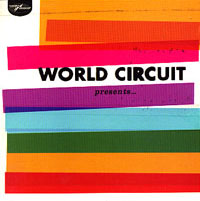
WORLD CIRCUIT PRESENTS (Nonesuch 139132-2)
IJ dropped off this boring-looking World Circuit sampler. I have all this, I told him. Just check it out, he said. So I did, and again I am reminded you can hear new things when you listen to the same music in a different context. The cover (once you lose the slipcase) is uninspired, but the same cannot be said of the contents. Even if you have all the World Circuit releases, I think you will enjoy this 2-disc sampler that shows the depth and strength of their catalogue. There is not a slack track on the front or the back. It opens and closes with the whiny slide guitar of Ry Cooder (the foundation stone of this empire), which is fine in a small dose. Ali Farka Toure (with Ry Cooder & solo), Cheikh Lo, Radio Tarifa, Afro-Cuban All Stars, Oumou Sangare -- we owe a huge debt of gratitude to Nick Gold for bringing it all to us. This is some of the most outstanding music of the last 15 years and it's incredible that it is all on one label. There are the pillars of Cuban son here: Nico Saquito's "Al vaiven de mi carreta" and Guillermo Portabales' "El Carretero," But then there is the Sierra Maestra update, the retro Buena Vista sound, plus the notable offshoots like the great Ruben Gonzalez album with his astounding piano (So good he gets two cuts!). Not to mention Guajiro Mirabal or Omara Portuondo. And of course they flow perfectly well into Orchestre Baobab or Toumani Diabaté's Symmetric Orchestra (which although he's Malian sounds thoroughly Senegalese). Lesser-known African artists Shirati Jazz, Dimi Mint Abba and Bellemou Messouad get a chance to shine, and you will hasten to get their albums, which of course is the goal. The only artist I didn't know was Angá Diaz, whose version of John Coltrane's "A Love supreme" is a treat.
On closer listening more discoveries emerge: two of the rootsy North African pieces are previously unreleased. These are Gnawan Mustapha Baqbou, who performs "Yumala" on the gimbri, a heavy bass-guitar-like stringed instrument, and Dimi Mint Abba, from Mauretania, sounding, according to the liner notes, like T-Rex. You be the judge! As the second disc continues we discover that the second Ali Farka Toure cut, the bluesy (actually Rock & Roll verging on heavy metal) "Amendrai," is a previously unreleased live recording. Ali Farka teams up with kora player Toumani Diabaté for "Du du," and this too is previously unreleased. Ali Farka's protégé Afel Bocoum plays solo on the porch in Niafunke with the crickets, and this sweet little number, made on a DAT, appears for the first time. And finally, for all you Buena Vestals, there is a hot take of "Candela," recorded live at Carnegie Hall without the distractions of Wim Wenders' moronic camerawork. You can enjoy Barbarito Torres' stinging laoud solo (I think in the film Wenders cut to Ry Cooder during this moment). So I reiterate: this is a fantastic collection and there's lots to discover and enjoy.
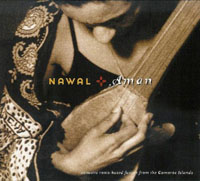
NAWAL
AMAN (KWE01307)
This is traditional music from the Indian Ocean islands of Comoros. I bet you can't point to it on a map. Me neither. It's a group of four "spice" islands and was inhabited by Indonesians who intermingled with Bantu Africans and people from Zanzibar. Nawal calls her sound Sufi music, but it's not necessarily Indian. Nawal sings in Comorian, English and French and plays gambusi and guitar. The gambusi is a small stringed instrument (originally Yemeni) with a banjo quality. Her brother Idriss Mlanao plays contrabass and sings harmony. An American woman, Melissa Rigoli, plays percussion and an mbira. Nawal was surprised, on visiting the USA, to hear Americans playing the Zimbabwean mbira which reminded her of sounds from back home. Overall, the mood is restful and floats along with hints of Malagache music, anchoring it a bit closer to Africa than India. But there are Arabic influences too. The mbira reminds me of Stella Chiweshe's trance grooves, but the contrabass and finger-cymbals add layers that make it even dreamier. One definite plus is the sound quality. It was recorded without overdubs in a live setting which gives warmth and richness to the overall tone. The songs in French tell us that Comoros was a French colony until 1975 but even with (or because of) the presence of "enlightened" Europeans, the women were kept shut away. Nawal is the first Comorian woman to perform on stage playing a musical instrument. The long trance number "Ode a Maarouf," in honour of her great-grandfather, a famous Sufi marabout of Comoros, is outstanding.
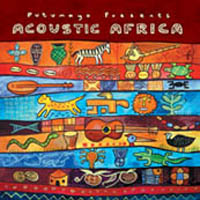
ACOUSTIC AFRICA TOUR (Putumayo)
The duchess & I returned from our trip to the desert in time for "We Are the World," em, make that "Acoustic Africa" show at Zellerbach Auditorium in Berkeley. I didn't have high expectations from this tour but it was interesting. Of the three acts on the bill, the only one I had heard of was Habib Koite. The other two were Dobet Gnahoré from the Ivory Coast and Vusi Mahlasela, a singer-songwriter from South Africa. These two artists would probably not find an audience if they toured solo, so it was a good idea to package them together. Showcases like this don't always work. I remember Papa Wemba refused to go onstage when he found he was to follow a pygmy troupe. The Zellerbach show opened with the performer I had come to see, Kélétigui on balafon: he played a short piece that the audience interrupted with applause. What's with these Berkeley types? The first time Habib opens his mouth and says "Good evening, I am from Mali!" he gets thunderous applause. When he says, "Right now the rainy season has ended in Mali!" there's cheers and a near-standing ovation. For what? His use of English? The weather? The artists interacted in different combos and it worked well for the first set. Vusi's ballads, with his excellent baritone voice and fine guitar playing were mellow, while Dobet was enthusiastic, but a bit strained at times. She leaped about and wiggled her bum to great applause. Though she sang and danced well she was not a first-rate performer. (I'm thinking of Tshala Muana or Mbilia Bel if you saw either in their prime.) Her band seemed to be Belgian so there was nothing particularly Ivorien in their sound. When all three headliners were on stage at once there seemed to be some sparks, but the result was inevitably pan-African pop. The Duchess commented that it was not that different from the "Lion King" show at Disneyworld. However it went over well with the Berkeley audience and, as the second set degenerated into the kind of showboating that provokes applause without having any musical merit, we left.
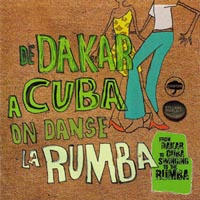
DE DAKAR A CUBA ON DANSE LE RUMBA (Syllart 079.0001.020)
IJ pulled me up short on this one. He reminded me I have nearly every track on this latest African Salsa compilation. I bought it anyway figuring I needed to hear the couple of tracks I didn't have, but of course he was right. I didn't need it, other than to complete my collection of African Salsa compilations, the best of which I burned myself. It's the second African Salsa compilation from Syllart and contains pretty much the same artists as AFRICAN RUMBA SALSA (CDS7037). The opener is "Guantanamera" by Bembeya Jazz. It's not a particularly great version of the song and if you are a Bembeya (or "Guantanamera") collector you probably were smart enough to download it from Stern's site last year when they offered it free during the promotion of the two-CD Best of Bembeya compilation: THE SYLIPHONE YEARS. Grand Kalle is up next with the much-anthologized "Independence Cha Cha." This was a golden era when many Congolese bands were playing rumba, and it would be great to hear a whole set from simply this time and place with Dewayon, Beguin Band, Conga Succes, etc. Africando gives us "Dacefo," sung by Gnonnas Pedro from BALOBA. Sentiment aside, it's rather generic. Les Bantous de la Capitale perform "Mayeya," which has not been remastered. Possibly there is no original recording: it starts with someone un-pausing a tape during a jam, and there's definitely the sound of tape stretch as it fades up in the middle of "Manicero." This one has been anthologized before: they go from "Son de la loma" to "Guantanamera" -- in fact every Cuban lyric they can recall. It's on the Anytha-Ngapy album BANTOUS Volume 3 (FDB300024). This mini-opera ends with José Missamou singing "Recuerdando a Nora Morales," a reference to the Puerto Rican pianist, and this segues nicely into Laba Sosseh performing "Recordando a Nora Morales," which is obscure, but by no means his best track. Recorded in 1967 with the Vedette Band, it stretches out with an endless 1-4-5 chord framework, chugging at an achingly slow tempo, like "Hang on Sloopy" on cough syrup.
Franco's "OK Aswanaka Tempo Na," from 1965, is a Michel Bombanda composition found on FRANCO & VICKY ET L'OK JAZZ (Sono 36533); Keletigui's "Guaguanco a todos los barrios" is a genuine rarity: it's not on either of the two Syliphone LPs by Keletigui I have (LE RETOUR & BEBE), nor is it on the dozen Syliphone CDs that Syllart (no relation) reissued a few years ago, but there's a reason: compared to the original, by Estrellas de Areito, it sucks! That's one monument no one else can scale. However Keletigui is an interesting composer and talented multi-instrumentalist and, this pathetic outing aside, worthy of a compilation. Tabu Ley Rochereau's "Calabasso" also has been anthologized before. It's on MARIA CHANTAL by Rochereau, Mujos and Nico (Sono CD36593). Rochereau takes credit but it is attributed to Mwamba Dechaud on the original VITA 45. It's probably based on a Cuban song by Oscar Calle. The hopeless liner notes, which ignorantly have him attending the "Grand Kalle School" (down the street from the University of Hard Knox?), also say he wrote 3500 songs. I think "took credit for" is probably more accurate.
Star Band De Dakar give us "Caramelo," a true rarity. Pap Seck sang this big Senegalese hit in 1972. The sound is thin but it's all there. Another rarity is Orchestre Rock'a Mambo's "Maria Valente." This is now the only track in print from this seminal band that included Docteur Nico and Tino Barozo on guitar and other members of African Jazz moonlighting with a splinter-group from OK Jazz (including Essous on clarinet). I occasionally get e-mail from wankers trying to buy stuff like this from me. It is beyond commercial value. And while it should be widely disseminated, it should not be cast about the net for free. Once the copyrights are straightened out and the right people credited, I am sure you will see it coming out from RetroAfric or Stern's. "Maria Valente" appeared on two albums GROUPES CHOC DES ANNEES 50 and AFRICAN RETRO VOLUME 5 (Pathé Marconi). Speaking of licensing, there's no indication of copyright or authorship anywhere on this compilation. Orchestra Baobab's "Mana Den" is another mouthwatering treat, unless you are fortunate enough to have the album it comes from BAWOBAB 75 (Disques BUUR), where it is called "Saf mana dem (We're in vogue)." Docteur Nico's "Sasonando"ends up in style. It's a gem, drawn from one of the worst mish-mash Nico CDs that Sono put out, ZADIO (CD36600). Nice to retrieve it from the mire.
For the record, my own SALSA AFRICANA compilation includes a large chunk of Estrellas Africanas, a group that featured Dexter Johnson. I would include Laba Sosseh's "Viva Africa," plus "Africa Boogaloo" and "Charanga in Paris" from African Team. Rochereau's "Bina ringa" makes my cut, and "Dya Dya" from Bembeya Jazz, as one of many vague versions of the Peanut Vendor.
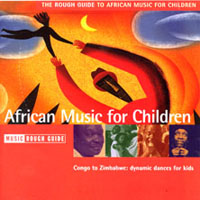
AFRICAN MUSIC FOR CHILDREN
(Rough Guide RGNET 1166 CD)
My granddaughter loves Zap Mama: she liked them before she could talk, but then she's a pretty sophisticated kid. But hey, she is my descendant! I feel Zap Mama (not on here) are really for small children in the way they have catchy melodies and somewhat anatomize their music, though I gather some adults love them too. I decided to spring this album on the other kids I hang out with, the Duchess's nephew and niece, and so I was pleased when the opening cut, "Tounga" by Issa Bagayogo had them dancing. They kept dancing for Ricardo Lemvo's "Nono Femineh" (a great choice for the second cut), and their hula moves mutated into the macarena, which they stopped to "explain" to me, but by the third track (Mory Kante's jamming "Mama"), they were bored and wanted to watch TV instead. Specific boredom set in for me on the next track, Tony Allen's spacey instrumental "Leroy," but Aleyamehu Eshete from Ethiopia kicked it back into play with "Tashamanaletch," but by then I had lost the kids. So much for empiric research! However it seems to me this is a good compilation for kids, and you could try the same experiment on your own proximate rugrats. I question the inclusion of African hip hop (K Plastaz): it's apparently popular with the British kids they tried these songs on, as was the Real Sounds' soccer commentary epic "Dynamos vs Tornados" but, as much as I like that song, I can imagine it wearing thin with kids -- or anyone else (about once every four years is often enough for me to hear it). There's more pseudo rap on JJC & 419 Squad which I have to skip. Even if kids say they like hip hop we shouldn't let them have it, like Big Macs or Frosted Fruit Loops! They are just imitating older kids (as indeed are the rappers on here), so let's steer (!) them to healthier stuff like the bubbly version of "Mbube!" (aka Wimoweh, or The Lion Sleeps) from Mahotella Queens. A guaranteed singalong. Kakai Kilonzo and Mabulu are also fine additions to this well-balanced sampler.
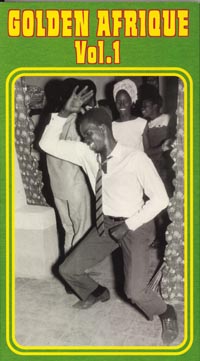
GOLDEN AFRIQUE VOL 1 (Network 27.677)
No matter how good your record collection is, you know there is someone with a better one! You think you have the best of a band, but there's always the chance that there are some stellar recordings that you just don't know about. So I've been holding my breath for GOLDEN AFRIQUE. With Günter Gretz behind the programming you know it would not be ordinary. Subtitled "Highlights and Rarities from the Golden Era of African Pop Music 1971-83," this first double disc focusses on Francophone West Africa. Gretz, the man behind Popular African Music of Frankfurt, along with Christian Scholtze and Jean Trouillet of Network Medien, has selected a wide array of tracks to show the alternate history of the popular music of the Western lobe of Africa. The Golden Age of African pop came along with independence as one by one the countries shook off their colonial legacy and began to discover their true identity. In literature and the arts, but especially in music, there was an outpouring of joyous liberation. I thought -- with Youssou Ndour, Rail Band, Bembeya Jazz, etc.-- it would be mostly the obvious tracks, but it goes far deeper: there's a surprise in every track and many of the cuts have never appeared on CD before. The first disc is the obscurities; the second disc the big guns. If the rest of the series is this good -- and there's every reason to believe it will be -- this set will be the cornerstone of any serious collection of African music. Gretz points out the problems inherent in anthologizing the "best" of West African music when he mentions that "Nama" by National Badema from Bamako is over 25 minutes long! (It's on LES NUITS DE BAMAKO -- also on my African Top 50.) Still, you don't feel they were rushed in their selection. Disc one starts in a pan-African mood with Maitre Gazonga shouting out to all the countries he's visited in "Les Jaloux saboteurs," a great jumping party number, recorded in Ivory Coast by an exile from Chad who comments on all the jealous people with crocodile eyes that envy his success. Today he's still the biggest star in Chad! There's speedy merengue-meets-soukous guitar, echoey sax and a pumping beat. This is followed by a legendary hit, "Amie" by Bébé Manga. It was such a smash she left Ivory Coast and headed to New York to break into the international market, teaming up with Tabou Combo, but not much has been heard from her since. Amadou Balaké & Ernesto Djédjé are up next: two of the obscure artists that Gretz has been championing. Djédjé delivers his breakout smash in the loping Ziglibithy rhythm: "Ziboté." The song has such enduring popularity that, according to the liner notes, it was even covered in a rap version in Ghana in 2000. The obscure Di Mi Amor from Togo is another pleasant surprise. Then we get to the big regional bands of Mali. The Ousmane Kouyate track is one of the treasures here. He was guitarist with Ambassadeurs du Motel, a split-off from the Rail Band de Bamako (A friend points out it was previously on TH4E MUSIC IN MY HEAD 2 and indeed it is, though the track listings are impossible to read on there!). Another Ambassadeurs tracks, "Bolola Sanou," features Kante Manfila on guitar, followed by the Rail Band. We hear Salif Keita singing with both bands. Apart from the Ernesto Djédjé cut, only the last track on the first disc, "N'toman" from Les Ambassadeurs International, has appeared on CD before. The remarkable fact we learn is that an engineer stole two hours of studio time to record the epochal MANDJOU album from which it is drawn.
The second disc kicks off with one my my favourite undeservedly obscure bands: Super Mama Djombo. Formed in Guinea Bissau in 1973, they were known as the Children of Independence -- singer Dulce Neves really sounds like a child. They quickly became national ambassadors, opening for President Cabral on his speaking tours, and everyone knew their songs even before they were recorded. They really should be in the Lusophone set and are the most Brazilian or Cape-Verdean sounding musicians here, but that Latin-ness fits in with the salsafied bands of Senegal. The guitarwork is mind-bogglingly intricate, the melody very catchy. I have volume 2 of a live recording they did in Cuba; someone (Günter?) would do us all a huge favour by finding volume 1 and putting out both parts on one CD. (And while you are at it, mein lieber Herr, how about a boxed set of the Bärenreiter-Musicaphon Malian recordings?) Next up a song made famous by Africando, "Yaye Boye" (which means "Dear mother," not "Hey boy!"), from Number 1 de Dakar. A bit obvious but a classic track from them: with great guitar, again, and fine mbalax drumming. In contrast there's an obscure version of the same song by Idy Diop, arranged by sax player Thierno Kouyate, who is currently in the Baobab line-up. Youssou Ndour, with Etoile de Dakar, returns with "Thiely" which is also on the ABSA GUEYE CD issued by Stern's. I went back to the ABSA GUEYE LP that Günter Gretz published as PAM02, and in the liner notes he discusses the influence of Super Eagles on mbalax and how Guelewar Band of Banjul developed the style, so finally he is able to demonstrate that bit of the history by putting all three groups onto one compilation. Along the way is "Autorail" by Baobab, which you have on the great BAMBA CD on Stern's. Among the buried gems is the Guelwar track, "Wartef Jiggen," which appeared on the Senegal Flash compilation CD LOUGA. Cited as his biggest influence by Youssou, Guelwar sang in Wolof and abandoned the popular rumba rhythms of the 70s for an acid rock approach. They kick out the jams on this track, with organ and guitar solos which they manage to rein in for a big finish. But the Latin tinge returns with the first Super Eagles track. Our tour continues to Guinee with the immortal Balla et ses Balladins, performing "Paulette" from that magical album "Reminiscin' in Tempo" that was also brought to us by Günter Gretz in 1993, and has remained on the all-time African Top Ten Desert Island Discs! (Rumour has it there's another Balla CD in the works.) In case you are thinking you have all this and could just put your own compilation together we have three more rarities up next. Miriam Makeba who -- after fleeing apartheid South Africa and marrying Black Panther Stokely Carmichael -- moved to Guinee in the mid-sixties and adopted the local musical style with her Quintet. She sings a praise song for President Sekou Touré -- a fair trade since he had given her a villa next door to Kwame Nkrumah and accorded her diplomatic status! This is followed by a moody blues number (I take that back: a slow blues or a smoky blues but not a moody blues@!) by Orchestre Paillote. Then the world's greatest all-policewoman band, Les Amazones de Guinee, do "Samba," from their classic AU COEUR DE PARIS album which Syliphone issued. We end with the beautiful "Tentemba" of Bembeya Jazz, certainly the crème de la crème, and one of their best numbers. It breaks up in laughter and shouting: a perfect ending to this perfect release. Two and a half hours of programmed bliss!

LOVES A REAL THING
THE FUNKY FUZZY SOUNDS OF WEST AFRICA (WORLD PSYCHEDELIC CLASSICS 3) (LUAKA BOP 6 80899 0052-2)
I'm assuming Ronnie Graham, who wrote the liner notes, compiled this gem. Graham, as you know, wrote the indispensable DA CAPO GUIDE TO CONTEMPORARY AFRICAN MUSIC so I presume he has an awesome record collection. I only knew two of the tracks on here and they are the least funky cuts. But at heart it's a killer selection of a dozen tracks from the 70s that show Africans getting into Cream, Hendrix, Love and other Western bands. It made Graham wonder what would have been the outcome if any of these bands had played at Woodstock? The title cut is from the Super Eagles (I watched their album climb past the $100 mark on EBay) and is the most Western pop track on here. Moussa Doumbia is a James Brown fan, I know him from a terribly recorded cut "Yeye Moussa" on ASSALAAM ALEIKOUM AFRICA VOLUME TWO that I played on a James Brown radio tribute years ago. He does the JB squeals and his band keeps up on "Keleya," which has a great organ solo. Manu Dibango's "Ceddo" is from the movie soundtrack and starts with moody marimba but calls to mind "Smoke on the Water" once the guitar enters. Some riffs are just unavoidable! However it's a good jam and well recorded. Sorry Bamba's track is unmistakably Malian and from the start goes into a trance. I have an album of his called LA TONNERE DOGON which includes some reggae influences that would be worth reissuing. Number One de Dakar's "Guajira ven" is an odd choice as it's Cuban-influenced and not funk though there is of course great guitar work on it. (The band is also misidentified.)
Curtis Mayfield is the benign presence in William Onyeabor's "Better change your mind," one of the best tracks on here. There's also a hint of "You've got to change your evil ways" in the lyrics when he sings "America, you ever think you own the world." It's from a 1978 Lagos album called ATOMIC BOMB which they apparently didn't actually have as there's no sleeve picture (some of the other sleeve pictures have writing on them, or price stickers). This is followed by another rarity: Ofo & the Black Company, who went to England in 1972 and blazed up this track, "Allah Wakbarr," on a 7-inch EP. They could have knocked over Ten Years After or Spooky Tooth with one finger! A Gaspar Lawal afro-beat cut grounds us again before we head back into the bush in search of new sounds. There's a Bo Diddley/Hand-Jive guitar opening to "Zinabu," another wonder, this one from Ghana-based Bunzu Sounds. The album ends with the other odd-man-out, Orchestre Regional de Kayes doing "Sanjina," the lead cut from their Best of the Biennial Youth Festival 1970 session on Barenreiter-Musicaphon. (I am fortunate to own five of the albums recorded then, and it would be a worthwhile enterprise for some label to do a box set of this crucial and well-recorded music.) But it is Malian traditional music and not really funk-influenced. It's a good way to wind things down but its appearance here is quite odd.
I don't normally look at the extra stuff on CDs that are "enhanced" but the offer of a video of the wondrous Orchestre Poly-Rhythmo de Cotonou was too much to resist and I clicked on it. As a result I was ill from laughing for ten minutes. Don't miss it!
PUTUMAYO PRESENTS
AFRO-LATIN PARTY (P235A)
Subtitle this one "Africando and beyond" and you get an idea of what's afoot. Putumayo storms the dancefloor with an upbeat set of salsa using Africando as the pivot with three tracks from that stellar conglomeration. Actually the seven Africando CDs are a bit much (three are enough), but Jacob Edgar finds the gems on "Mandali" and a cut from "Baloba!" that I have overlooked. He could have gone deeper: Salsa is a deep well with bucketsful of great flavours. I.J. suggested adding Monguito, Afro-Salseros or Super Cayor instead of three Africando cuts. Of course there are other neglected greats who could be stirred up for such a compilation. But the other selections are solid: José Mangual Jr from Puerto Rico is hotly pursued by Pepe & the Bottle Blondes doing "Cuéntame que te pasó." I don't know how I know this one. The Duchess says it's a Manhattan Transfer song (and they do it better) but it must be on a TV commercial, it's very familiar. There's a weird version of "Babalu" by Ska Cubano (which I am guessing is a London ska band with a Cuban singer) and a Croatian group called Cubismo (not Cubanismo) doing "Morenita," which could pass for Cubanismo except the singer's Spanish is better-enunciated. Although Ricardo Lemvo parted ways with Putumayo he's here with the jamming "Samba luku samba" from his last album "¡Ay Valeria!" Like the very successful "Salsa round the World" of two years ago, this is a fluid set that shows not only Cubans are masters of the swinging Latin dancefloor. Like most Putumayo CDs it clocks in at a brief 45 minutes, though that's better than the endless tedium of the "Rough Guide to Dub" or other CDs that last an hour that seems to go on forever.
MUSIQUE POPULAIRE AFRICAIN
ARCHIVES 1926-63 (BUDA 82284-2)
If you are keeping up with the Hugh Tracey archives being reissued on Sharp Wood Productions you'll gravitate at once to this collection of gems. Remastered from 78s, this is a clear sonic window into the middle of the twentieth century as represented in African popular music. (The greatest attribute of the 78 player is that it is a stand-alone mechanical device not requiring electricity, so it survived until the arrival of the battery-operated cassette tape.) The first African recordings were made a century ago by Germans Carl Meinhof in Tanzania and Pater Witte in Togo, but the passionate and discerning work of Tracey put folkloric African music firmly on the world map. Tracey's recordings were based on where he could get to in his Landrover, but he did manage to get all the way from Rhodesia to Uganda. And he was not looking for "pure" untainted sounds, the quest of so many ethnomusicologists. From the thirties on he was supplying popular as well as traditional recordings to Eric Gallo in Johannesburg. Of course he never recorded in West Africa and the recordings here from Cameroun, Upper Volta, Nigeria and Ghana are a wonderful complement to his work, as well as the early Ngoma and Opika recordings made by Greek businessmen in Congo. The album starts with some superb selections from the Gallo archives of Shangaan music from Mozambique. These, like the cuts from Uganda following, were possibly recorded by Tracey. The tracks from Wendo and Manuel D'Oliveira of Congo were the only ones known to me. Though recorded in the fifties they are quaint and don't show a distinct Congolese identity as yet. However the 1930's recordings from Ghana are superb. There is a heavy conga track and a clear indication of the direction of vocal music that would blossom into Highlife as we know it now, decades later. But here you can already hear the polyrhythms of Ashanti, Yoruba and Ewe people behind the banjo playing calypso or polka riffs. Zonophone, based in London, was the main producer of West African music and Gallo's only rival on the continent. The roots of Sunny Ade are here in a Tunde King recording from 1937 that sounds a bit too speedy! King Alvin and the Yoruba Chipmunks?!! This is a great compilation: and has nicely packaged liner notes by Nadar El Dugar, with reproductions of masks, hand-coloured photos and tantalizing old record labels!
MUSIC OF THE KALAHARI BUSHMEN
SONGS FOR HEALING (One World Music; www.oneworld.co.za)
Southwest of Mozambique, beyond Zimbabwe, beyond the Okovango swamp is the Kalahari desert, traditional home to the Bushmen who, 10,000 years ago, were the only people in Southern Africa. Their traditional way of life is disappearing as they are giving up their nomadic hunter-gatherer existence for farm work and government settlements. MUSIC OF THE KALAHARI BUSHMEN: SONGS FOR HEALING is a compilation of vocal and instrumental music showing all the types of casual music made with mouthbows, fiddles, guitars and other indigenous or imported instruments of the Botswana desert. Healing music is a social activity, involving everyone, young and old. The twenty-three tracks included here are short and diverse and occasionally quite magical. The dongo solo called "small birds" is a delicate lamellaphone piece quite different from other thumb piano music I have heard. Although adopted from northern neighbors, the Bushmen have made this instrument their own. The slow, deliberate perfomance has a music box quality to it. Late nights around the fire and the sussuration of insects are conjured up by the crackling, buzzing and rattling of the metal resonators on these instruments. The longest track is a ten-minute healing dance with handclaps and polyphonic singing that reminded me of Mbuti pygmy music.

VARIOUS ARTISTS
MUSIC IN MY HEAD 2 (Stern's Africa STCD 1094 www.sternsmusic.com)
To fill the space left by the entropic collapse of soukous, I keep coming back to the essential righteousess of Senegalese, Malian and Guinean music. The latest volume of MUSIC IN MY HEAD (and let's assume for now it's an ongoing series), is a classic compilation of the golden age of Francophone West African pop that still strikes such a resonant note today. I looked at the playlist and thought, "Hmmm, I have all these," but I do like to turn the programming over to another deejay sometimes because I'll find a different cut on an album I had overlooked or hear something in a different way, maybe even a better remastering of an old gem. I wasn't disappointed. And of course here are tracks I didn't have: Super Diamono (which I thought was Etoile de Dakar) doing a track called, I think, "Bass." (I'm not sure because the CD designer made the color of the type the same value as the color of the background so the titles are illegible!) This spacey Islamic wailing wall of sound is followed by a super-hot Rail Band cut from "Kaira" 1975 (I can't read this title either: Get a clue people!!). There's Baobab, Etoile de Dakar, Super Mama Djombo, Balla et ses Balladins -- all the greats! But suffice it to say, there's enough familiar or unusual stuff in here that compels you to listen and maybe dig out the book, MUSIC IN MY HEAD by Mark Hudson, again. The CD is subtitled "Guitars are from Mars, Balafons are from Venus" -- go figure. Hudson's liner notes are superb, and as a bonus "Litch" writes a snotty intro that is perfect, ranting on about "balafons-on-acid" then commenting there is only one track with balafon but its sound is implicit in all the music and if you don't know what a balafon is, then this album ain't for you! Now if only I can remember who I loaned my copy to...
VARIOUS ARTISTS
NO MAKE PALAVER (Piranha CD pir 39-2)
Recorded "102% live in August 1993" at the Heimatklänge (Homelandracket, or Folkfest) in Berlin, this outstanding compilation presents a survey of West African popular music. Le Zagazougou, the accordeon group from Ivory Coast, get things off to a raucous start, and, after a beautiful praise song from Mali's Oumou Sangare, we are treated to the best from Nigeria and Ghana in songs from Barrister and Eric Agyeman. The highlights are the next two cuts, an eleven-minute version of "Foliba" by the Super Rail Band of Bamako with sax lines snaking in and out of the kora-derived guitar, and a powerful "Thiédo" from Baaba Maal and Dande Lenol. This crisp recording is the closest thing to being there; it's immediate and hot.
NONESUCH EXPLORER SERIES (Elektra 14 CDs)
When the Elektra record label began to have successes on folk singers in the late 60s, they branched out, licensing music from Europe. A former child prodigy on classical piano, Teresa Sterne, came aboard as coordinator of a new label to explore folk music of the world. A big breakthrough at the time was the reduction in size of recording equipment so musicologists could go out into the field with portable tape recorders that only weighed 70 pounds as compared to the 200 pound record-cutting machines that were previously required. When David Lewiston returned from Bali with the incredible "Music from the Morning of the World" tapes, the new label was born. Many of us who grew up in the late sixties and were curious about different kinds of music fell in love with the Nonesuch Explorer records and their hokey covers. I went on to seriously collect OCORA and Musique du Monde, two French labels that also explored world music, and the Barenreiter-Musicaphon series issued in Germany, that gave you the cream of the crop. But Nonesuch was my inauguration into world music.
Now Nonesuch is beginning the reissue of all 92 recordings on budget-priced CD, starting with the thirteen volumes of African music. In January 2003 the ten classic Indonesian albums from Bali and Java will be reissued. There is also a sampler of the African albums to whet your appetite, and slick new packaging with sharp black and white photography.
Originally released between 1969 and 1983 some of the 13 African albums have become classics. ESCALAY THE WATER WHEEL, oud recordings of Nubian Hamza El Din, has been previously reissued on CD. Dumi Maraire's THE AFRICAN MBIRA is another of the eternally great recordings from the series. DRUM, CHANT & INSTRUMENTAL MUSIC was recorded in Niger, Mali and Upper Volta in 1976 and was my introduction to this wonderful, trance-inducing music. David Fanshawe's WITCHCRAFT & RITUAL MUSIC, recorded in Kenya and Tanzania, caught the echoes of a culture now all-but extinct. Neighbouring Burundi too was decimated, to the sound of those royal drums that were sampled in some less-than-memorable eighties pop. Still, it's one of my favourites. The original liner notes have been retained and include remarks like this, for a classic cut, "Take me back to Mabayi," on the "Burundi" album: "An amiable old man from Gahabura sings, accompanying himself on the inanga. He dreams of returning to the places of his happy youth. 'Take me back to Mabayi, where there are plenty of women.' Pieces like this are usually sung in the moonlight, and many musicians have been annoyed when asked to perform by day in order to allow their songs to be taped." The 8-stringed zither on which the old geezer accompanies himself has a really funky tone to it and he adds mouth percussion between stanzas. I've played this in a set with James Brown and it works!
One oddity in the series is the ANIMALS OF AFRICA, recordings of animal sounds which will mean a lot more to you if you've been to Africa. I used to use it as ambient background noise between sets when I was back-announcing on the radio. The new liner notes tell us that since this recording it has been established that Vervets have a vocabulary and actual words for "eagle" and "leopard," so man is not alone in communicating linguistically!
If you are not ready to dive in, there is a sampler of the entire African series: Nonesuch PRCD 300883.
URBAN AFRICA NOW (Trace)
URBAN AFRICA NOW is a beautifully packaged anthology of current hits from all parts of Africa. The designer uses stock photos in a letterbox format in the booklet and each song has its own spread. The album kicks off with a very urbane accordion piece from Madagascar and follows it with a hit from Youssou Ndour's JOKO CD, but presented in the mix released on cassette for the fans in Dakar. Maciré Sylla's "Wombéré" from Guinée is one of the highlights. It has great energy, a mixture of funk and mbalax, strong harmony singing and wonderful flute. But too many of the tracks, for my taste, are aspiring gangsta with English or French vocals, drum machines and angrily declaimed lyrics. Sorry, that ain't music. I know Elvin Jones says he likes Rap because it pisses off people like me, but I just kill it before it spreads. Baaba Maal's "Guelel" is here from his album NOMAD SOUL: the vocals are fine but the kora is buried beneath the synths, samples and drum tracks. A stronger Senegalese entry is Cheikh Lo's "Jeunesse Senegal" from his classic BAMBAY GUEEJ, one of my favorite albums of last year.
I never paid any attention to Brenda Fassie the disco diva from South Africa, but "Vuli Ndlela," her 1999 comeback hit, is very catchy. Mabulu from Mozambique is included with a great cut. Also from Mozambique, Eyuphoro have a strong musical and melodic entry amid the usual rappers and pseudo-reggae (why is it all African reggae sounds like Peter Tosh?). I don't recommend this album wholeheartedly. It's a snapshot of a segment of what is happening in urban Africa, if you're interested.